
Justinian I (Justinian the Great)
Eastern Roman emperor (527–565) who codified Roman law, led reconquest campaigns, rebuilt Constantinople, and left a lasting legacy in law, architecture, and Byzantine history.
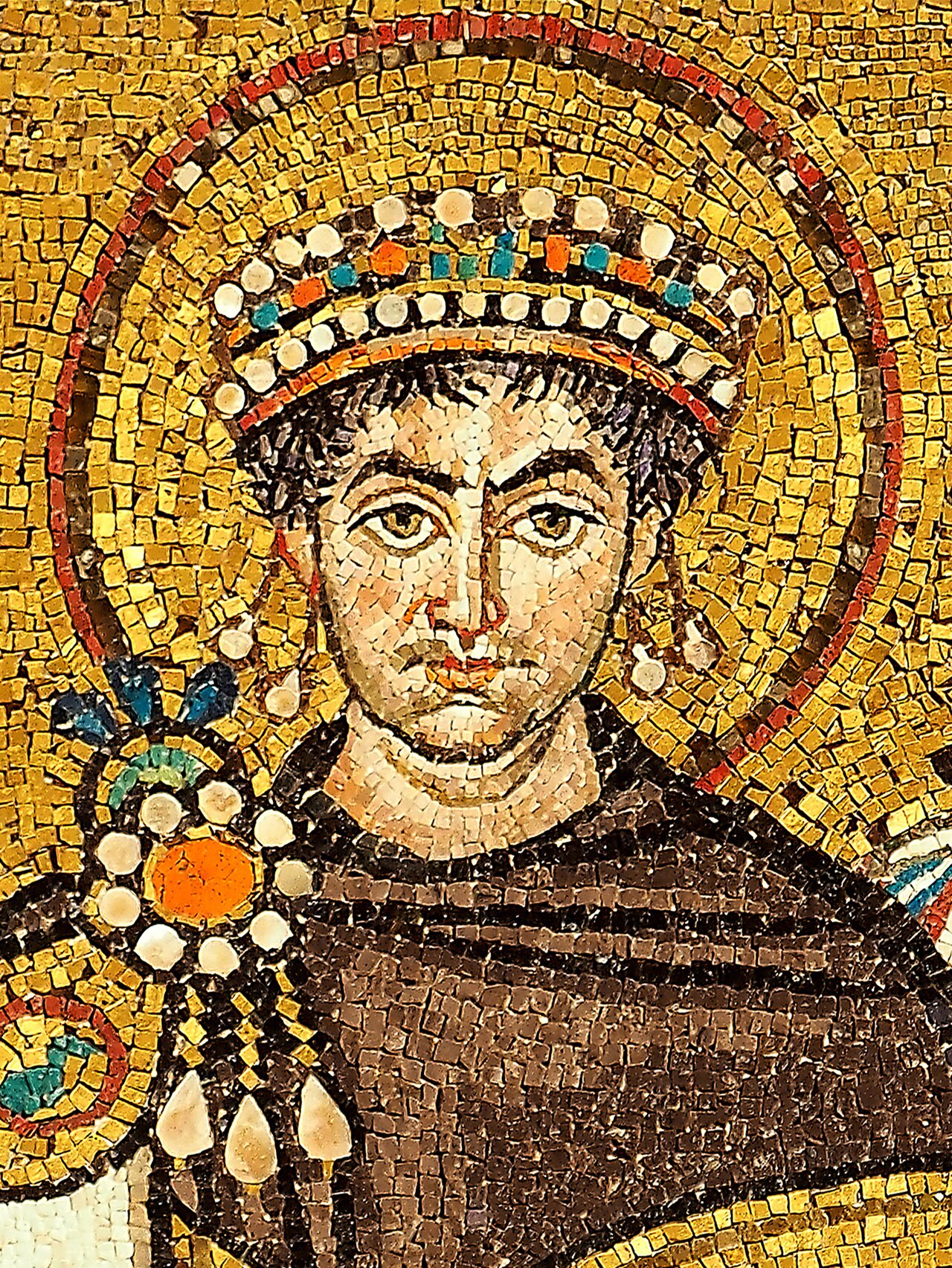
Justinian I (c. 482 – 14 November 565), commonly called Justinian the Great, was the Eastern Roman (Byzantine) emperor from 527 until his death. Born Petrus Sabbatius and later taking the name Iustinianus, he ruled from Constantinople and sought to restore Roman authority across the Mediterranean. His reign combined legal reform, large-scale building projects, and military campaigns intended to reassert imperial power. The Greek form of his name is Φλάβιος Πέτρος Σαββάτιος Ἰουστινιανός.
Image gallery
10 Images





Legal reforms: the Corpus Juris Civilis
One of Justinian's most enduring achievements was the organized revision and compilation of Roman law, commonly called the Corpus Juris Civilis. Commissioned under his authority, this body of work gathered, revised and systematized centuries of statutes, juristic writings and imperial constitutions. Its principal elements are:
- Codex (Code) – a collection of imperial enactments.
- Digesta or Pandectae (Digest) – a summary of jurists' writings and legal opinions.
- Institutiones (Institutes) – an introductory textbook for law students.
- Novellae Constitutiones (Novels) – new laws issued after the Codex.
These works profoundly influenced the development of civil law traditions in Europe and remain a foundational reference for scholars of Roman law.
Military campaigns and territorial policy
During his reign Justinian authorized military expeditions to recover territories that had once belonged to Rome. Generals such as Belisarius and Narses led campaigns that temporarily brought parts of North Africa, Italy and southern Spain back under imperial control by defeating successor kingdoms like the Vandals and various Gothic rulers. These efforts were costly and fought intermittently over many years.
Architecture, administration and crises
Justinian sponsored an ambitious building program, the most famous work being the rebuilt Hagia Sophia, completed in 537, which became a symbol of Byzantine architectural achievement. He also reformed imperial administration and fiscal systems to support his projects and campaigns. His reign experienced dramatic events, including the Nika riots — a major civil disturbance in Constantinople — and outbreaks of the plague that affected population and economy.
Justinian's wife, Theodora, played a notable political role and is often credited with influencing imperial policy. In Eastern Orthodox tradition Justinian is venerated as a saint for his support of the Church and his role as a Christian ruler; the Eastern Orthodox Church recognizes his contributions and memory in its commemorations.
Assessment of Justinian's legacy balances substantial cultural and legal achievements against the heavy human and financial costs of his wars and building programs. His legal reforms, the monumentality of his construction projects, and the temporary restoration of imperial territories ensured that his name remained prominent in both Byzantine history and the later European legal tradition.
Related articles
Author
AlegsaOnline.com Justinian I (Justinian the Great) Leandro Alegsa
URL: https://en.alegsaonline.com/art/123210