
Julieta Castellanos — Honduran sociologist and university leader
Julieta Castellanos (b. 1954) is a Honduran sociologist, long-time rector of the National Autonomous University of Honduras (UNAH), and a prominent advocate for data-driven crime monitoring, judicial reform and accountability.
Julieta Castellanos (born 8 January 1954) is a Honduran sociologist and public intellectual who has combined academic leadership with activism on violence, rule of law and institutional reform. She has been rector of the National Autonomous University of Honduras (UNAH) since 2009 and is widely known for founding and promoting evidence-based tools to understand crime and public security.
Image gallery
3 Images

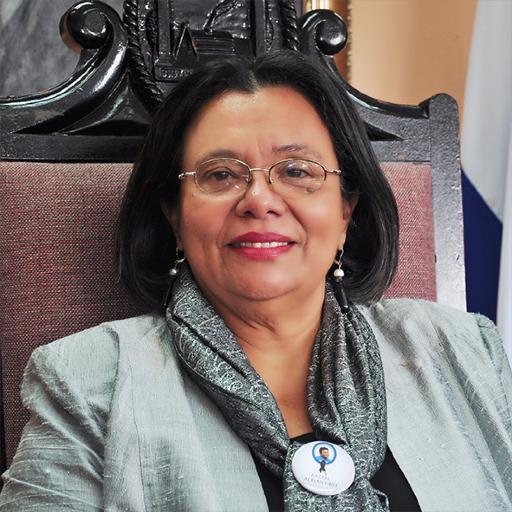
Academic leadership and public role
As head of UNAH, Castellanos has overseen one of the country’s largest higher-education institutions while using the university’s resources to support research and policy dialogue. Her position as rector placed her at the intersection of academia, civil society and government debate, and she has used that platform to push for transparency, greater accountability and institutional improvements in Honduras.
Violence Observatory and research approach
In 2004 Castellanos established the Observatorio de la Violencia (Violence Observatory) at UNAH. The observatory compiles and analyzes official and media-derived crime statistics, produces regular reports and seeks to translate data into practical policy recommendations. Its work emphasizes consistent methodology, open data where possible, and communication of complex trends to nontechnical audiences.
Advocacy for reform and anti-corruption work
Castellanos has been a visible critic of organized crime, particularly the influence of drug cartels, and of abuses within the security sector. She has publicly documented and protested police shortcomings and corruption, arguing for institutional change rather than ad hoc measures. Her advocacy includes calls for comprehensive judicial and police reform, stronger oversight mechanisms and better training for security forces.
Role in national crises and commissions
Beyond research and university administration, Castellanos has participated in national reconciliation and fact-finding efforts. She served on a Truth and Reconciliation Commission convened to examine the circumstances of the 2009 political crisis that led to the removal of President Manuel Zelaya. In that capacity she emphasized establishing an accurate record and recommending reforms to prevent future institutional breakdowns.
Impact, distinctions and continuing relevance
Castellanos’s combination of scholarship and activism has made her a central figure in debates about security policy, university autonomy and democratic governance in Honduras. Her emphasis on data collection, institutional reform and public accountability has influenced other civil-society actors and academic initiatives. While her positions have sometimes been contested in highly polarized contexts, her work illustrates how university-based research can inform public policy and civic debate.
- Main themes: violence monitoring, institutional reform, academic leadership.
- Institutional base: National Autonomous University of Honduras (UNAH).
- Methods: statistical monitoring, public reporting, policy advocacy.
For further reading on topics related to institutional reform, crime analysis and Honduran public life, see the resources linked through the university and civil-society portals: biographical overview, reports on organized crime and cartels, studies of police oversight, investigations of corruption, proposals for legal reform and the Observatory’s published crime statistics.
Questions and answers
Q: Who is Julieta Castellanos?
A: Julieta Castellanos is a Honduran sociologist and the rector of the National Autonomous University of Honduras since 2009.
Q: What is the Violence Observatory?
A: The Violence Observatory is an institution started by Julieta Castellanos in 2004 that analyzes crime statistics in Honduras.
Q: What did Julieta Castellanos work against in Honduras?
A: Julieta Castellanos worked against violence in Honduras, particularly drug cartels and police corruption.
Q: What reforms did Julieta Castellanos propose in Honduras?
A: Julieta Castellanos proposed reforms for the courts and the police in Honduras.
Q: What commission was Julieta Castellanos a part of?
A: Julieta Castellanos was a member of the Truth and Reconciliation Commission in Honduras.
Q: What was the purpose of the Truth and Reconciliation Commission?
A: The purpose of the Truth and Reconciliation Commission was to find the facts of the 2009 coup that removed President Manuel Zelaya from power.
Q: When was Julieta Castellanos born?
A: Julieta Castellanos was born on January 8, 1954.
Related articles
Author
AlegsaOnline.com Julieta Castellanos — Honduran sociologist and university leader Leandro Alegsa
URL: https://en.alegsaonline.com/art/123130
Sources
- nytimes.com : "An Academic Turns Grief Into a Crime-Fighting Tool"
- taipeitimes.com : "Honduras sets up truth commission"
- archivo.elheraldo.hn : "Julieta Castellanos Ruiz"
- proceso.hn : "Julieta Castellanos, electa Rectora de la UNAH"
- unah.edu.hn : "Honduras contará con centro de investigaciones único en Latinoamérica"
- english.eastday.com : "Police quell student protest in Honduras"
- elheraldo.hn : "Sindicalistas de la UNAH protestan en la Corte"
- proceso.hn : "UNAH construirá Polideportivo para albergar Juegos Universitarios de 2013"
- elheraldo.hn : "Julieta Castellanos asume como rectora interina"
- latribuna.hn : "La rectora tiene ventaja porque ella nombró a miembros de la JDU"
- laprensa.hn : "Julieta Castellanos es reelecta como rectora de la Unah por 4 años"
- internacional.elpais.com : "La madre coraje de Honduras"
- archivo.elheraldo.hn : "No tuvimos reporte de a quién se le dio la recompensa: Julieta Castellanos"
- radiocadenavoceshn.com : "Conmoción y dolor por muerte de hijo de rectora Julieta Castellanos"
- thenation.com : "Honduras: Which Side Is the US On?"