
Julia Kristeva: Life, ideas and influence
Concise, balanced overview of Julia Kristeva — Bulgarian–French philosopher, critic, semiotician and psychoanalyst — summarising her life, major concepts, principal works, honours and lasting influence.
Overview
Julia Kristeva (born 24 June 1941) is a Bulgarian–French intellectual whose work spans philosophy, literary criticism, semiotics, psychoanalysis and feminist thought. She settled in France in the mid-1960s and became a leading voice in structuralist and poststructuralist debates. The author of more than thirty books, Kristeva is known for combining close literary reading with psychoanalytic reflection and cultural critique. She is professor emeritus at the University Paris Diderot and the founder of the Simone de Beauvoir Prize committee. For details of her Bulgarian name and early biographical notes see Bulgarian form of her name and for general biographical notices consult biographical summaries.
Image gallery
4 Images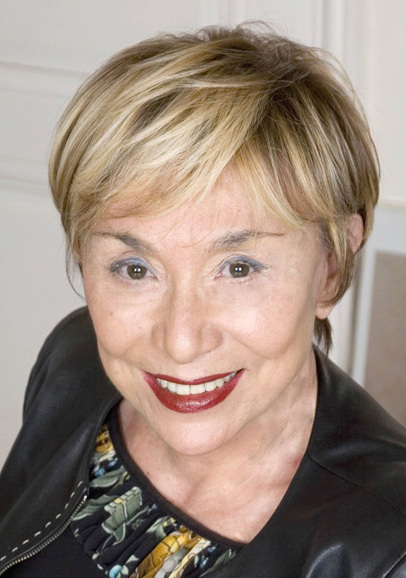


Early life and career
Kristeva was educated in Bulgaria and moved to France as a young scholar. In Paris she engaged with contemporary debates in linguistics, semiotics and continental philosophy. Her first major volume, Semeiotikè (1969), established her as a theorist of language and signification; subsequent work extended those concerns into psychoanalytic and cultural registers. French institutional pages and critical overviews provide context for her professional trajectory and long residence in France (French sources).
Major concepts
Kristeva introduced and popularised several terms and distinctions that have become central in humanities scholarship. Her use of the term intertextuality emphasises how texts are shaped by and refer to one another rather than standing as isolated systems. She proposed a distinction between the semiotic — a prelinguistic, bodily and rhythmic aspect of signification connected to drives and poetic language — and the symbolic — the structural, grammatical order associated with law, syntax and commonly shared meanings. This semiotic/symbolic framework underpins analyses of literary form, subjectivity and creativity.
Another widely cited idea is abjection, developed in Powers of Horror, which describes how subjects and societies expel what threatens their identity or symbolic order (bodily fluids, waste, the maternal as uncannily primeval). Kristeva also elaborated on concepts such as the chora (a pre-symbolic space of drives and rhythm), the partially formed subject, and the intersections of mourning, melancholia and depression, discussed especially in Black Sun.
Approach and influences
Kristeva's work draws on and converses with a range of traditions: structural linguistics, psychoanalysis (both Freudian and Lacanian currents), literary modernism and continental philosophy. Her writing often moves between theoretical argument, clinical reflection and careful readings of literary texts. Critics and reviewers catalogue these developments and their implications for contemporary theory (literary critics).
Principal works and themes
- Seminal texts: Semeiotikè (1969) laid foundations for her semiotic theory; Powers of Horror elaborated abjection; Tales of Love examined partial objects and erotic attachment; Black Sun explored melancholia and depression; Proust and the Sense of Time addressed memory and temporality. A later set of books on creativity and gender is often referred to as a trilogy on female genius.
- Genres: Her output includes dense theoretical essays, psychoanalytic writing, cultural commentary and later, works of fiction and autobiography.
Honours and public role
Kristeva has received a number of national and international honours and prizes. She has been recognised by French national orders and has been awarded prizes that acknowledge scholarly and public contributions to the humanities. In addition to scholarly work, she has taken public stances on cultural and political questions and established the Simone de Beauvoir Prize, which recognises contributions to women's rights and public debate.
Reception and debate
Her influence is wide and sometimes contested. Admirers value her capacity to bring together psychoanalysis and semiotics, to read literature as a site of ethical and psychic struggle, and to introduce concepts that have been widely adopted in cultural and film studies. Critics have questioned the clarity and empirical grounding of some claims, as well as certain political positions she has taken in public life. Her style — often aphoristic and allusive — can be praised for poetic force or criticized for obscurity. Overviews of her reception in feminist and cultural studies are available in various critical forums (feminist reception, critical analysis).
Influence across disciplines
Kristeva's ideas have been taken up across literary theory, film and media studies, art history, psychology and philosophy. Her notions of intertextuality and abjection have become conceptual tools in fields that study identity, gender, migration, the body and cultural memory. For readers approaching her work from semiotics or linguistics, introductory resources and bibliographies can help situate her contributions (semiotics resources, literary theory). For those interested in the psychoanalytic dimensions of her writing, consult guides to her clinical reflections and published essays (psychoanalytic contexts).
Further reading and research
Beginners are often advised to start with concise translated essays or accessible critical introductions before approaching denser volumes. Collections of interviews, annotated bibliographies and scholarly commentaries provide entry points to ongoing debates. Institutional archives and research guides collect primary texts and secondary literature for deeper study. For curated bibliographies and institutional material see the links above for biographical and thematic resources.
Selected lists
- Selected works: Semeiotikè; Powers of Horror; Tales of Love; Black Sun; Proust and the Sense of Time; trilogy on female genius.
- Selected topics: intertextuality, semiotic/symbolic distinction, abjection, chora, melancholia, creativity and gender.
Kristeva remains a major figure in contemporary theory, widely read and taught, and debated across disciplines. Readers are encouraged to consult both primary texts and a range of critical perspectives to grasp the richness and complexity of her work.
Questions and answers
Q: Who is Julia Kristeva?
A: Julia Kristeva is a Bulgarian-French philosopher, literary critic, semiotician, psychoanalyst, feminist and novelist who has lived in France since the mid-1960s.
Q: What awards has she received?
A: She has been awarded Commander of the Legion of Honor, Commander of the Order of Merit, the Holberg International Memorial Prize, the Hannah Arendt Prize and the Vision 97 Foundation Prize by the Havel Foundation.
Q: What fields does her academic work cover?
A: Her academic work covers intertextuality, semiotics and abjection in linguistics, literary theory and criticism, psychoanalysis, biography and autobiography, political and cultural analysis as well as art and art history.
Q: When did she publish her first book?
A: She published her first book Semeiotikè in 1969.
Q: In what ways is she influential?
A: She is influential in international critical analysis, cultural studies and feminism.
Q: What kind of thought does she represent?
A: She represents structuralist and poststructuralist thought.
Related articles
Author
AlegsaOnline.com Julia Kristeva: Life, ideas and influence Leandro Alegsa
URL: https://en.alegsaonline.com/art/123123
Sources
- jstor.org : "Julia Kristeva's Bataille: reading as triumph,"
- campaign4equality.info : Simone de Beauvoir Prize 2009 goes to the One Million Signatures Campaign in Iran
- books.google.com : Google Print, p. 166
- nytimes.com : Correcting Her Idea of Politically Correct
- id.loc.gov : Library of Congress authority record for Julia Kristeva
- data.bnf.fr : BNF data page
- hvolat.netai.net : Julia Kristeva: A Bibliography
- books.google.com : Julia Kristeva
- ms.cc.sunysb.edu : "State University of New York at Stony Brook" · web.archive.org
- tate.org.uk : Tate Britain Online Event: Julia Kristeva
- pileface.com : Who's who in Les samouraïs by Kathleen O'Grady
- lacan.com : An Interview with Josefina Ayerza - Flash Art Magazine
- books.guardian.co.uk : Guardian article: March 14, 2006