
Bloomery: the traditional iron-smelting furnace and its products
A bloomery is a preindustrial furnace that produces sponge iron (a bloom) by direct reduction of iron ores. Article covers construction, operation, history, products, and differences from blast furnaces.
A bloomery is a small, solid‑fuel furnace used historically to reduce iron oxides into a spongy mass of metallic iron and slag. Unlike furnaces that melt iron, a bloomery operates below the melting point of the metal so the iron forms as a porous lump called a bloom or sponge iron. The basic purpose of a bloomery was early smelting—extracting metal from ore—using charcoal and air supplied through a tuyere.
Image gallery
8 Images



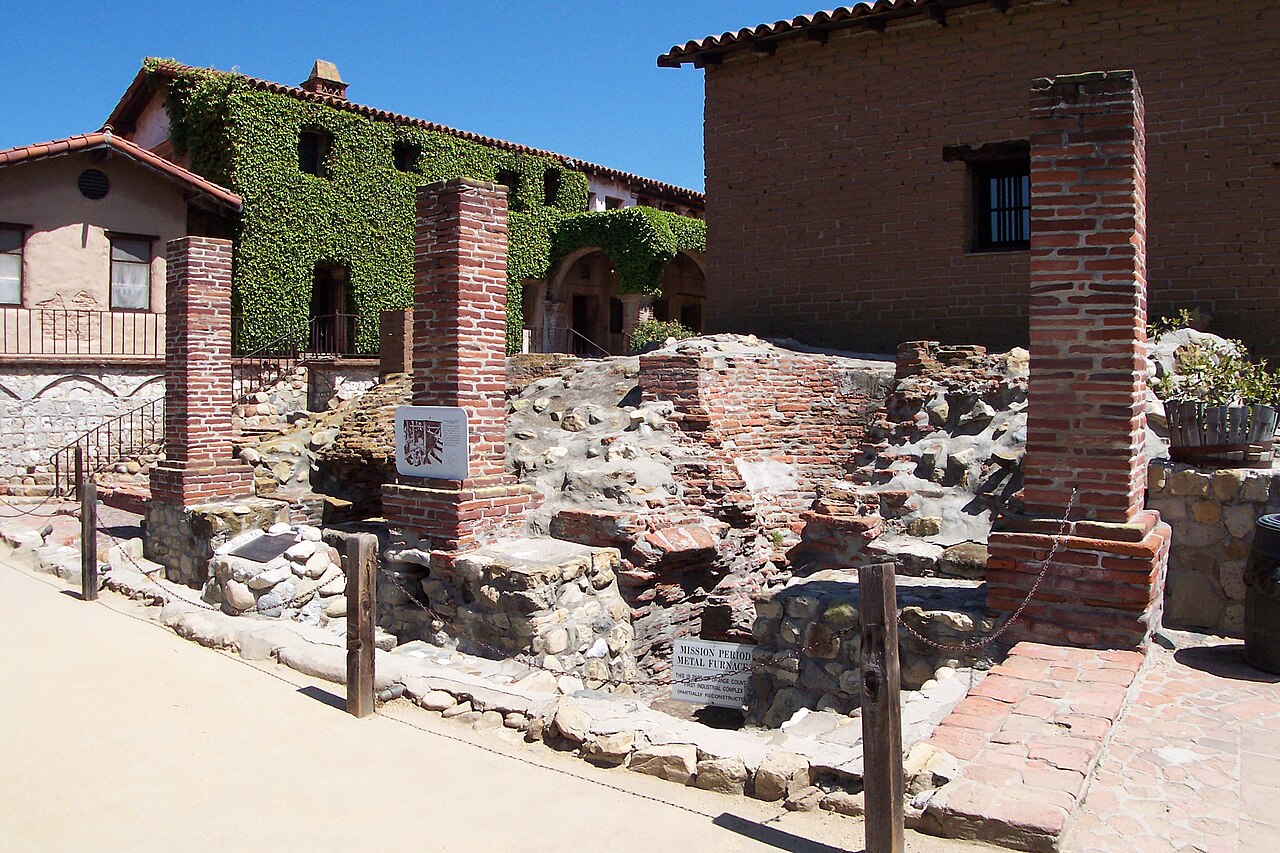



Structure and operation
A typical bloomery is a shaft or bowl of clay, stone or brick with one or more inlets for air and a working opening to remove the bloom. Charcoal and crushed ore are layered and heated; forced air increases combustion and the reduction reactions. The process leaves mixed slag and metallic iron that must be hammered to expel impurities. Because it does not fully melt the metal, a bloomery is a form of direct reduction furnace.
Products and subsequent working
The immediate product, sponge iron or bloom, is consolidated by repeated heating and hammering to produce workable iron. Wrought iron, a malleable form with low carbon content, was the usual end product after refining the bloom. Some cultures also forged tool and weapon components directly from bloomery iron without casting (wrought iron).
History and geographic spread
Bloomeries were central to early ironworking and were used in many regions from the Iron Age onward. Their adoption enabled more durable tools and weapons and supported economic and social changes. Regional variations existed in size, fuel type and furnace shape; archaeological remains commonly include slag heaps, tuyere fragments and furnace bases.
Advantages, limits and legacy
Bloomeries were relatively simple and suited for small‑scale production, but they could not reach temperatures needed to produce cast iron or modern steels. Larger-scale, hotter methods such as blast furnaces eventually supplanted bloomeries in many areas, though direct-reduction methods persisted longer in places with limited resources. The bloomery process contrasts with modern smelting that melts and separates metal and slag.
Notes and contexts
- Terminology: the ore reduced in a bloomery is typically an iron oxide or carbonate; the process yields a solid bloom rather than molten metal (oxides).
- Materials: charcoal was the dominant fuel because of its reducing properties; later transitions to coke and coal were tied to larger furnaces.
- Continuity: in some regions and experimental archaeology projects, traditional bloomeries are reconstructed to study ancient techniques and to produce historically authentic iron (iron).
For further technical or historical reading, see general references on early metallurgy and furnace archaeology. While technologically superseded, bloomeries remain a key chapter in the development of ironworking and the preindustrial metal economy.
Questions and answers
Q: What is a bloomery?
A: A bloomery is a type of furnace that was once widely used for smelting oxides.
Q: What was the purpose of bloomeries?
A: Bloomeries were the first smelters able to smelt iron.
Q: What is the product of using a bloomery?
A: The result of using a bloomery is a mass of iron and slag called a bloom.
Q: Why is sponge iron called that way?
A: Sponge iron is called that because it is porous like a sponge.
Q: What is wrought iron?
A: Wrought iron is the refined form of sponge iron.
Q: Why are bloomeries no longer used in smelting?
A: Bloomeries are no longer used in smelting because blast furnaces are better.
Q: What is the advantage of blast furnaces over bloomeries?
A: The advantage of blast furnaces over bloomeries is that they are better.
Tags
Related articles
Author
AlegsaOnline.com Bloomery: the traditional iron-smelting furnace and its products Leandro Alegsa
URL: https://en.alegsaonline.com/art/12283