
John von Neumann: mathematician, physicist, and architect of modern computing
Comprehensive overview of John von Neumann (1903–1957): his life, major contributions across mathematics, physics, economics and computing, and his lasting influence.
John von Neumann (December 28, 1903 – February 8, 1957) was a Hungarian‑American scientist widely celebrated for his breadth of intellect and deep technical contributions. Trained as a mathematician and active as a physicist, he spent his career developing mathematical foundations and practical methods that shaped 20th‑century science and engineering.
Image gallery
10 Images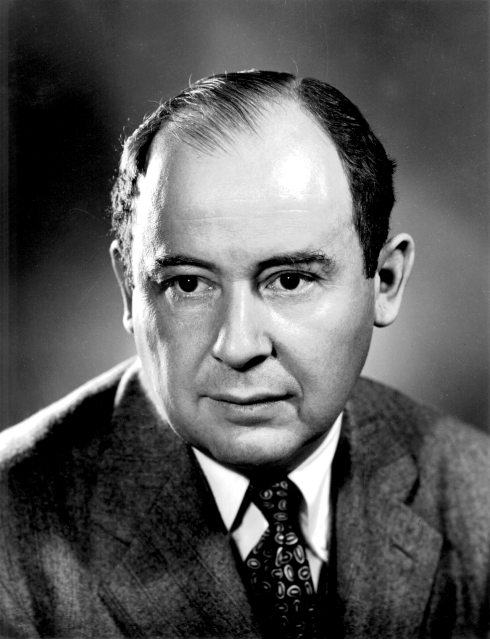



Fields and fundamental contributions
- Set theory — introduced formal constructions such as von Neumann ordinals that simplified the axiomatic treatment of sets.
- Functional analysis — pioneered operator theory and structures that later became known as von Neumann algebras.
- Quantum mechanics — provided a rigorous mathematical formulation of the theory, including use of Hilbert spaces and statistical operators.
- Ergodic theory — developed tools to relate long‑term dynamical behaviour to averaged quantities.
- Continuous geometry — explored nonclassical geometries that interpolate discrete and continuous concepts.
- Economics and game theory — co‑authored foundational work that established a mathematical theory of strategic interaction and expected utility.
- Computer science — formulated the stored‑program computer architecture that became a blueprint for modern digital computers.
- Numerical analysis — advanced methods for computation and error estimation used in scientific computing.
- Systems theory — contributed to models of complex systems and control concepts.
- Statistics — worked on probabilistic methods and statistical foundations that supported applications in physics and computation.
These contributions were often cross‑disciplinary: von Neumann blended abstract mathematical ideas with pressing applied problems, moving rapidly between pure theory and technological practice. His tendency to recast practical issues in rigorous mathematical language helped make many disparate fields more systematic and interconnected.
Computing, the Manhattan Project, and practical work
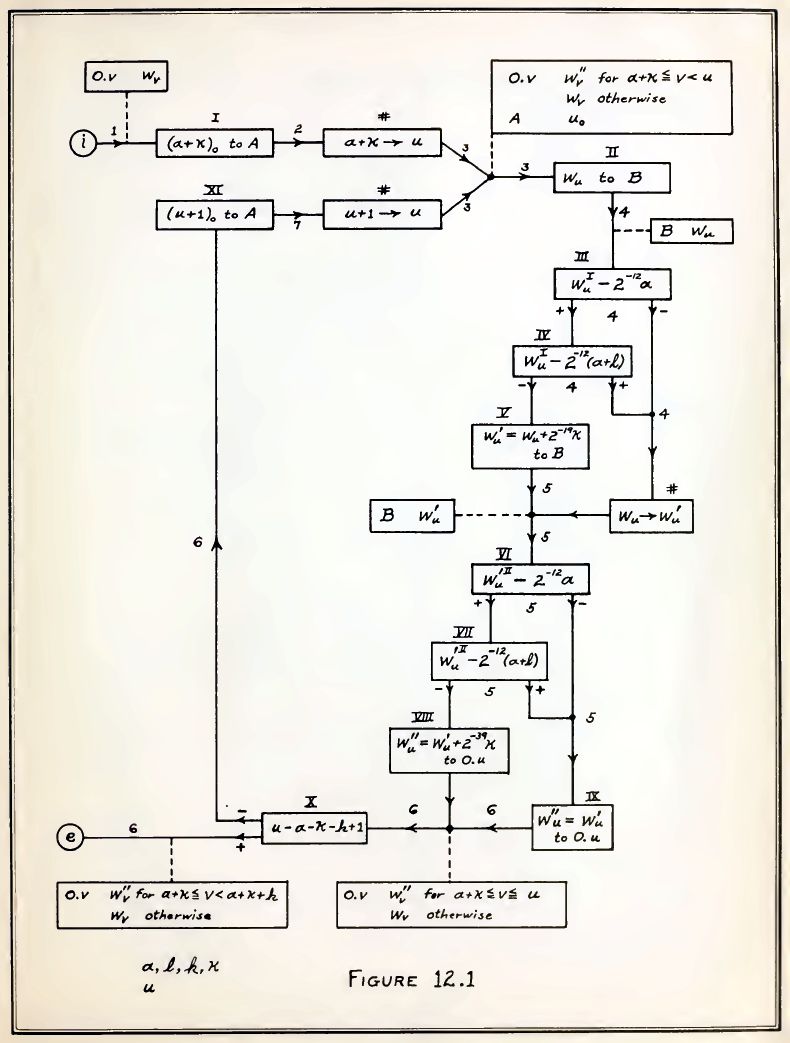
During and after World War II von Neumann played a central role in wartime scientific efforts and the early development of electronic computing. At Los Alamos he worked on problems related to the atomic bomb and on numerical methods, and he was involved in the early adoption of stochastic techniques such as the Monte Carlo method. His "First Draft of a Report on the EDVAC" summarized ideas about a stored‑program architecture and influenced subsequent machine designs; the architecture that bears his name describes a computer in which instructions and data share memory.
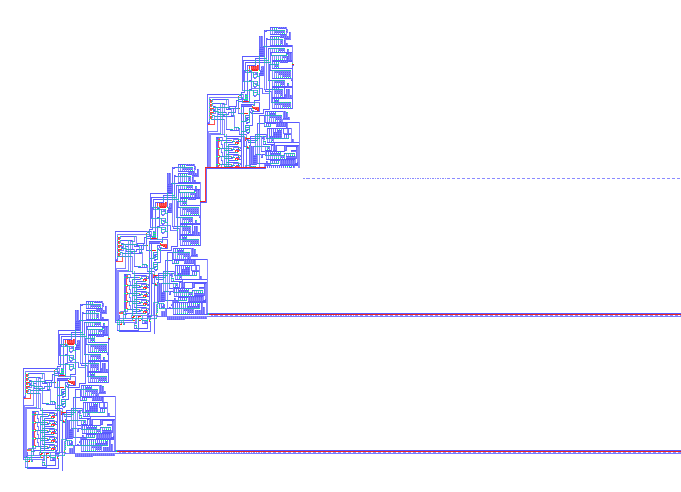
Beyond hardware, von Neumann anticipated ideas such as cellular automata and self‑replicating systems, and he advised government and industrial projects on computation, systems design, and simulation. His practical influence extended from laboratory algorithms to national policy on scientific research and technology.
Mathematical style and legacy
Von Neumann combined conceptual clarity with technical precision. In mathematical physics he helped make the formal structure of quantum mechanics precise, introducing tools like density matrices and entropy measures that remain central. In analysis and algebra his work on operator algebras provided a language that connects quantum theory, probability, and geometry.
In economics and social science his collaboration on game theory created a framework for studying strategic behaviour and introduced concepts still used in economics, political science, and evolutionary theory. His influence on numerical methods and algorithmic thinking underpins much of modern scientific computing.
Career, peers, and enduring importance
Von Neumann was associated with institutions such as the Institute for Advanced Study and collaborated with many leading scientists of his era. He was often grouped with other exceptionally talented Hungarian émigrés — sometimes called the "Martians" — including Edward Teller, Paul Erdős, Leó Szilárd and others. His work left a lasting imprint across mathematics, physics, economics, and computing; concepts bearing his name continue to appear in research, engineering, and education.
Today von Neumann is remembered as a polymath whose rigorous, application‑oriented approach accelerated the mathematization of multiple disciplines. Students and practitioners study his formulations both for their historical importance and for their continued utility in theory and practice.
Further reading and archival materials are available through specialized collections and institutional histories; introductory expositions and technical treatments can be found in texts on mathematical physics, operator algebras, game theory, and computer architecture. For general audiences, surveys of his life emphasize the combination of prodigious talent, broad curiosity, and deep influence that characterizes his legacy.
More on von Neumann · Mathematical work · Physics contributions
Questions and answers
Q: Who was John von Neumann?
A: John von Neumann was a Hungarian-American mathematician and physicist who contributed to various fields like set theory, quantum mechanics, game theory, computer science, and statistics.
Q: What was John von Neumann known for?
A: John von Neumann was known for his exceptional intelligence and being a polymath. He was one of the most important mathematicians of the 20th century and contributed significantly to several fields.
Q: What were the fields in which John von Neumann contributed?
A: John von Neumann contributed to several fields, including set theory, functional analysis, quantum mechanics, ergodic theory, continuous geometry, economics, game theory, computer science, numerical analysis, systems theory, and statistics.
Q: Who were the Martians?
A: The Martians were a group of Hungarian immigrants in the United States who had extraordinary intellect. John von Neumann, Edward Teller, Paul Erdős, Leó Szilárd, and Eugene Wigner were some of the famous members of this group.
Q: What was the significance of John von Neumann's contribution to game theory?
A: John von Neumann made significant contributions to game theory. He is regarded as one of the founders of this field and introduced the concept of the minimax theorem.
Q: Which field did John von Neumann contribute to by introducing the concept of the minimax theorem?
A: John von Neumann introduced the concept of the minimax theorem in game theory.
Q: What is John von Neumann's contribution to computer science?
A: John von Neumann contributed to computer science in various ways. He was instrumental in designing the architecture of modern computers and also worked on the development of programming languages.
Related articles
Author
AlegsaOnline.com John von Neumann: mathematician, physicist, and architect of modern computing Leandro Alegsa
URL: https://en.alegsaonline.com/art/122688
Sources
- encarta.msn.com : "John von Neumann"
- wikidata.orgQ17455.html : wikidata.orgq17455.html
- dl.acm.org : 81100490404
- authority.bibsys.no : 90111628
- catalogo.bne.es : XX1047593
- catalogue.bnf.fr : cb11917576c
- data.bnf.fr : (data)
- biografischportaal.nl : 99135541
- cantic.bnc.cat : a11192665
- dblp.org : 20/6013
- d-nb.info : 118770314
- isni.org : 0000 0001 1031 6592
- id.loc.gov : n50021202
- kopkatalogs.lv : 000133423
- genealogy.math.ndsu.nodak.edu : 53213