
John Mayow: 17th-century pioneer of pneumatic chemistry and respiration research
English chemist, physician and physiologist who anticipated the concept of oxygen by identifying an active component of air involved in combustion and breathing.
Overview
John Mayow (1641–1679) was an English physician, physiologist and early chemist who carried out careful experiments on air, combustion and breathing. A Fellow of the Royal Society, he worked during the mid-17th century in what later became known as pneumatic chemistry, seeking chemical explanations for physiological processes.
Image gallery
2 Images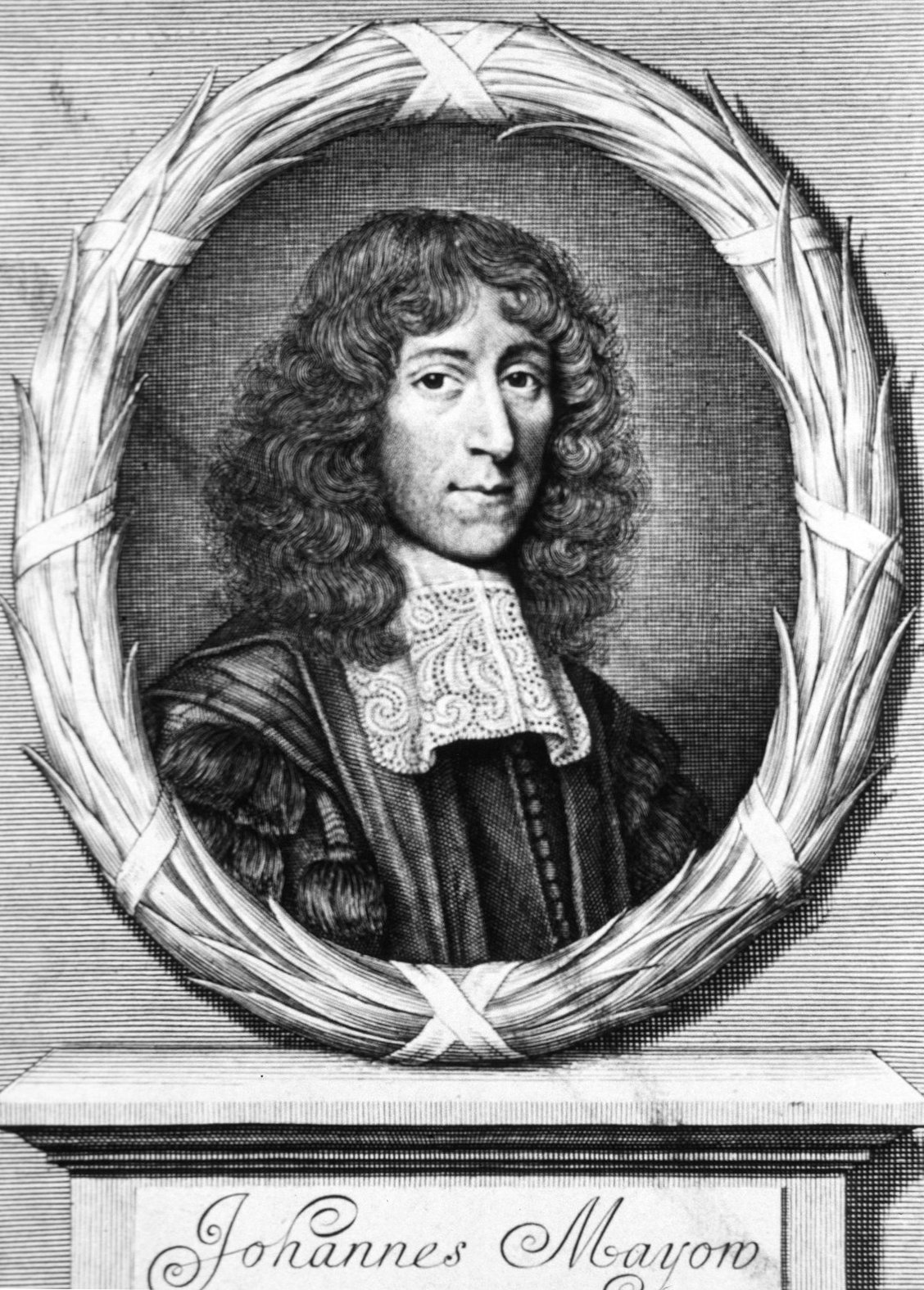

Research and experiments
Mayow argued that only a portion of atmospheric air supports combustion and vital functions. He used simple sealed-vessel experiments and observations of burning materials and living animals to show that a component of air is consumed during both combustion and respiration. Mayow called this active principle spiritus nitro-aereus and described its role in producing heat and sustaining life. His work connected chemical change with physiological activity and can be seen as an early contribution to studies in chemistry and respiration.
Methods and findings
Rather than elaborate apparatus, Mayow relied on repeated, comparative experiments and careful measurement of effects: how long a candle burned, how long an animal survived in a closed space, and how only a limited quantity of air produced those effects. From these results he inferred that a discrete component of air was responsible for supporting combustion and animal life, and that its depletion limited both processes. He also considered the relationship between air and bodily heat and muscle activity.
Legacy and context
Mayow's ideas anticipated later discoveries by chemists who isolated and named oxygen in the 18th century. Though his terminology and some explanations differed from modern chemistry, historians regard him as a significant forerunner to investigators like Priestley, Scheele and Lavoisier. His published observations and experiments—issued around the time of his untimely death—were gradually recognized as important steps toward understanding the composition of air and the chemistry of respiration. For further reading on his scientific role see air composition studies.
Key contributions
- Proposed that only part of air supports combustion and life.
- Linked chemical processes to physiological functions such as breathing and heat production.
- Conducted reproducible experiments that helped establish pneumatic chemistry as a field.
Mayow combined medical training with experimental practice, leaving a concise but influential body of work that bridges 17th-century natural philosophy and later chemical science.
Questions and answers
Q: Who was John Mayow?
A: John Mayow was a chemist, physician, and physiologist.
Q: What is John Mayow famous for?
A: John Mayow is famous for doing early research into respiration and the nature of air.
Q: What is pneumatic chemistry?
A: Pneumatic chemistry is a field that deals with the properties and behavior of gases.
Q: Did John Mayow work in the field of pneumatic chemistry?
A: Yes, John Mayow worked in the field of pneumatic chemistry.
Q: When was John Mayow born and when did he die?
A: John Mayow was born in 1641 and he died in 1679.
Q: What was one of John Mayow's research areas?
A: One of John Mayow's research areas was respiration.
Q: What is FRS?
A: FRS stands for Fellow of the Royal Society, a prestigious scientific organization in the United Kingdom.
Related articles
Author
AlegsaOnline.com John Mayow: 17th-century pioneer of pneumatic chemistry and respiration research Leandro Alegsa
URL: https://en.alegsaonline.com/art/122572