
John Marshall: Chief Justice and Architect of American Constitutional Law
John Marshall (1755–1835), longest-serving Chief Justice of the United States, established judicial review and shaped federal constitutional doctrine through landmark opinions and institutional leadership.
Overview
John Marshall (September 24, 1755 – July 6, 1835) was an American statesman and prominent jurist whose decisions as Chief Justice transformed the role of the judiciary in the United States. A leading figure in early national government, Marshall helped define the relationship between the federal government and the states and clarified the meaning of the Constitution in ways that endure. He has been credited with giving the Supreme Court a central and independent position within the American system of separated powers.
Image gallery
10 Images
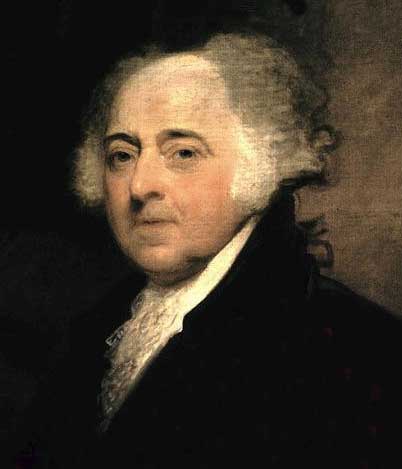


Early life and political career
Born in the Shenandoah Valley of the Commonwealth of Virginia, Marshall served in the Revolutionary War and built a successful law practice before entering public life. He represented his state in Virginia politics and served a term in the United States House of Representatives. In the final months of the Adams administration he was appointed United States Secretary of State under President John Adams, a post he held briefly before being elevated to the Supreme Court bench.
Chief Justice: appointment and institutional impact
Named Chief Justice on February 4, 1801, Marshall became the longest-serving leader of the Supreme Court, remaining in that office until his death in 1835. During his thirty-year tenure he pursued a consistent program: strengthen the judiciary, assert the supremacy of the Constitution, and promote a strong, energetic national government. Central to this program was the doctrine of judicial review, the authority of courts to invalidate statutes that conflict with the Constitution, which Marshall articulated and applied when appropriate.
Notable opinions and legal principles
Marshall wrote several landmark opinions that shaped constitutional law and federalism. His rulings often favored national over state power while recognizing limits on federal reach. Important cases include:
- Marbury v. Madison – established the principle that the Supreme Court can declare acts of Congress unconstitutional, grounding judicial review.
- McCulloch v. Maryland – affirmed federal supremacy and a broad reading of Congress's enumerated powers, including the constitutionality of a national bank.
- Gibbons v. Ogden – interpreted the Commerce Clause to give Congress wide authority over interstate commerce.
- Cohens v. Virginia – asserted the Court's authority to review state criminal judgments in matters involving federal law.
Philosophy and significance
Marshall approached constitutional questions with an eye toward institutional stability and national cohesion. He favored an expansive interpretation of implied powers to allow the federal government to meet the young nation's needs, while also insisting that the Constitution is the supreme law that binds all branches and levels of government. Through clear, reasoned opinions he made legal doctrines accessible and durable, helping to professionalize the Court and to foster public respect for judicial decisions.
Legacy, controversies, and assessment
Marshall's impact is widely acknowledged: he established the Court as a coequal branch and shaped core doctrines of federalism and separation of powers. Critics note that his decisions sometimes reflected Federalist political priorities and that Marshall did not challenge entrenched social institutions of his era. Historians and jurists continue to debate the balance he struck between national authority and individual liberty, yet his role in forming an operational constitutional order is undisputed.
For further reading on Marshall's life and jurisprudence, see general biographies and legal histories that examine cases, the early republic, and the Court's institutional development. His tenure remains a central subject in studies of constitutional law and American political development.
Related topics to explore: the evolution of American constitutional law, the history of the Chief Justice role, and the origins and consequences of judicial review in democratic systems.
Additional resources and reference collections are available from archival materials and curated legal libraries and institutions: see institutional guides and primary documents for Marshall's opinions and correspondence at specialized repositories and digital collections (overview, legal works, congressional records, presidential papers, State Department materials, Virginia records, Supreme Court archives, constitutional analyses, Chief Justice histories, judicial review studies).
Questions and answers
Q: Who was John Marshall?
A: John Marshall was an American statesman and jurist who shaped American constitutional law and made the Supreme Court more powerful.
Q: What positions did John Marshall hold in the United States government?
A: John Marshall worked in the United States House of Representatives from March 4, 1799, to June 7, 1800, and, under President John Adams, was Secretary of State from June 6, 1800, to March 4, 1801. He served as Chief Justice of the United States from 1801 until his death in 1835.
Q: What party did John Marshall support?
A: John Marshall was a leader of the Federalist Party.
Q: What was John Marshall's most important addition to the American legal system?
A: John Marshall's most important addition to the American legal system was judicial review; the power to stop laws that violate the Constitution.
Q: Why has John Marshall been called the one that made the judicial branch special and powerful?
A: John Marshall has been called the one that made the judicial branch special and powerful because he shaped American constitutional law, made the Supreme Court more powerful, and introduced judicial review.
Q: What did John Marshall do to balance the power between the federal and state government?
A: John Marshall balanced the power between the federal and state government by ensuring that federal law was more powerful than state law and agreeing with an expansive reading of the enumerated powers.
Q: How long did John Marshall rule the Supreme Court?
A: John Marshall ruled the Supreme Court for thirty years, making him the longest working Chief Justice in Supreme Court history.
Related articles
Author
AlegsaOnline.com John Marshall: Chief Justice and Architect of American Constitutional Law Leandro Alegsa
URL: https://en.alegsaonline.com/art/122564