
John Howard (Australian politician)
John Howard (born 1939) was Australia's 25th prime minister (1996–2007), a long-serving Liberal Party leader and federal MP noted for economic reform, gun-law changes and a close alliance with the United States.
Overview
John Winston Howard (born 26 July 1939) is an Australian former politician who served as the 25th Prime Minister of Australia from 11 March 1996 to 3 December 2007. He led the federal government for over eleven years, making him the second longest-serving Australian prime minister after Robert Menzies. A member of the Liberal Party, Howard was a prominent figure in Australian public life for more than three decades.
Image gallery
10 Images


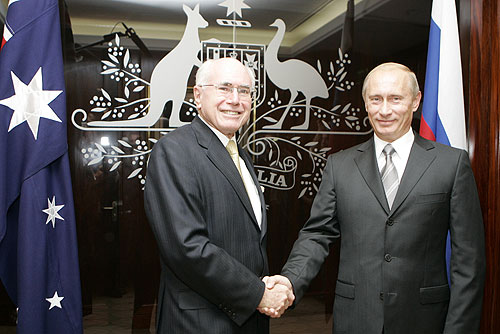


Early life and political rise
Trained as a lawyer, Howard entered federal politics in the mid-1970s and remained a member of parliament from 1974 until his defeat in 2007. In the late 1970s and early 1980s he held senior economic office in the government led by Malcolm Fraser, serving as Treasurer. That period shaped his reputation as a fiscal conservative. During the 1980s and early 1990s he established himself as a leading figure in his party and in national debates over economic and social policy.
Prime ministership: key policies and events
As prime minister, Howard's government pursued a combination of market-oriented economic measures, national security initiatives and social policy reforms. Notable themes of his time in office include strengthening the alliance with traditional partners, addressing domestic security concerns, and reforming taxation and industrial relations. Some measures and episodes commonly associated with his government include:
- Economic reform: introduction of broad-based tax changes and a focus on budget discipline and economic competitiveness.
- Gun law reform: major changes to firearms regulation following a mass shooting in 1996, which included tighter controls and buyback programs.
- Industrial relations: reforms aimed at altering workplace regulation and the balance between employers and unions.
- Foreign and defence policy: close cooperation with allies and deployments of Australian forces overseas in the context of post-2001 security concerns.
Later career and defeat
After more than a decade in government, Howard's coalition lost the 2007 federal election to the Australian Labor Party led by Kevin Rudd. In that election Howard also lost his own parliamentary seat to Maxine McKew, an event that made him the second sitting Australian prime minister to be unseated at his constituency at an election — the first being Stanley Bruce in 1929. His departure marked the end of continuous service in federal parliament that began in 1974.
Legacy and assessment
Howard's legacy is viewed as mixed and remains the subject of debate. Supporters credit his government with sustained economic growth, lower government debt levels during much of his tenure, decisive action on gun control, and firm international alliances. Critics point to contentious industrial relations changes, difficult debates over immigration and Indigenous affairs, and controversies linked to foreign deployments. His long tenure ensured that many of his policies and decisions have had enduring influence on national institutions and public debates.
Notable distinctions
Among the notable facts about Howard's career are his lengthy period in office and his unusual electoral defeat in 2007. He is often referenced in discussions about modern Australian political history as a leader whose government oversaw significant economic and social changes at the turn of the 21st century. For further basic information, see primary resources and biographies that document his time as leader and minister under both conservative and subsequent governments.
References within this summary point to contextual sources: his prime ministership (Prime Minister), national context (Australia), party affiliation (Liberal Party), parliamentary service (parliament), service under Malcolm Fraser, later political opponents such as Bob Hawke, his 2007 opponent Kevin Rudd, and the historical parallel with Stanley Bruce.
Questions and answers
Q: Who is John Winston Howard?
A: John Winston Howard is a former Australian politician who served as the 25th Prime Minister of Australia from 1996 to 2007.
Q: What political party was John Howard a member of?
A: John Howard was a member of the Liberal Party.
Q: What was John Howard's profession before he became a politician?
A: John Howard was a lawyer before he became a politician.
Q: How long was John Howard in parliament?
A: John Howard was in parliament for 33 years, from 1974 until 2007.
Q: What government position did John Howard hold from 1977 to 1983?
A: From 1977 to 1983, John Howard was the Treasurer in Malcolm Fraser's government.
Q: Who did John Howard lose to in the 2007 election?
A: John Howard lost to Kevin Rudd in the 2007 election.
Q: Who did John Howard lose his parliamentary seat to in 2007?
A: John Howard lost his parliamentary seat to Maxine McKew in 2007, becoming the second prime minister to lose a seat after Stanley Bruce in 1929.
Related articles
Author
AlegsaOnline.com John Howard (Australian politician) Leandro Alegsa
URL: https://en.alegsaonline.com/art/122504
Sources
- primeministers.naa.gov.au : "Australia's Prime Ministers - Fast Facts - Howard"
- primeministers.naa.gov.au : "Australia's Prime Ministers - Meet a PM - Howard"
- smh.com.au : "Tin soldered for the King in Howard's home"
- smh.com.au : "How Labor's machine won Asian votes for McKew - National - smh.com.au"