
John Adams: Founding Father, Vice President, and Second President of the United States
Overview of John Adams (1735–1826): his early life, legal and diplomatic career, vice presidency, presidency, family and lasting legacy among the Founding Fathers.
John Adams (October 30, 1735 – July 4, 1826) was a leading American statesman and political thinker who served as the nation's first vice president and its second president. He played a central role in the struggle for independence, in early diplomacy for the United States, and in shaping the institutions of the new republic. Later generations remember him both for his public career and for his long correspondence with his wife, Abigail.
Image gallery
10 Images


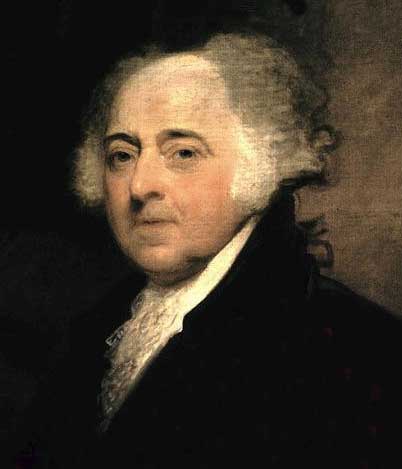


Early life and education
Adams was born in Braintree, in colonial Massachusetts. He attended Harvard College and trained as a lawyer. His legal practice brought him into the public controversies of the 1760s; he took cases that earned him a reputation for conscience and independence, most famously defending British soldiers after the Boston Massacre.
Political career and diplomacy
Active in local and colonial politics, Adams became a prominent advocate for independence in the Continental Congress. He helped press for the nomination of George Washington as commander and worked on committees dealing with foreign relations. As a diplomat in Europe he negotiated with French and Dutch officials and helped secure loans and recognition that were vital to the war effort and to the Treaty of Paris that ended the Revolutionary War.
- First Vice President (1789–1797)
- Second President (1797–1801)
Presidency and political stance
As a Federalist president, Adams presided during tense international conflicts and domestic political disagreements. His administration resisted revolutionary France, strengthened the navy, and sought to preserve national sovereignty. Controversial measures taken by his administration and by Federalist allies provoked strong opposition from Republicans led by Thomas Jefferson; the bitter election of 1800 resulted in Adams's defeat. His conduct and decisions are often judged in light of the difficult post-revolutionary international environment and the evolving American party system.
Family, writings, and legacy
Adams married Abigail Smith in 1764; their intimacy of thought and politics is preserved in many letters that are valued historical sources. Their son, John Quincy Adams, later became president. Adams was related to and politically associated with other leaders of the era, including Samuel Adams and other New England patriots (fellow Founding Fathers). Historians note his emphasis on balanced government and rule of law. He died on July 4, 1826, the same day as Thomas Jefferson, a striking coincidence frequently remarked upon. For biographical resources and original documents see Abigail and John Adams collections and other scholarly archives.
Notable facts: Adams's career spanned the colonial, revolutionary and early national periods; he is remembered both for practical diplomacy and for extensive political writing that influenced the early constitution and institutions of the United States.
Questions and answers
Q: Who was John Adams?
A: John Adams was the second president of the United States and the first vice president of the United States.
Q: When was John Adams born?
A: John Adams was born on October 30, 1735.
Q: Where was John Adams born?
A: John Adams was born in Braintree, Massachusetts.
Q: Who were John Adams' parents?
A: John Adams' parents were Lt. Col. John Adams, Sr. and Susanna Boylston.
Q: Was John Adams related to Samuel Adams?
A: Yes, John Adams was the cousin of the philosopher and fellow Founding Father Samuel Adams.
Q: Where did John Adams go to college?
A: John Adams went to Harvard College.
Q: Who did John Adams marry?
A: John Adams married Abigail Adams in 1764.
Related articles
Author
AlegsaOnline.com John Adams: Founding Father, Vice President, and Second President of the United States Leandro Alegsa
URL: https://en.alegsaonline.com/art/122332
Sources
- law.umkc.edu : "Key Figures in the Boston Massacre Trial"