
Johannes Ockeghem: Franco-Flemish Master of the Early Renaissance
Composer Johannes Ockeghem (c.1410–1497) was a leading Franco‑Flemish figure whose complex polyphony, canonic technique and expressive masses shaped late 15th‑century sacred music and influenced later masters.
Overview
Johannes Ockeghem was a central composer and teacher of the Franco‑Flemish tradition whose career spanned the mid and late 15th century. Born near Saint‑Ghislain in what is now Belgium around 1410, he spent much of his working life in service to the French crown and died in Tours, France on 6 February 1497. As a composer he is often placed between the generation of Guillaume Dufay and the later mastery of Josquin des Prez.
Image gallery
5 Images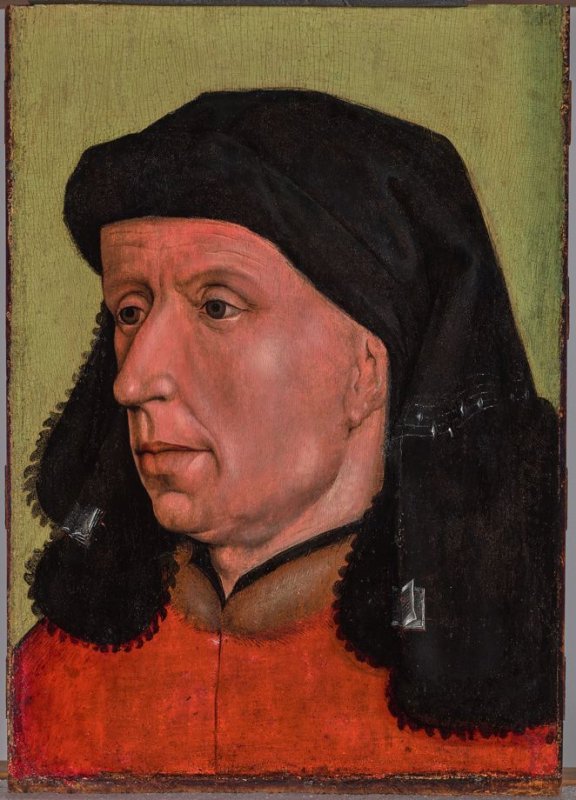


Life and career
Ockeghem served for decades in the royal chapel of France, where he worked as a singer, composer and musical administrator during a period of close cultural exchange across the Burgundian Netherlands and the French court. His appointments placed him at the center of elite liturgical and ceremonial music, and contemporaries admired him both for his practical leadership and his skill at composition. He was celebrated in his own lifetime and remembered by later generations as a master teacher and innovator within the emerging Renaissance style.
Musical style and techniques
Ockeghem's music is noted for its complex counterpoint, long melodic lines, and subtle treatment of rhythm and voice‑leading. He used cantus‑firmus procedures but extended them with equal treatment of voices, unusually low bass ranges for the period, and sophisticated mensural canons. Works such as the famous late‑15th‑century masses show an economy of material combined with contrapuntal ingenuity: parts interweave without obvious hierarchical melody lines, producing a dense but fluid texture.
Major works
- Missa prolationum (double mensuration canon) — often cited as a high point of technical ingenuity.
- Missa Mi‑mi — notable for its use of modality and structure.
- Missa cuiusvis toni — a demonstration of modal flexibility, usable in any mode.
- Several motets, chansons and an early polyphonic Requiem that has been transmitted under his name but is sometimes debated by scholars.
Legacy and influence
Ockeghem bridged the medieval and Renaissance practices, influencing a generation of northern composers and contributing to the evolution of mass composition and sacred polyphony. His technical achievements — particularly in canon and mensural manipulation — were studied and emulated by later masters. Although the surviving corpus is modest compared with later eras, his works were widely copied and admired, securing his reputation as one of the most important figures of the Franco‑Flemish School.
For further reading and source materials, see authoritative collections and modern scholarly introductions to 15th‑century Franco‑Flemish music. Scholarly editions and recordings make his challenging music accessible to performers and listeners today.
More on Ockeghem's dates • Tours connections • Context in France • Death notice • Role as composer • 15th century background • Dufay and predecessors • Josquin and successors
Questions and answers
Q: Who was Johannes Ockeghem?
A: Johannes Ockeghem was a composer from the Franco-Flemish School who lived during the last half of the 15th century.
Q: When and where was Ockeghem born?
A: Ockeghem was born in Saint-Ghislain, near Mons, Belgium, around 1410.
Q: When did Ockeghem die?
A: Ockeghem died on February 6, 1497, in Tours, France.
Q: What is the Franco-Flemish School?
A: The Franco-Flemish School was a group of composers who came from the area which is now Belgium and were active during the Renaissance period.
Q: Who is Ockeghem compared to in terms of importance?
A: Ockeghem is often thought of as the most important composer between Dufay and Josquin des Prez.
Q: What were Ockeghem's strengths as a musician?
A: Ockeghem was an excellent choirmaster and teacher.
Q: Where did Ockeghem spend most of his life working?
A: Ockeghem spent most of his life working for the French royal court.
Related articles
Author
AlegsaOnline.com Johannes Ockeghem: Franco-Flemish Master of the Early Renaissance Leandro Alegsa
URL: https://en.alegsaonline.com/art/122278
Sources
- grovemusic.com : groves music online