
Jean‑Baptiste de Lamarck — French naturalist and early proponent of biological change
Jean‑Baptiste de Lamarck (1744–1829) was a French naturalist who proposed an early theory of species change based on environmental influence and use/disuse of organs; he worked on invertebrate classification.
Overview
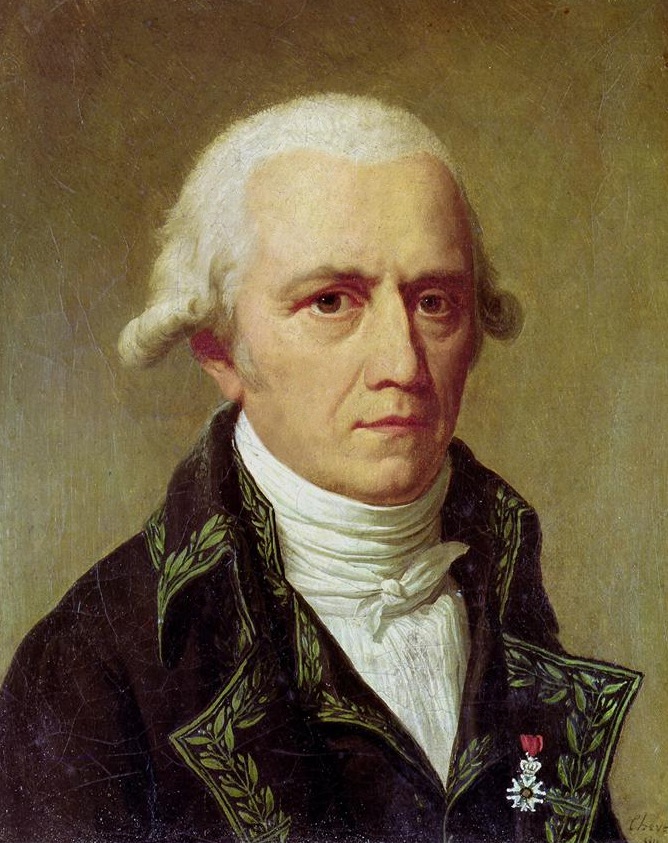
Jean‑Baptiste Pierre Antoine de Monet, Chevalier de la Marck, commonly called Lamarck (1 August 1744 – 18 December 1829), was a French scientist whose work helped organize knowledge of animals and who argued that living forms change through natural processes. Trained first as a soldier and later active in scholarly circles, he is remembered for early evolutionary thinking and for detailed studies of invertebrates.
Image gallery
6 Images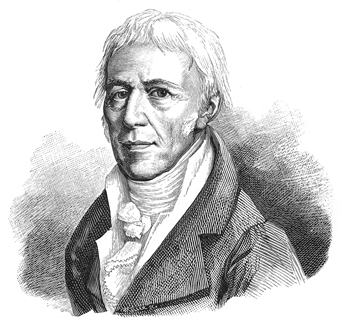


Career and positions
Lamarck served in the French army in his youth and subsequently turned to medicine and natural history. He became a professional naturalist, working at the Muséum national d'Histoire naturelle in Paris where he held a chair devoted to invertebrate animals. He was also associated with institutions such as the French Academy, contributing to taxonomy and museum collections.
Major works and concepts
- Système des animaux sans vertèbres (1801): a comprehensive classification of invertebrates that influenced zoology.
- Philosophie zoologique (1809): a systematic presentation of his ideas about how living forms transform over time.
Theory of biological change
Lamarck proposed that organisms are influenced by their environment and by the habitual use or disuse of body parts. He argued that changes acquired during an individual's life could be transmitted to offspring, producing gradual transformation of species. Although this mechanism—often called "Lamarckism"—was later replaced by natural selection, Lamarck is credited with emphasizing that evolution proceeds by natural laws rather than by fixed, unchanging creation. His name is closely linked to early debates about the causes of species change and adaptation.
Legacy and modern perspective
Historically, Lamarck was one of the first well‑known scientists to present a coherent, testable account of organic change. Darwinian natural selection provided a different mechanism that dominated 19th‑ and 20th‑century biology, but modern discoveries about gene regulation and non‑genetic inheritance have led scholars to reassess some aspects of environmental influence on heredity. Lamarck's role is therefore seen as foundational for thinking about the dynamics of life and for framing questions about how organisms respond to their surroundings and change through time, contributing to ongoing discussions of evolution.
Notable facts
- He popularized the systematic study of invertebrates and helped professionalize zoological classification.
- His career bridged the ancien régime and post‑revolutionary scientific institutions in France.
- While his specific mechanism lost favor, his insistence that species can change under natural processes influenced later evolutionary thought.
Questions and answers
Q: Who is Jean-Baptiste de Lamarck?
A: Jean-Baptiste de Lamarck was a French soldier, naturalist, and a member of the French Academy.
Q: When was he born?
A: He was born on 1st August 1744.
Q: When did he die?
A: He died on 18th December 1829.
Q: What is Lamarck known for?
A: Lamarck is known for being one of the first people to suggest that organisms changed in accordance with natural laws, which is known as evolution.
Q: What was Lamarck's occupation?
A: Lamarck's occupation was a soldier and a naturalist.
Q: In which academic institution was Lamarck a member?
A: Lamarck was a member of the French Academy.
Q: What did Lamarck suggest about the way organisms change?
A: Lamarck suggested that organisms changed in accordance with natural laws, which is now known as evolution.
Related articles
Author
AlegsaOnline.com Jean‑Baptiste de Lamarck — French naturalist and early proponent of biological change Leandro Alegsa
URL: https://en.alegsaonline.com/art/121617
Sources
- ucmp.berkeley.edu : ucmp.berkeley.edu/history/lamarck.html
- simple.wiktionary.organticipation.html : anticipated
- victorianweb.org : "Elegy of Lamarck"