
James Prescott Joule: life, experiments, and legacy in energy science
James Prescott Joule (1818–1889), English physicist whose experiments established the mechanical equivalent of heat, formulated Joule's law for electrical heating, and helped found modern thermodynamics.
James Prescott Joule (24 December 1818 – 11 October 1889) was an English scientist whose careful measurements and experiments established central ideas about energy and heat. Born in Salford, near Manchester, he worked from a private laboratory while supporting himself from the family brewing business. Though trained outside a formal university setting, Joule became widely respected for the precision of his experimental methods and for conclusions that helped transform natural philosophy into modern physics.
Image gallery
10 Images





Major discoveries and concepts
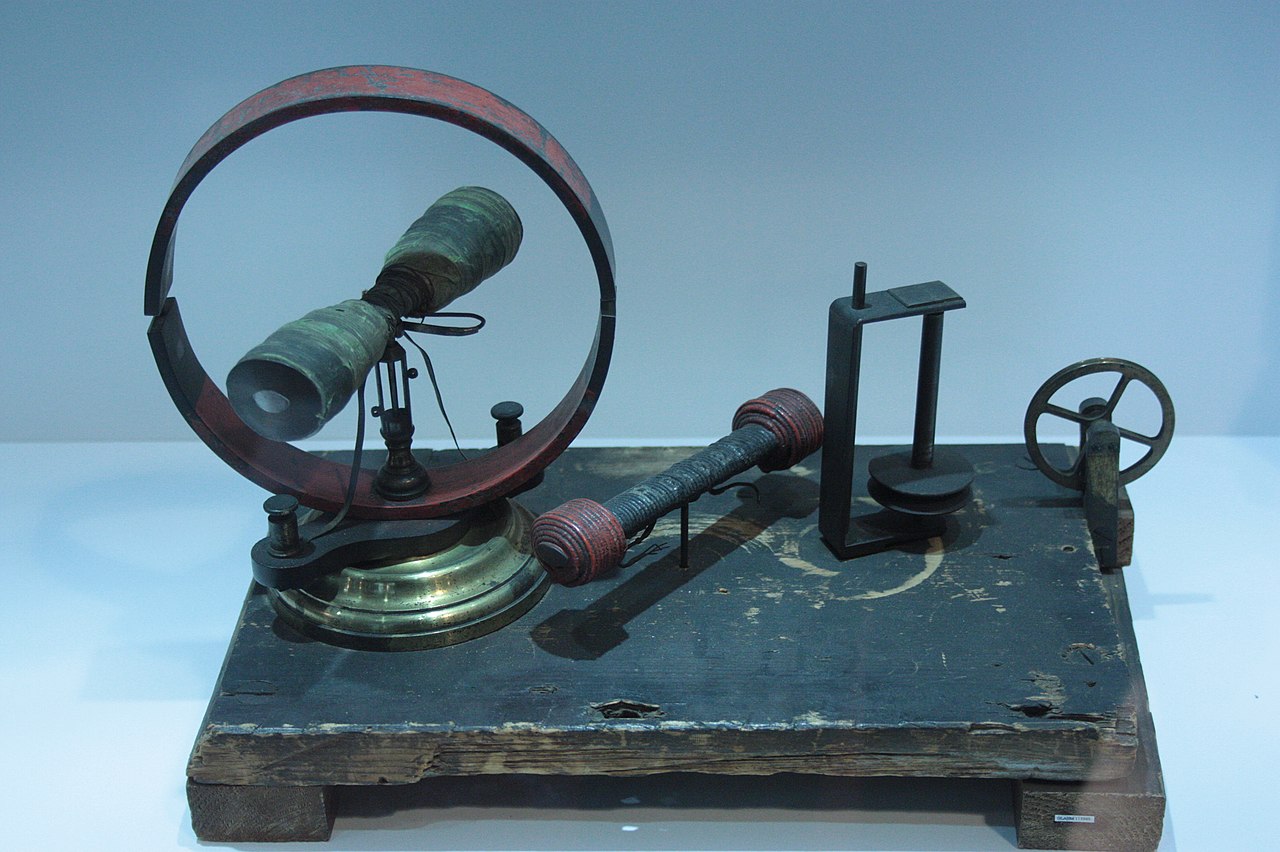
Joule is best known for three interrelated achievements. First, his studies of electrical heating led to what is commonly called Joule's law, which quantifies how an electric current produces heat in a conductor. In practical form it shows that the rate of heat production is proportional to the resistance of the conductor and to the square of the current flowing through it. Second, through mechanical experiments — most famously a paddle-wheel device — he demonstrated a consistent relation between mechanical work and the amount of heat produced, an empirical step toward the principle of conservation of energy and the mechanical equivalent of heat. Third, in collaboration with William Thomson, he investigated the temperature change that occurs when a gas expands, a phenomenon now called the Joule–Thomson effect.
Experiments and methods
Joule's approach emphasized reproducible, quantitative measurement. He compared electrical heating and frictional heating, used well-insulated calorimeters to detect small temperature changes, and sought to eliminate systematic error. His paddle-wheel experiment converted controlled mechanical work into heat and allowed him to estimate a constant connecting work and heat. These laboratory practices influenced later experimental standards in physics and engineering.
Context and impact
At a time when the nature of heat was debated, Joule's results contributed to replacing the caloric theory with an energy-based view. The SI unit of energy, the joule, was later named in his honour; it is equivalent to one watt multiplied by one second. Joule's work intersects electrical science, thermodynamics and engineering practice and helped set the conceptual ground for the first law of thermodynamics — energy conservation.
Legacy and notable facts
- Joule pursued research as an independent investigator rather than as a university professor, yet collaborated with leading theorists of his era.
- His collaboration with Thomson clarified cooling and heating effects during gas expansion, with practical consequences for refrigeration and high-pressure engineering.
- His name is preserved in both the unit of energy (joule) and in laws and effects cited across physics, electrical engineering and chemistry.
- For further reading on his life and experiments see biographical and technical resources: biography and historical summaries of his work (research overview).
Joule's careful quantification of processes that transform one form of energy into another remains a cornerstone of physical science and engineering. His methods exemplify how precise measurement can resolve theoretical disputes and produce broadly applicable laws; his investigations into electrical heating, mechanical work, and gas behaviour continue to be taught as foundational examples in physics courses and practical applications.
Questions and answers
Q: Who was James Prescott Joule?
A: James Prescott Joule was an English physicist born near Manchester.
Q: What was James Prescott Joule's contribution to the world of electricity?
A: James Prescott Joule is best known for discovering Joule's law, which describes electric heating.
Q: What does Joule's law say?
A: Joule's law says that the amount of heat produced each second in a conductor by a current of electricity is proportional to the resistance of a conductor and to the square of the current.
Q: What is the unit for Joule's law?
A: The unit for Joule's law is the joule, which is equal to one watt-second.
Q: Who did James Prescott Joule work with to discover the Joule-Thomson effect?
A: James Prescott Joule worked with William Thomson to discover the Joule-Thomson effect.
Q: What is the Joule-Thomson effect?
A: The Joule-Thomson effect is the principle that the temperature of gas falls as gas expands.
Q: When did James Prescott Joule live and when did he die?
A: James Prescott Joule was born on December 24, 1818 and died on October 11, 1889.
Related articles
Author
AlegsaOnline.com James Prescott Joule: life, experiments, and legacy in energy science Leandro Alegsa
URL: https://en.alegsaonline.com/art/121356
Sources
- johncassidy.org.uk : "John Cassidy:Manchester Sculptor"
- wikidata.orgQ8962.html : wikidata.orgq8962.html
- catalogue.bnf.fr : cb12140688b
- data.bnf.fr : (data)
- cantic.bnc.cat : a11152813
- d-nb.info : 118776436
- isni.org : 0000 0000 8107 3121
- id.loc.gov : n79007744
- id.ndl.go.jp : 00620901
- aleph.nkp.cz : mzk2003202348
- nla.gov.au : 35724606
- uli.nli.org.il : 000072388
- data.bibliotheken.nl : 075184877
- snaccooperative.org : w64f1v1q
- idref.fr : 029871980