
James Lovelock: inventor, independent scientist and proponent of the Gaia idea
English independent scientist (1919–2022) known for the Gaia hypothesis, atmospheric measurements of CFCs, invention of sensitive detectors, and public writings on environment and future risks.
Overview
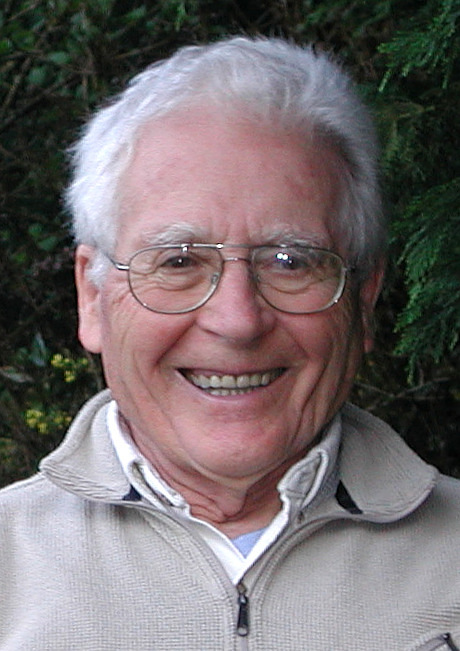
James Ephraim Lovelock (26 July 1919 – 26 July 2022) was an English independent scientist, inventor and author whose work crossed chemistry, earth science and environmental thought. He is best known for formulating the Gaia hypothesis, a proposal that views the living and non‑living parts of Earth as interacting in ways that can produce stable conditions for life. In later decades he became a widely read commentator on environmental risk, climate change and technology.
Image gallery
5 Images



Early work and instrument development
Lovelock trained in chemistry and moved between academic, industrial and independent research roles. He developed sensitive analytical instruments to measure trace gases in the atmosphere, most notably an electron capture detector that made possible the detection of halogenated compounds at extremely low concentrations. This invention proved important for field studies of pollutants and for practical environmental monitoring.
The Gaia hypothesis
In the 1970s Lovelock proposed what he called the Gaia hypothesis: the idea that life and the Earth's environment form a coupled system that can regulate planetary conditions. He presented Gaia as a way to understand global homeostasis — for example, how atmospheric composition, ocean salinity and climate can remain within ranges that support life. The hypothesis was initially controversial in parts of the scientific community because it appeared teleological to some critics; over time the concept has been refined and various formulations range from a poetic metaphor to testable scientific models of feedbacks between organisms and the environment.
Atmospheric research and CFC detection
Applying his detector to air samples, Lovelock was among the first to demonstrate that chlorofluorocarbons (CFCs) were widespread in the atmosphere. In the late 1960s he reported detectable levels of CFC‑11 above remote locations, recording concentrations such as about 60 parts per trillion over Ireland. He later measured CFC‑11 concentrations on a transect from the northern hemisphere toward the Antarctic aboard the research vessel RRS Shackleton. These observations helped establish that human-made compounds could circulate globally and influence the chemistry of the upper atmosphere.
Public engagement, later views and controversies
Lovelock wrote several books and many articles aimed at a general audience; his writing popularized ideas about Earth's systems and future environmental challenges. Although he warned strongly about climate change and biodiversity loss, he also argued controversially for considering nuclear power as a low‑carbon option and, at times, expressed pessimism about some geoengineering and conservation strategies. His forthright style and willingness to revise earlier positions made him a prominent and sometimes polarizing public intellectual.
Recognition, works and legacy
He received numerous honors and fellowships during his career, reflected in postnominal distinctions such as CH and CBE and his election as a Fellow of the Royal Society. His collaborations and exchanges with biologists and Earth scientists helped move the Gaia idea from a speculative hypothesis toward more nuanced ecological and geochemical models. Selected themes associated with his work include:
- instrumental innovation for trace‑gas detection;
- conceptual frameworks linking life and environment;
- public communication of environmental risk and technological options (environmentalist, Gaia hypothesis);
- engagement with planetary science and astrobiology questions.
Readers seeking further context can follow institutional and archival material and Lovelock's own books and essays. His work remains influential in discussions about Earth system science, the responsibilities of technology, and the ways human activity is reshaping planetary processes. For concise descriptions of related concepts see references to the biosphere and discussions of self‑regulating systems.
Additional source material and biographical summaries are available through academic and public archives and the many collected interviews and lectures he gave across his long career.
Questions and answers
Q: Who was James Ephraim Lovelock?
A: James Ephraim Lovelock was an English independent scientist, environmentalist and futurist.
Q: What is the Gaia hypothesis?
A: The Gaia hypothesis, proposed by James Lovelock, suggests that the biosphere is a self-regulating system.
Q: What did James Lovelock discover in the atmosphere?
A: In the late 1960s, James Lovelock was the first to detect the widespread presence of CFCs (chlorofluorocarbons) in the atmosphere.
Q: How much concentration of CFC-11 did James Lovelock find over Ireland?
A: James Lovelock found a concentration of 60 parts per trillion of CFC-11 over Ireland.
Q: Where did James Lovelock measure the concentration of CFC-11?
A: James Lovelock measured the concentration of CFC-11 from the northern hemisphere to the Antarctic aboard the research ship RRS Shackleton.
Q: When was James Lovelock born and when did he pass away?
A: James Lovelock was born on 26 July 1919 and passed away on his 103rd birthday, 26 July 2022.
Q: What is James Lovelock's legacy in science?
A: James Lovelock's legacy in science includes being the first to detect the widespread presence of CFCs in the atmosphere and proposing the Gaia hypothesis which suggests that the biosphere is a self-regulating system.
Related articles
Author
AlegsaOnline.com James Lovelock: inventor, independent scientist and proponent of the Gaia idea Leandro Alegsa
URL: https://en.alegsaonline.com/art/121325
Sources
- doi.org : 10.1038/nature.2014.15017
- nature.com : nature.com/articles/230379a0?error=cookies_not_supported&code=39236652-c6ef-4676-ac4d-264…
- nature.com : nature.com/articles/241194a0?error=cookies_not_supported&code=815b8291-2f6b-4069-a731-829…
- sciencedirect.com : sciencedirect.com/science/article/pii/0004698172900765.html
- tellusa.net : tellusa.net/index.php/tellusa/article/view/9731.html
- doi.org : 10.1016/j.gloenvcha.2009.04.001
- earth.geology.yale.edu : "Atmosphere: an ancient carbon mystery"
- doi.org : 10.1126/science.1136110
- ui.adsabs.harvard.edu : 2007Natur.449..403L
- doi.org : 10.1038/449403a
- atmocean.com : Biological Ocean Sequestration of CO2 using atmocean upwelling