
James Hutton: pioneer of modern geology and the concept of deep time
Scottish physician, chemist and naturalist James Hutton (1726–1797) developed the theory that gradual natural processes shape Earth’s surface, founding modern geology and the idea of deep time.
James Hutton was an 18th-century Scottish scientist whose observations and reasoning helped establish geology as a modern science. Trained in medicine, he pursued wide-ranging interests in chemistry, agriculture and natural history rather than practicing medicine, and he presented a coherent view of Earth as the result of ongoing natural processes. For a concise overview of his life and work see biographical summary.
Image gallery
10 Images


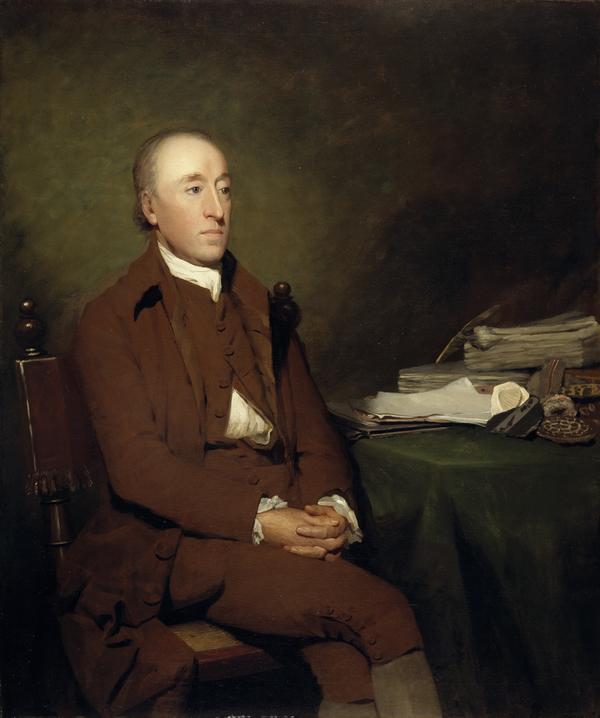


Overview of his ideas
Hutton argued that the same slow processes observed today — erosion, sedimentation, heating and uplift — operating over immense spans of time, can account for the structure and sequence of rock layers. This perspective emphasized what later writers called uniformitarianism, the idea that present processes are the key to understanding the past. His approach contrasted with theories that invoked catastrophic or single-origin accounts for rocks; for further context consult contextual notes and scientific background.
Major contributions
- Deep time: Hutton recognized that the Earth’s history must be vast to allow the slow accumulation and alteration of rocks. See an explanation at deep time resources.
- Rock cycle and plutonism: He described a cycle in which rocks are formed, broken down and reformed, and he argued that many igneous rocks originate from molten material rather than from chemical precipitation — a view known as plutonism; compare with alternative theories.
- Field evidence: Hutton used field observations, notably angular unconformities, to demonstrate repeated episodes of deposition and erosion; see a discussion at field examples.
Life, methods and development of his theory
Born in Edinburgh in 1726, Hutton combined experimental work in chemistry with practical farming experiments on his estates. He balanced laboratory study with careful mapping and examination of rock exposures. He shared and presented his ideas in published essays and in a longer treatment known as the Theory of the Earth; readers can locate primary and secondary sources via primary sources and further reading. Hutton’s method emphasized observation, hypothesis and the search for natural causes rather than appeal to extraordinary events.
Importance and legacy
Hutton’s concepts paved the way for later 19th-century geologists, influencing figures such as Charles Lyell and, indirectly, the development of evolutionary theory. His insistence on gradual change and very long time spans reshaped scientific and public views of Earth’s antiquity. For perspectives on influence and debate see historical perspective and scholarly analysis.
Notable sites and demonstrations
Some of the most famous places associated with Hutton’s field demonstrations include coastal and inland outcrops where angular unconformities and intrusive bodies are visible. These locations remain important teaching sites for geology; curated guides and visitor information are available at site guides, museum references and educational resources.
Questions and answers
Q: Who was James Hutton?
A: James Hutton was a Scottish geologist, physician, naturalist, chemist and experimental farmer.
Q: What did James Hutton study?
A: James Hutton studied medicine.
Q: Did James Hutton ever practice medicine?
A: No, James Hutton never practiced medicine.
Q: What did James Hutton do instead of practicing medicine?
A: Instead of practicing medicine, James Hutton did scientific research, helped to start a chemical industry, and farmed his estate.
Q: What is James Hutton known for?
A: James Hutton is known as one of the founders of modern geology.
Q: How did James Hutton see the Earth?
A: James Hutton saw the Earth as the product of natural forces.
Q: What did James Hutton's book on the Theory of the Earth set out?
A: James Hutton's book on the Theory of the Earth set out theories of geology and geologic time, which supported the theories of plutonism and uniformitarianism.
Related articles
Author
AlegsaOnline.com James Hutton: pioneer of modern geology and the concept of deep time Leandro Alegsa
URL: https://en.alegsaonline.com/art/121314
Sources
- ed.ac.uk : "Millennial Plaques: James Hutton"
- ed.ac.uk : Millennial Plaque
- newyorker.com : "Northern Lights: How modern life emerged from eighteenth-century Edinburgh"
- amnh.org : "James Hutton: the founder of modern geology"
- james-hutton.org : "The Theory of the Earth"
- uwmc.uwc.edu : Theory of the Earth
- uwmc.uwc.edu : Concerning the system of the Earth
- thedispersalofdarwin.blogspot.com : "In retrospect"
- nature.com : V. 425 #6959, p. 665
- books.google.com : The Founders of Geology