
James Hansen — Climate Scientist, NASA Researcher, and Public Advocate
James E. Hansen (born 1941) is an American climatologist who led NASA's Goddard Institute for Space Studies, testified on global warming, advocated a 350 ppm CO2 goal, and remains an influential public voice on climate policy.
James E. Hansen is an American climate scientist whose career has combined research on planetary and Earth atmospheres with sustained public engagement about the risks of human-caused climate change. Born in Denison, Iowa, Hansen trained in astronomy and physics and received his graduate education at the University of Iowa. He spent the bulk of his professional life at the NASA Goddard Institute for Space Studies in New York City, a unit administratively associated with the Goddard Space Flight Center, and later served as an adjunct professor at Columbia University.
Image gallery
10 Images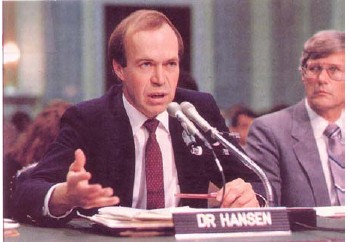






Research and scientific contributions
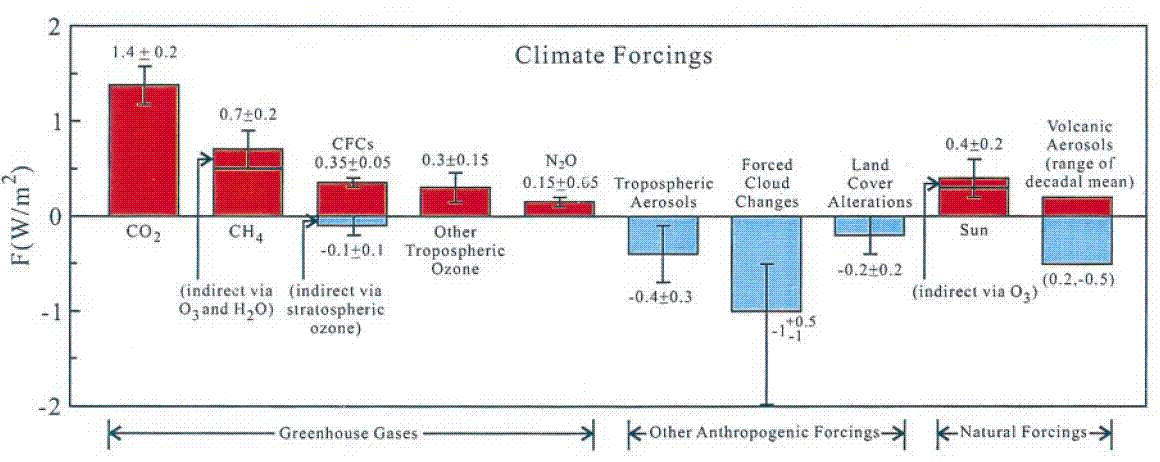
Hansen's scientific work moved from studies of other planets' atmospheres toward detailed investigations of Earth's climate system. He is known for applying observational analysis and numerical climate models to examine how greenhouse gases and aerosol particles influence Earth's radiative balance. His research contributed to improved understanding of how anthropogenic changes in atmospheric composition can alter global temperatures, ocean heat uptake, ice-sheet stability and sea level over different timescales. Discussions of atmospheric greenhouse gas concentrations and historical trends appear frequently in summaries of his findings and public statements about future risks; these issues relate to tracked indicators such as CO2 concentrations and emissions.
Public testimony and role in policy debates
Hansen first gained wide public attention when he testified before the U.S. Congress in the late 1980s, presenting scientific evidence that human activities were contributing to a warming climate. That testimony and subsequent public appearances helped place concerns about global warming on broader political and media agendas. Throughout his career he has repeatedly provided testimony and advisory commentary on climate issues, and he has advocated specific policy responses to reduce emissions and stabilize the climate, often emphasizing the urgency of rapid action.
Policy positions and advocacy
Among Hansen's well-known policy positions is his support for a conservative target for atmospheric carbon dioxide to reduce the risk of long-term, potentially irreversible changes. He has argued in technical papers and public fora that atmospheric CO2 should be reduced toward levels often referenced as 350 ppm to lessen the probability of crossing major climate thresholds. He has also been an outspoken critic of particular government decisions or inaction on climate; for example, he publicly challenged policies of the Clinton-era and Bush-era administrations when he judged them insufficient to address the accelerating risks of warming.
Controversies and engagement
Hansen's advocacy has sometimes been controversial. He has opposed large-scale fossil fuel developments he views as incompatible with climate stabilization, including projects tied to oil sands, and he was a prominent critic of pipeline projects associated with those resources. At the same time, he has urged a pragmatic discussion of low-carbon energy options; in some public statements he has expressed conditional support for advanced nuclear power technologies as part of broader efforts to reduce emissions, while emphasizing the need to limit high-carbon fuels.
Awards, honors and publications
Hansen's scientific and public-service contributions have been recognized by several awards and honors. He was elected to the National Academy of Sciences and has received environmental and science awards including the Heinz Award and shared prizes that acknowledged both research and public engagement. He is the author of numerous peer-reviewed articles and of books aimed at general readers; his trade book Storms of My Grandchildren sets out his perspective on likely impacts of continued high fossil fuel emissions and argues for policy changes to reduce long-term risks.
Legacy, influence and further reading
Hansen's dual role as a researcher and public communicator has contributed to shaping scientific and public debates about climate change. Supporters credit him with helping to translate complex scientific results into messages that influenced policy discussions, while critics have questioned elements of his advocacy strategy or particular prescriptions. For readers seeking primary sources, institutional profiles, technical papers and official testimony provide direct accounts of his research and public statements, including his recorded testimony before lawmakers. For accessible summaries of technical topics he studies, see materials on climate science and, for historical and policy context, reviews of atmospheric CO2 trends and emissions. Biographical and institutional links provide additional context on his background (personal background), career at NASA, affiliations with research centers in New York City and at the Goddard Space Flight Center, and his academic role at Columbia University. Readers interested in debates over specific technologies or projects can consult commentary relating to the oil sands controversy and conversations about nuclear energy. Hansen's career illustrates how scientific research, public communication and policy advocacy can interact in the modern governance of environmental risk.
Questions and answers
Q: When was James E. Hansen born?
A: James E. Hansen was born on March 29, 1941 in Denison, Iowa.
Q: What is the current record level of carbon dioxide in the atmosphere?
A: The current record level of carbon dioxide in the atmosphere is 389 ppm.
Q: What university did Hansen study astronomy and physics at?
A: Hansen studied astronomy and physics at the University of Iowa during the 1960s.
Q: What award did he receive for his research on global warming in 2001?
A: In 2001, Hansen received a US$250,000 Heinz Environment Award for his research on global warming.
Q: How much higher is the current CO2 emissions per capita than pre-industrial revolution levels?
A: The current CO2 emissions per capita are almost 40% higher than pre-industrial revolution levels.
Q: What book has Hansen written about climate change?
A: Storms of My Grandchildren is Hansens first book about climate change.
Q: What open letter did Dr. Hansen co-author in 2013?
A:In 2013, Dr.Hansen co-authored an open letter saying "continued opposition to nuclear power threatens humanity's ability to avoid dangerous climate change."
Related articles
Author
AlegsaOnline.com James Hansen — Climate Scientist, NASA Researcher, and Public Advocate Leandro Alegsa
URL: https://en.alegsaonline.com/art/121304
Sources
- giss.nasa.gov : "Goddard Institute for Space Studies"
- gsfc.nasa.gov : "Goddard Space Flight Center"
- cbsnews.com : "Rewriting The Science"
- nasonline.org : "Directory of the National Academy of Sciences"
- heinzawards.net : "The Heinz Awards"
- poptech.org : poptech.org
- bangordailynews.com : bangordailynews.com
- unfccc.int : Fact sheet: The need for mitigation.
- 350.org : 350 Science
- 350.org.html : 350.org
- washingtonpost.com : Remember This: 350 Parts Per Million
- treehugger.com : 350: The Most Important Number of Your Lifetime
- news.yahoo.com : news.yahoo.com
- wmo.int : wmo.int
- cdiac.ornl.gov : Recent Greenhouse Gas Concentrations