
James Butler, 1st Duke of Ormonde
Anglo‑Irish noble, soldier and statesman (1610–1688) who led Royalist forces in Ireland, served in exile with Charles II, and played a central role after the Restoration.
James Butler, 1st Duke of Ormonde (19 October 1610 – 21 July 1688) was a leading Anglo‑Irish aristocrat, soldier and politician of the 17th century. A member of the long‑established Butler family of Ormond, he became the principal royal agent and military commander in Ireland during the upheavals that accompanied the English Civil Wars and the Cromwellian conquest. His career combined martial command, negotiation with rival factions in Ireland, service in royal exile and high office after the monarchy was restored.
Image gallery
6 Images


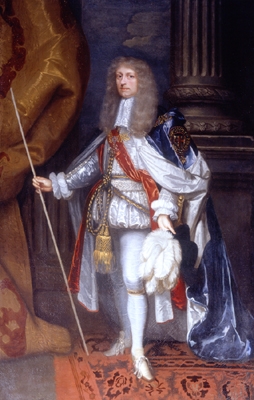


Family background and early life
Born into a prominent landed dynasty that held estates around Kilkenny, Butler was raised in the traditions of both the English and Irish nobility. His upbringing prepared him for responsibilities as a landowner and a courtier. He was Protestant by religion, but his household and political life required frequent dealings with Irish Catholic magnates and the Catholic Confederation that emerged in the 1640s.
Military and political career
During the Irish wars that began in 1641, Butler acted as the leading royalist commander opposing the Irish Catholic Confederation between roughly 1641 and 1647. After a brief period of uneasy local agreements and shifting alliances, he resumed military command when the monarchy’s cause in Ireland collapsed and the threat from parliamentary forces intensified.
- Led Royalist forces in Ireland against the campaigns associated with Oliver Cromwell.
- Engaged in negotiations and local settlement attempts with Irish Confederate leaders.
- Served as a leading representative of the crown in Irish affairs, balancing military and civil duties.
Exile with Charles II and the Restoration
After Royalist defeat in Britain and Ireland, Butler accompanied the court in exile and remained a close supporter of Charles II during the 1650s. He spent time abroad in continental Europe while planning for the monarchy’s return and managing royal interests from abroad (exile). Following the Restoration he was raised to the highest peerage rank and entrusted with major offices, reflecting his long loyalty to the Stuart cause and his experienced knowledge of Irish politics; he was a member of the king’s inner circle and an influential administrator of Irish government, closely associated with Charles II.
Later life and legacy
In later decades Butler held successive high posts and acted as a stabilising — if sometimes controversial — figure in Irish and Anglo‑Irish governance. His career exemplifies the complex loyalties of an Anglo‑Irish magnate in a period of confessional conflict and dynastic change: a royalist soldier, a negotiator with local elites, and a courtier who profited from, and helped shape, the Restoration settlement. Historians note his combination of military competence, political acumen and the difficulties inherent in reconciling competing interests in Ireland.
Notable facts
- Remembered as the most prominent Butler of his generation and a central figure in mid‑17th century Ireland.
- Combined military leadership with diplomatic efforts to maintain royal authority.
- His life illustrates the interplay of family power, religion and politics in the Stuart era.
Questions and answers
Q: Who was James Butler?
A: James Butler was a politician and soldier who lived between 1610 and 1688.
Q: What was Ormonde's role in the fight against the Irish Catholic Confederation?
A: Ormonde was the leader in the fight against the Irish Catholic Confederation from 1641 to 1647.
Q: Who did Ormonde fight against during his time as top commander of the Royalist forces?
A: Ormonde fought against Oliver Cromwell during his time as top commander of the Royalist forces from 1649 to 1650.
Q: Where did Ormonde live during the 1650s?
A: Ormonde lived in exile in Europe with Charles II of England during the 1650s.
Q: What happened during the restoration of 1660?
A: Charles II was put back on the British throne during the restoration in 1660.
Q: Was Ormonde important in English and Irish politics after the restoration?
A: Yes, Ormonde became very important in English and Irish politics after the restoration.
Q: What kind of family did James Butler come from?
A: James Butler came from an Anglo-Irish family, with English and Irish ancestry.
Related articles
Author
AlegsaOnline.com James Butler, 1st Duke of Ormonde Leandro Alegsa
URL: https://en.alegsaonline.com/art/121258