
Jackie Robinson: Breaking Major League Baseball's Color Barrier and Civil Rights Legacy
Jackie Robinson ended MLB's color barrier in 1947 as the Brooklyn Dodgers' trailblazing Hall of Famer and MVP whose on-field success and civil rights activism reshaped American sports and social progress.
Jack Roosevelt "Jackie" Robinson (January 31, 1919 – October 24, 1972) was the player widely credited with ending the long exclusion of Black athletes from modern Major League Baseball. When he took the field for the Brooklyn Dodgers in 1947, Robinson shattered the sport’s longstanding baseball color barrier, becoming the first Black man to play openly in the majors since the 1880s. His entry helped dismantle racial segregation within professional baseball, ending a period in which African-American players were limited largely to the Negro leagues.
Image gallery
10 Images




Playing career
Robinson’s major league career spanned ten seasons, during which he became one of the game’s most influential figures on the field. He appeared in six World Series and was a key contributor to the Brooklyn Dodgers’ 1955 World Championship. Between 1949 and 1954 he was chosen for six straight All-Star Games. In his debut season he received baseball’s first modern MLB Rookie of the Year Award, and in 1949 he became the first Black player to earn the National League Most Valuable Player Award. Robinson’s achievements on the diamond led to his election to the Baseball Hall of Fame in 1962. In 1997, Major League Baseball honored his legacy by retiring his uniform number, 42, across all teams.
Activities beyond baseball
Off the field, Robinson broke additional racial barriers. He worked as a television analyst for major league broadcasts and later served as one of the first African-American vice presidents at a large American corporation. In the 1960s he helped found the Freedom National Bank in Harlem, an institution intended to support economic development in the Black community.
Recognition and legacy
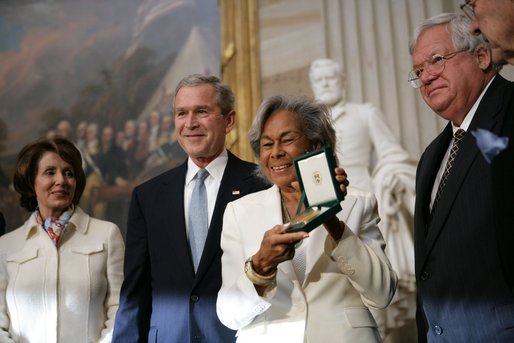
Robinson’s impact extended well beyond sports. He is remembered as a pivotal figure in the civil rights movement and has been honored posthumously with some of the nation’s highest awards, including the Presidential Medal of Freedom and the Congressional Gold Medal. His courage and performance helped change attitudes in professional athletics and American society, and his story remains central to discussions about race, sports, and equality.
Questions and answers
Q: When was Jackie Robinson born?
A: Jackie Robinson was born on January 31, 1919.
Q: What did Jackie Robinson do that made history?
A: Jackie Robinson broke the baseball color barrier when he debuted with the Brooklyn Dodgers in 1947. He was the first black man to openly play in the major leagues since the 1880s and had a big role in bringing an end to racial segregation in professional baseball.
Q: How long did African-Americans have to play only in Negro leagues before Robinson's debut?
A: African-Americans had to play only in Negro leagues for six decades before Robinson's debut.
Q: What awards did Jackie Robinson win during his career?
A: During his career, Jackie Robinson won MLB Rookie of the Year Award (1947), National League Most Valuable Player Award (1949), Presidential Medal of Freedom, and Congressional Gold Medal after his death.
Q: What other activities outside of baseball was he known for?
A: Outside of baseball, Jackie Robinson was known for being the first African-American television analyst in Major League Baseball and helping establish Freedom National Bank, an African-American owned/controlled financial business based in Harlem, New York.
Q: In what year was his uniform number retired by Major League Baseball?
A: Major League Baseball retired his uniform number 42 across all major league teams in 1997.
Related articles
Author
AlegsaOnline.com Jackie Robinson: Breaking Major League Baseball's Color Barrier and Civil Rights Legacy Leandro Alegsa
URL: https://en.alegsaonline.com/art/121093