
Ivan Pavlov: Physiologist, Nobel Laureate, and Founder of Classical Conditioning
Russian physiologist Ivan Pavlov (1849–1936) won the 1904 Nobel Prize for digestive research and is best known for describing classical conditioning, a foundation of behavioral science and learning theory.
Overview
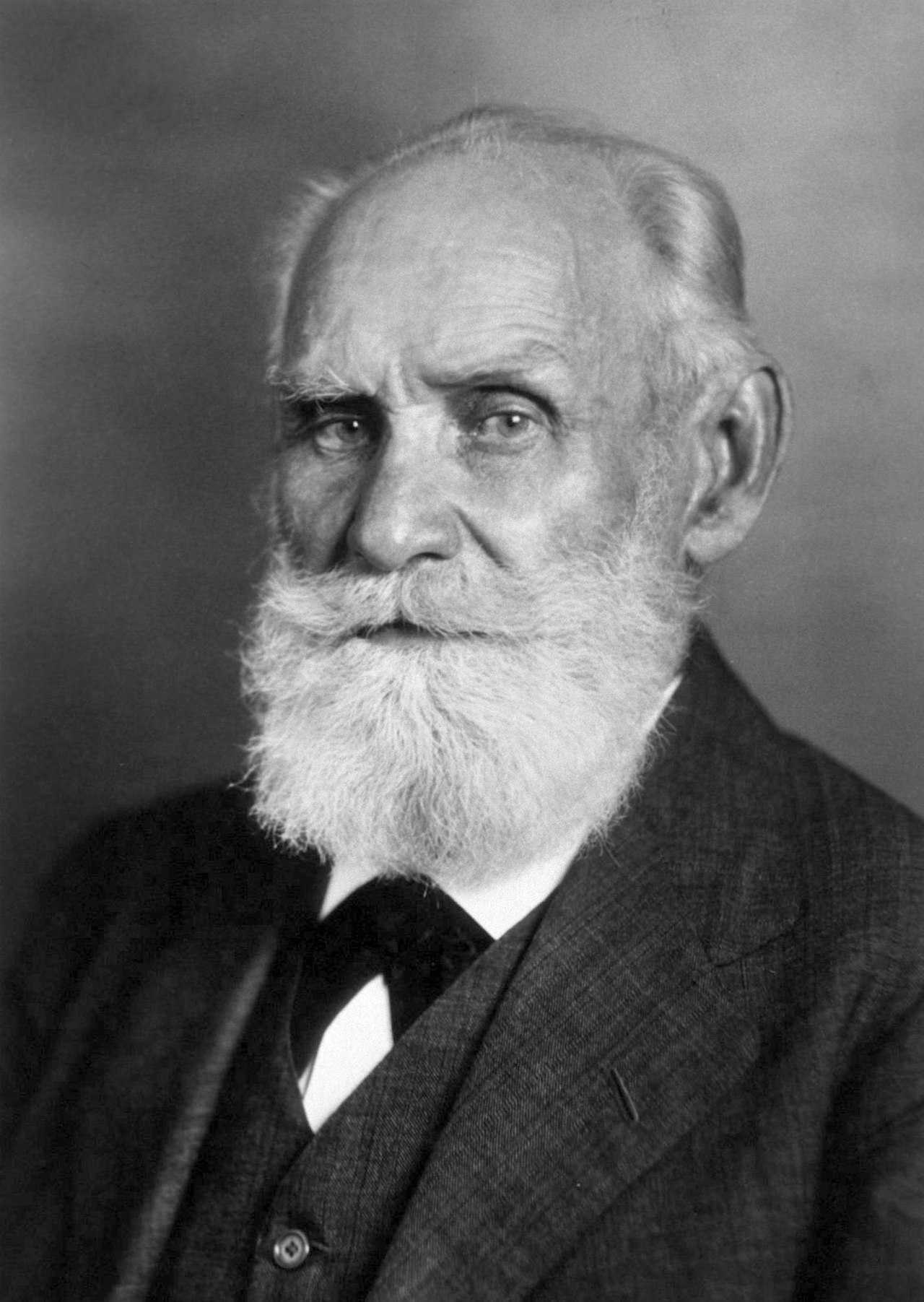
Ivan Petrovich Pavlov (14 September 1849 – 27 February 1936) was a Russian scientist who trained as a physiologist and worked at the intersection of physiology, psychology and medicine. He received the Nobel Prize in Physiology or Medicine in 1904 for his investigations into the digestive system. Pavlov’s name is most often associated with the concept of the conditioned reflex and the experimental studies that established the basic principles of what became known as classical conditioning.
Image gallery
10 Images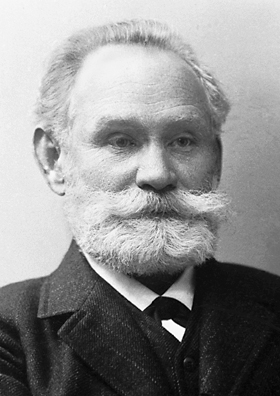



Major work and methods
Pavlov’s early research focused on the mechanisms of digestion and the physiology of glands. He developed experimental techniques to measure and collect digestive secretions, and his systematic approach emphasized careful observation, controlled stimuli and quantifiable outcomes. Although his work began in digestive physiology, he extended his investigations to the relationship between external signals and involuntary responses, coining the term "conditioned reflex" for responses that are acquired through association.
Classical conditioning and experiments
Pavlov showed that an originally neutral stimulus, when repeatedly paired with a biologically significant stimulus (such as food), can come to elicit a similar response (for example, salivation). His experiments with dogs provided clear, replicable demonstrations of this associative process and illustrated principles such as acquisition, extinction and generalization. These findings connected physiological measurement with behavioral phenomena and helped bridge laboratory physiology and emerging psychological theory.
Impact, applications and influence
By translating conditioned reflexes into a framework for studying learning, Pavlov influenced psychology, education, and clinical practice. His ideas were important for early behaviorists and for later work in habit formation, phobia treatment, and behavior therapy. At the same time, scholars and practitioners have pointed out limits: classical conditioning explains many forms of reflexive learning but does not encompass complex cognition or purpose-driven behavior, areas addressed by other traditions in psychology.
Legacy, context and controversies
Pavlov’s legacy includes the Nobel Prize and a lasting methodological emphasis on experimental control. He is sometimes described as a "psychologist" or "physician" in broader accounts of his life and work (psychologist, physician). Ethical concerns about invasive animal procedures used in early twentieth-century physiology have been raised by historians and ethicists, and modern readers often view parts of his methodology through that prism. Nonetheless, his careful documentation and the reproducibility of his basic findings secure him a prominent place in the history of science.
Key aspects and distinctions
- Born in 1849 and active into the 1930s, Pavlov combined laboratory physiology with questions about behavior and adaptation.
- He won the Nobel Prize (1904) for digestive physiology but gained broader fame for work that shaped experimental psychology.
- Classical conditioning differs from operant conditioning (later popularized by B. F. Skinner): the former pairs stimuli to elicit reflexes, while the latter associates actions with consequences.
- His work remains influential in neuroscience, behavioral therapy, and learning theory, and is discussed in both scientific and popular contexts.
For concise introductions to Pavlov’s research and its ramifications, see basic summaries and historical overviews that cover both his digestive physiology research and his foundational studies of conditioned reflexes.
physiologist psychologist physician digestive system classical conditioning
Questions and answers
Q: Who was Ivan Pavlov?
A: Ivan Pavlov was a Russian physiologist, psychologist, and physician.
Q: When was Ivan Pavlov born?
A: Ivan Pavlov was born on September 14, 1849.
Q: What was Ivan Pavlov awarded the Nobel Prize in Physiology or Medicine for?
A: Ivan Pavlov was awarded the Nobel Prize in Physiology or Medicine in 1904 for his research about the digestive system.
Q: What is Ivan Pavlov widely known for?
A: Ivan Pavlov is widely known for first describing classical conditioning.
Q: What is classical conditioning?
A: Classical conditioning is a type of learning in which a stimulus acquires the capacity to evoke a response that was originally evoked by another stimulus.
Q: Was Ivan Pavlov only a physiologist, or did he explore other fields too?
A: Ivan Pavlov explored other fields too besides physiology such as psychology and medicine.
Q: When did Ivan Pavlov die?
A: Ivan Pavlov died on February 27, 1936.
Related articles
Author
AlegsaOnline.com Ivan Pavlov: Physiologist, Nobel Laureate, and Founder of Classical Conditioning Leandro Alegsa
URL: https://en.alegsaonline.com/art/121032
Sources
- nobelprize.org : 1904 Nobel prize laureates
- cogsci.ecs.soton.ac.uk : Thomas, Roger K. 1994. Pavlov's rats "dripped saliva at the sound of a bell", Psycoloquy, 5, No. 80, accessed 22 Aug 2006
- bbc.co.uk : The brain: a secret history at bbc.co.uk "Mind Control" broadcast on BBC 4 on 11 January 2011
- Ivan Pavlov