
Isaac Newton
English mathematician, physicist and astronomer whose work on motion, gravitation, optics and calculus laid foundations for modern science.
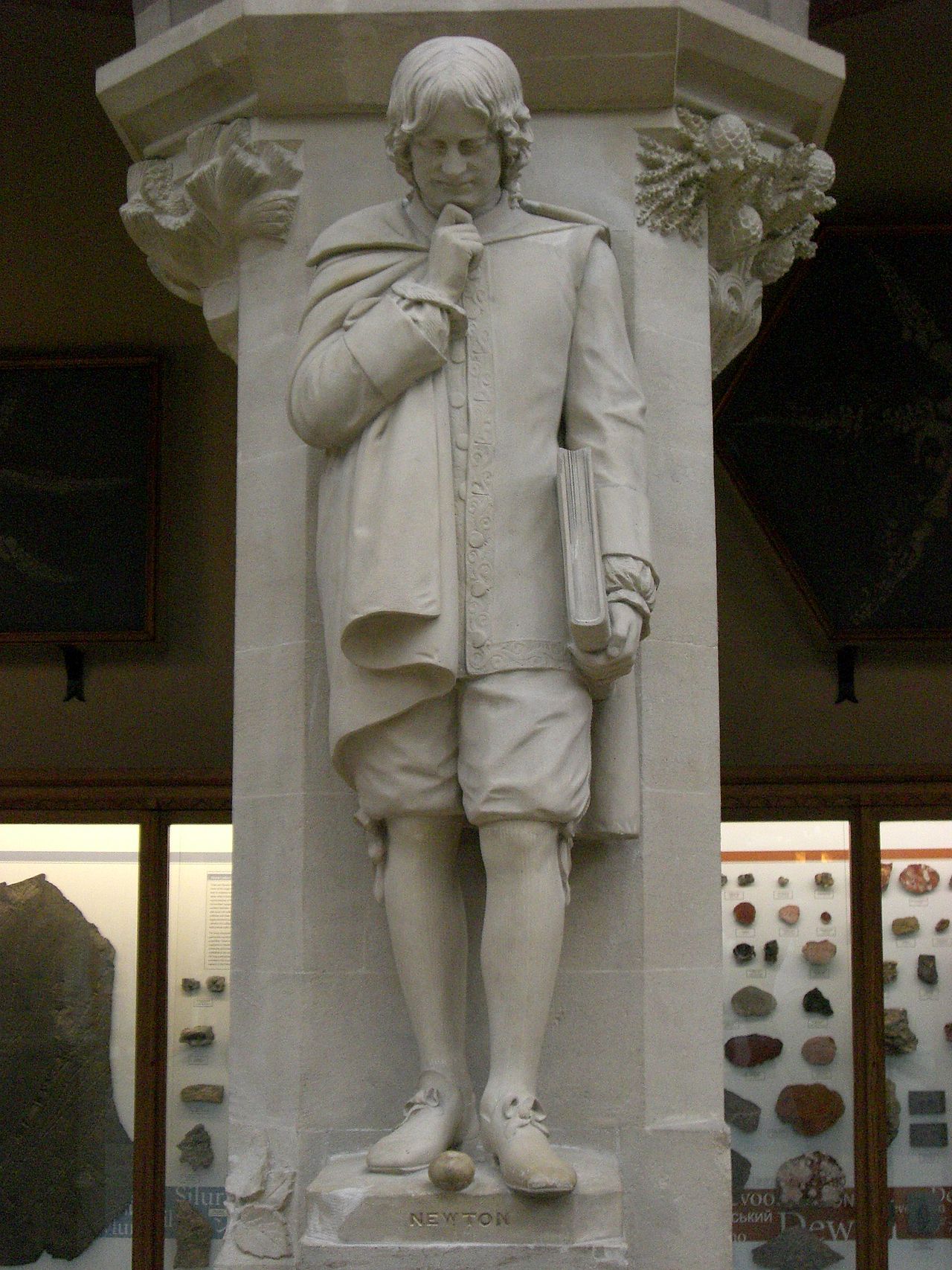
Isaac Newton (born 25 December 1642 — died 20 March 1726/27) was an English mathematician, natural philosopher and astronomer whose investigations reshaped the study of motion, light and the physical universe. He formulated the three laws of motion and the law of universal gravitation that provided a unified framework for terrestrial and celestial mechanics. Newton also made major advances in optics, built an early practical reflecting telescope, and developed mathematical methods for change and motion that are now called calculus.
Image gallery
10 Images




Major contributions
Newton's work is often grouped by subject:
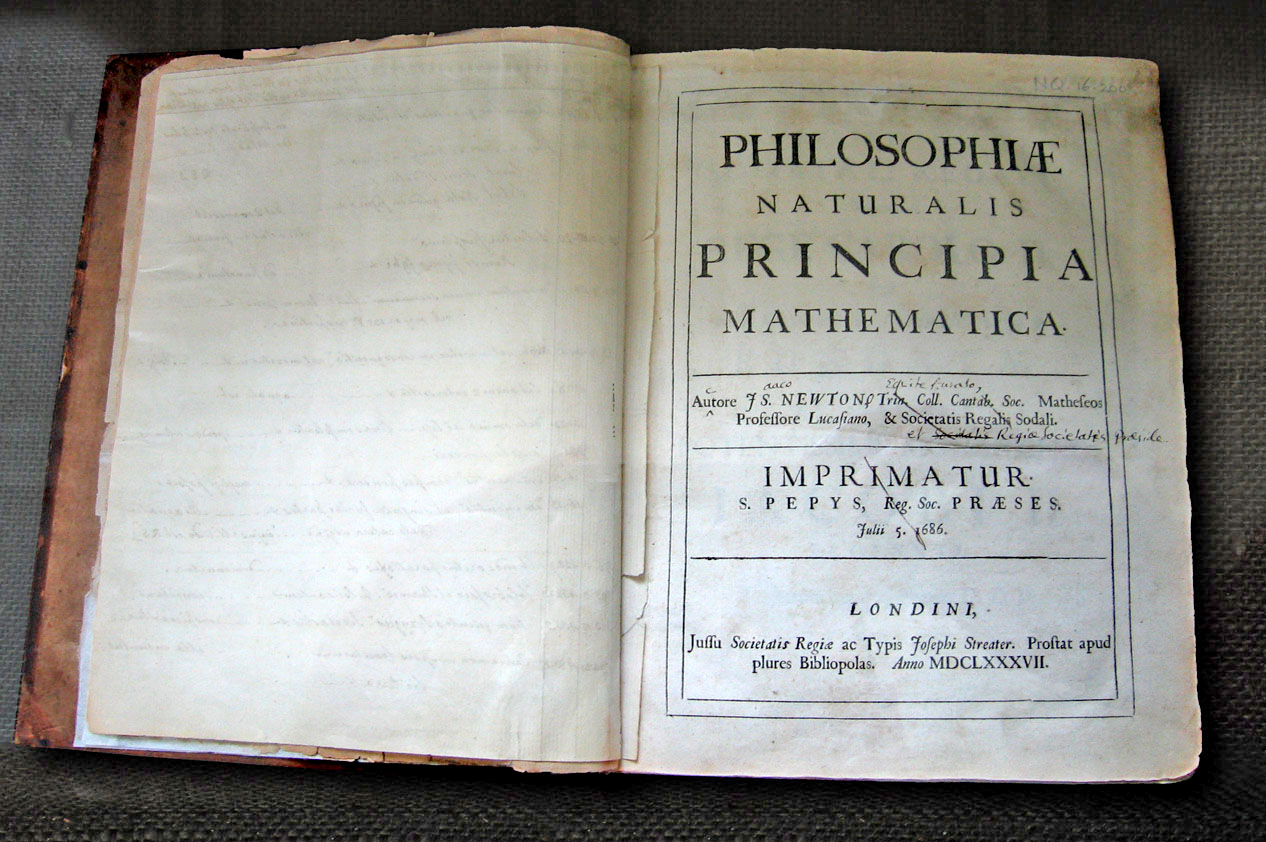
- Classical mechanics: In the Philosophiæ Naturalis Principia Mathematica (1687) he presented laws describing inertia, force and action–reaction, and used them, together with his universal law of gravitation, to explain planetary motion and tides.
- Gravitation: The inverse-square form of gravitational attraction linked motions on Earth with the motions of the Moon and planets and provided the basis for later celestial mechanics.
- Optics: Through prism experiments he showed that white light can be decomposed into a spectrum of colors and promoted a corpuscular (particle) theory of light while also designing a reflecting telescope to reduce chromatic aberration.
- Mathematics: He developed methods for dealing with rates of change and areas under curves (fluxions), now recognized as an independent formulation of calculus alongside work by Gottfried Leibniz; this led to improvements in mathematical analysis and applied problem solving.
Life and career
Newton was born in Lincolnshire and educated at Trinity College, Cambridge, where he later became Lucasian Professor of Mathematics. His productive years included deep study of classical problems, laboratory optics, and mathematical analysis. In public life he served as Warden and later Master of the Royal Mint, and as President of the Royal Society. He was knighted in 1705. Alongside his public roles, Newton pursued private interests in alchemy and biblical chronology, subjects that occupied him for many years.
Influence and legacy
The Newtonian synthesis dominated scientific thought for centuries: his mathematical description of motion enabled precise predictions in astronomy, engineering and navigation. Newtonian mechanics remained the standard framework until the early 20th century, when phenomena at very high speeds and strong gravitational fields led to refinements by relativity and quantum theory. Nevertheless, Newton's equations remain highly accurate and widely used in most everyday and engineering contexts.
Controversies and notable facts
Newton's career included disputes: the most famous concerned priority over calculus with Leibniz, which sparked intense debate over methods and notation. He was also unusual among major scientists for devoting substantial effort to alchemical experiments and private theological study. His major scientific works include the Principia and Opticks, both of which have been reprinted and studied extensively.
Further reading
- Biography and life overview
- Newton and natural philosophy
- Contributions to physics
- Mathematical works
- Astronomical applications
- Optics and experiments with light
- Universal gravitation explained
- Calculus: fluxions and notation
- Principia Mathematica (1687)
- Gravitational theory resources
- The three laws of motion
- Reflecting telescope and instrument design
- Leibniz and the calculus controversy
- Newton's place in the history of science
- Relation to later developments (e.g., relativity)
- Selected editions and translations
Questions and answers
Q: Who was Sir Isaac Newton?
A: Sir Isaac Newton was an English physicist, mathematician, and astronomer.
Q: What is he well known for?
A: He is well known for his work on the laws of motion, optics, gravity, and calculus.
Q: What book did he publish in 1687?
A: In 1687, Newton published a book called the Philosophiæ Naturalis Principia Mathematica in which he presents his theory of universal gravitation and three laws of motion.
Q: What did he invent in 1668?
A: In 1668, Newton built the first practical reflecting telescope.
Q: How did Newton explain light?
A: Newton developed a theory of light based on the observation that a prism decomposes white light into the colors of the rainbow.
Q: Who else shares credit with him for developing calculus?
A: Newton shares credit with Gottfried Leibniz for developing calculus.
Q: How long did his ideas dominate physics until they were modified by Albert Einstein's theory of relativity?
A: His ideas on light, motion, and gravity dominated physics for the next three centuries until they were modified by Albert Einstein's theory of relativity.
Related articles
Author
AlegsaOnline.com Isaac Newton Leandro Alegsa
URL: https://en.alegsaonline.com/art/120979
Sources
- royalsociety.org : "Fellows of the Royal Society"
- oxforddnb.com : Barrow, Isaac (1630–1677)
- jstor.org : Newton, Leibniz, and Barrow Too: An Attempt at a Reinterpretation
- chlt.org : "Dictionary of Scientific Biography"
- astro.com : "Isaac Newton, horoscope for birth date 25 December 1642 Jul.Cal"