
Ignatius of Antioch (Theophorus): early Christian bishop, martyr, and writer
Early second‑century bishop of Antioch, author of influential letters on church order, the Eucharist and episcopal authority; venerated across Eastern and Western Christian traditions.
Ignatius of Antioch, traditionally called Theophorus (“God‑bearer”), is one of the most important figures of the early Christian church. He is remembered as the bishop who led the large Syrian church centered in Antioch and as an eyewitness link to apostolic teaching. Traditionally dated to the late first and early second centuries, Ignatius is honored as a saint and as one of the group of early writers known as the Apostolic Fathers. His surviving letters preserve an early, distinctively pastoral theology and provide close‑up evidence for how Christian communities organized themselves after the apostolic age.
Image gallery
6 Images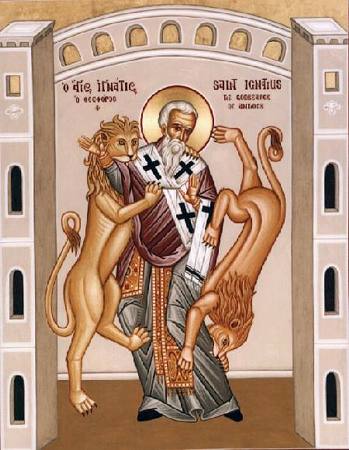



Life and historical context
Later Christian tradition places Ignatius as a successor in the Antiochene episcopate after Peter and Evodius, and he is often described as a disciple of the Apostle John. He called himself Theophorus and, in later legend, was said to have been blessed by Jesus as a child — an account treated by historians as pious tradition rather than documented history. Accounts of his dates and origins vary among sources; the conventional chronology assigns him to c. 35–107 CE, though some scholars debate exact dating.
Writings and theological emphases
Ignatius is best known for a series of letters composed while he was being taken to his execution. These letters — addressed to local churches and to church leaders such as Polycarp of Smyrna — touch on core matters of emerging Christian practice and belief. They are an important witness to early theology and to how the earliest Christians thought of worship, ministry and communal unity. Prominent themes include ecclesiology (the shape and authority of the church), the meaning and celebration of the sacraments, and the distinctive role of bishops within congregations.
In several passages Ignatius speaks vividly of the Eucharist, calling it the "medicine of immortality," and he insists on the visible leadership of a single bishop, supported by presbyters and deacons, as the means by which church unity and sound teaching are preserved. His letter corpus is a primary source for the development of hierarchical structures in early Christian communities.
Martyrdom, letters and transmission
Ignatius composed his letters while under escort to his execution in Rome, an episode sometimes described as his martyrdom journey. The letters include correspondence to communities at Ephesus, Magnesia, Tralles, Rome, Philadelphia and Smyrna and to individuals; together they shaped later Christian reflection on pastoral care and church order. His exchanges with figures like Polycarp help historians trace networks of authority and teaching across the Mediterranean world.
Legacy and commemoration
Ignatius is commemorated liturgically in both Western and Eastern traditions. The Western churches mark his feast on 17 October (also noted by some sources at the same date), while several Eastern calendars remember him on 20 December and related Eastern and Eastern Catholic communities observe similar days of commemoration (Orthodox and Eastern Catholic churches). He is widely recognized in the Eastern Orthodox Church and other major communions.
Significance and scholarly notes
Scholars study Ignatius both for what his letters directly say and for what they imply about the institutional growth of the church. While his authority in later centuries was used to justify episcopal prerogatives, modern readers also find in his letters a pastoral concern for unity and holiness. Questions about exact dating, the survival of textual variants, and how later editors may have shaped the transmitted texts remain part of ongoing research.
Selected themes and letters
- Episcopal leadership and the structure of local churches
- Ecclesiology and communal unity
- Sacramental language for the Eucharist
- Correspondence with Polycarp and communities at Ephesus, Magnesia, Tralles, Philadelphia and Rome
Ignatius of Antioch remains a touchstone for students of early Christianity: a bridge between apostolic memory and the increasingly organized life of the second‑century church.
Peter • Antioch • John • martyrdom • Rome • Polycarp • theology • earliest Christians • ecclesiology • sacraments • role of bishops • Western feast day • Eastern feast day • saint • Eastern Orthodox Church • feast day • Orthodox and Eastern Catholic churches
Questions and answers
Q: Who was Saint Ignatius of Antioch?
A: Saint Ignatius of Antioch (also known as Theophorus) was the third Bishop or Patriarch of Antioch and a student of the Apostle John.
Q: When did he live?
A: He lived from AD 35-107.
Q: What is important about his letters?
A: His letters are an example of the theology of the earliest Christians and address important topics such as ecclesiology, sacraments, and the role of bishops.
Q: What is his feast day?
A: His feast day is observed on 17 October in Western Christianity and 20 December in Eastern Christianity.
Q: Who were some people that knew him?
A: He wrote a letter to Polycarp, bishop of Smyrna, who had also known John. Additionally, Jesus took him in His arms and blessed him when he was a child. He was most likely a disciple of the Apostle John as well.
Q: How did Ignatius base his authority?
A: Ignatius based his authority on living his life in imitation of Christ.
Related articles
Author
AlegsaOnline.com Ignatius of Antioch (Theophorus): early Christian bishop, martyr, and writer Leandro Alegsa
URL: https://en.alegsaonline.com/art/120874
Sources
- bennozuiddam.com : Holy Letters and Syllables, the function and character of Scripture Authority in the writings of St Ignatius (Contains biography Ignatius as well. Doctoral thesis University of the Orange Free State 1997, Dutch, pdf)