
Hyder Ali — de facto ruler of Mysore, military reformer (c.1720–1782)
Hyder Ali was the military commander who became the effective ruler of the Kingdom of Mysore. He modernised its army, used rocket artillery, expanded territory and resisted the British East India Company.
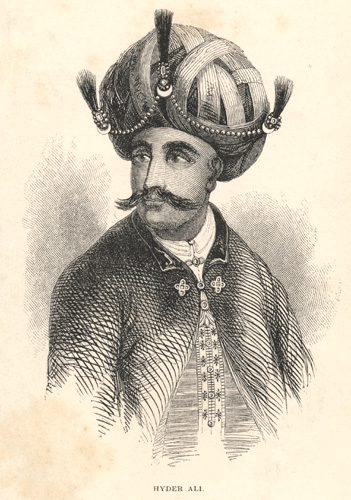
Hyder Ali (c.1720–7 December 1782) rose from humble military beginnings to become the de facto ruler of the Kingdom of Mysore in southern India. Although nominal authority remained with the Wodeyar dynasty, Hyder exercised real power as commander and later sovereign administrator. His career combined rapid military advancement, territorial expansion and an energetic program of armed and fiscal reform that made Mysore one of the stronger regional states in late‑eighteenth‑century India. His death on 2 Muharram of the Islamic year is sometimes noted with reference to the Islamic calendar and contemporary sources often situate key dates using the lunar era.
Image gallery
10 Images




Origins and rise to power
Born as Hyder Naik into a family of soldiers and local officials, Hyder entered service in the Mysore military and gained recognition for his competence and energy. He was appointed dalwai (commander‑in‑chief) under the titular ruler Krishnaraja Wodeyar II and gradually consolidated authority over court and state functions. By combining patronage, military success and skilful factional politics he displaced rivals and assumed control of administration without formally dethroning the Wodeyar monarch.
Territorial expansion and neighbours
During Hyder Ali’s ascendancy Mysore extended its influence at the expense of neighbouring powers. His campaigns brought him into repeated conflict with the Maratha confederacy and the Nizam of Hyderabad, as well as with the expanding British East India Company. He negotiated, fought and sometimes allied against these rivals as the balance of power in southern and central India shifted during the decline of Mughal authority and the scramble for regional dominance.
- Major rival polities: Maratha Empire, Nizam of Hyderabad.
- Context: fragmentation following the decline of the Mughal Empire and the competing influence of Islamic and regional powers (Islamic and Hindu polities).
Military reforms and innovations
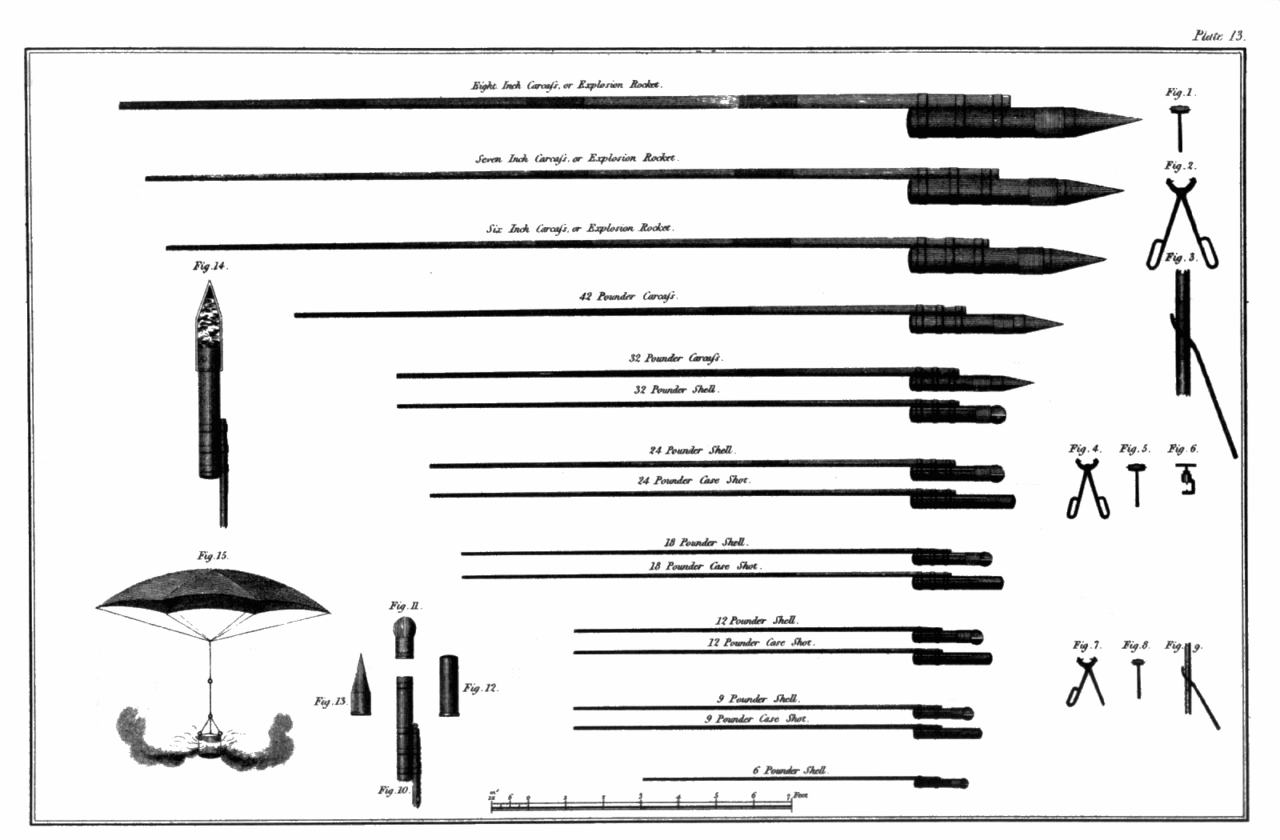
Hyder reorganised Mysore’s forces, introducing more disciplined infantry and a structured artillery arm, and paying attention to logistics and training. He is best known for developing and deploying Mysorean rocket artillery: iron‑cased rockets that delivered incendiary payloads and could be massed for psychological and tactical effect on the battlefield. His army combined traditional cavalry and irregular troops with newly drilled battalions modelled in part on contemporary European methods.
Wars with the British and diplomacy
Hyder fought the British in the complex series of confrontations that came to be known as the Anglo‑Mysore Wars. In the First and Second Anglo‑Mysore Wars his forces checked British advances on several occasions and at times threatened the Company’s positions near Madras. While not ultimately expelling British influence, his resistance delayed their consolidation and made Mysore a principal obstacle to Company expansion in southern India. Contemporary negotiations and alliances with French and other actors featured in his foreign policy as he sought technical expertise and diplomatic support.
Administration, family and legacy
Administratively Hyder strengthened revenue collection, fortified frontiers and encouraged workshops for armaments. He took honorific titles and was often styled Hyder Ali Khan or Hyder Ali Sahib. He had multiple wives and children; his son Tipu Sultan succeeded him as the ruler who continued and intensified Mysore’s resistance to the British. Tipu’s reign, military campaigns and eventual defeat are commonly seen as a direct continuation of Hyder’s policies and institutions. For further reading on his life, dates and later succession see entries linked to the Kingdom of Mysore and biographical treatments of Tipu Sultan.
Notable facts
- Combined indigenous and European military practices to modernise the army.
- Promoted early military use of rocket artillery, later copied by other armies.
- Maintained a pragmatic approach to diplomacy, balancing warfare with negotiated settlements.
- His career illustrates the shifting politics of late‑Mughal India and the emergence of regional powers amid growing European commercial and military influence.
Hyder Ali remains a significant figure in South Asian history for creating a stronger, more centralised Mysore state and for challenging the expansion of the British East India Company during a formative period of colonial intervention. For timelines, military overviews and contemporary accounts, see specialist studies and archives linked in modern bibliographies and online research collections (Anglo‑Mysore Wars resources).
References and further context may be explored through dedicated historical compendia and regional studies that place Hyder’s life within the broader breakdown of old empires and the rise of successor states in the eighteenth century.
Questions and answers
Q: Who was Hyder Ali?
A: Hyder Ali was the de facto ruler of the Kingdom of Mysore in southern India. He was born Hyder Naik and rose to the post of dalwai, or commander-in-chief to Krishnaraja Wodeyar II.
Q: What did Hyder Ali accomplish during his rule?
A: During his rule, Hyder Ali expanded the kingdom's borders at the expense of other powers such as the Maratha Empire and Nizam of Hyderabad. He also effectively blunted military advances from the British East India Company during two wars.
Q: How many wives did Hyder Ali have?
A: It is believed that he had at least two wives.
Q: How many children did he father?
A: It is believed that he fathered at least three children.
Q: What methods did he use to organize his military forces?
A: He organized his military forces in part along European lines and was a pioneer in using rocket artillery for military purposes.
Q: When did Hyder Ali die?
A: He died on 7 December 1782, 2 Muharram 1197 in the Islamic calendar.
Q: What honorific titles were given to him during his life? A: He was given a number of honorific titles, including Sultan Hyder Ali Khan or Hyder Ali Sahib.
Related articles
Author
AlegsaOnline.com Hyder Ali — de facto ruler of Mysore, military reformer (c.1720–1782) Leandro Alegsa
URL: https://en.alegsaonline.com/art/120807