
Henry the Young King (1155–1183): crowned junior king and heir of Henry II
Eldest surviving son of Henry II, crowned as a junior king in 1170 but never given independent rule; noted for his interest in tournaments, a revolt against his father and an early death on campaign in 1183.
Henry the Young King (28 February 1155 – 11 June 1183) was the eldest surviving son of King Henry II of England. Crowned in 1170 during his father's lifetime, he is commonly described as a junior king — a crowned heir whose title signalled dynastic continuity and who might act as a royal presence within a widely scattered realm. Despite being anointed and invested with royal insignia, he never exercised independent government and predeceased his father, so he never ruled in his own right.
Image gallery
5 Images


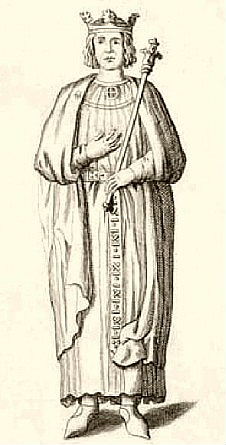
Early life and coronation
Born into the Angevin dynasty, Henry spent his childhood in the courts and household of his parents. The ceremony that marked his status as heir took place while his father retained full authority; the crown was intended to formalise the succession and reassure magnates across England and Normandy. The coronation gave him the outward dignity of kingship but did not confer autonomous power: the elder king maintained the executive control of his territories.
Personality, upbringing and interests
Contemporary chroniclers and later biographers portray the Young King as strikingly interested in the martial and social life of the nobility. Under the care of tutors such as William Marshal he learned the arts of knighthood and courtly behaviour, and he became closely associated with the culture of knights' tournaments. This emphasis on chivalric display and military exercise shaped his reputation: he was admired as a handsome and energetic prince, but he is often criticised for lacking a clear interest in administration.
Marriage and dynastic politics
As part of Angevin diplomacy, Henry was married to Marguerite of France, a daughter of King Louis VII. The match was intended to cement ties between the houses of Plantagenet and Capet, yet those dynastic links did not prevent rivalry between their fathers. The marriage produced no effective power base that could guarantee the Young King's independence from his father's authority.
Rebellion of 1173–74
Frustrations over his lack of real authority, together with the influence of other nobles and the support of his mother, Eleanor of Aquitaine, led Henry to join a major uprising against his father in 1173–74. That conflict, often referred to as the civil war of 1173–74, drew in foreign and domestic allies, including forces aligned with the King of France and Scotland. Despite initial successes, the rebellion was ultimately suppressed by Henry II, and the Young King gained no lasting power from the venture.
Military activity and later years
After the failed revolt the Young King continued to play a role as a military prince. He travelled in Aquitaine and other parts of his father's domains, taking part in campaigns and in the social life of the aristocracy. His lifestyle remained oriented toward warfare, tournaments and the patronage networks of knights and nobles rather than the day-to-day tasks of governance.
Death and succession
Henry died unexpectedly on 11 June 1183 near Limoges in France. Contemporary reports attribute his death to illness, commonly recorded as dysentery, contracted while on campaign. Because he predeceased his father, the succession passed to his younger brothers, and the hopes placed in the policy of crowning a junior king as a means of securing a smooth transition were shown to be uncertain.
Legacy
Historians view Henry the Young King as an illuminating example of the limits of dynastic planning in the high Middle Ages: crowned to guarantee the future, he lacked the independent authority that would have made him an effective co-ruler. His life is often cited to illustrate tensions between princely expectation and monarchical control, and his association with tournaments contributes to our understanding of the rise of chivalric culture in the twelfth century. Modern studies also consider the episode of his rebellion as part of wider conflicts within the Angevin dominions, reflecting the difficulties a ruler faced in balancing personal loyalty, noble ambition and territorial management.
- Coronation as a junior king was meant to secure the succession but did not guarantee power.
- He is remembered for chivalric pursuits and frequent attendance at tournaments.
- His marriage to Marguerite linked the Angevin and Capetian dynasties without preventing conflict between their rulers.
- His participation in the civil war of 1173–74 demonstrates the fragility of royal authority within large composite realms.
- He died near Limoges in France, reportedly of dysentery, and never ruled independently.
Questions and answers
Q: Who was Henry the Young King?
A: Henry the Young King was the junior king to his father Henry II of England.
Q: When was Henry the Young King crowned king?
A: Henry the Young King was crowned king in 1170.
Q: Did Henry the Young King use his power as a king?
A: No, Henry the Young King never actually used the power.
Q: Why was Henry the Young King made a king?
A: The meaning of making Henry the Young King a king was to have an official deputy for legal actions when Henry II was in France, and to indicate the succession to the throne.
Q: Was Henry the Young King interested in government?
A: No, according to his tutor, William Marshal, Young Henry was not interested in government.
Q: Who was Henry the Young King married to?
A: Henry the Young King was married as a child to Marguerite of France, daughter of the French King Louis VII.
Q: How did Young Henry die?
A: Young Henry died ten years later, of dysentery. As he died before his father, he never achieved power.
Related articles
Author
AlegsaOnline.com Henry the Young King (1155–1183): crowned junior king and heir of Henry II Leandro Alegsa
URL: https://en.alegsaonline.com/art/120566