
Henry Benedict Stuart, Cardinal and Jacobite Claimant (1725–1807)
Italian-born Roman Catholic cardinal and the last prominent Jacobite heir; a churchman who maintained the Stuart legacy while rejecting active attempts to reclaim the thrones of England, Scotland and Ireland.
Henry Benedict Maria Clement Thomas Francis Xavier Stuart (11 March 1725 – 13 July 1807) was a Roman Catholic prince of the Stuart line who spent his life in the service of the Church. Known in his youth by the dynastic title Duke of York, he later became a senior prelate of the Roman Curia and one of the longest-serving cardinals in modern times. Although he was recognised by Jacobite supporters as a claimant to the thrones of England, Scotland and Ireland, Henry never led or financed a political movement to press that claim and is best remembered for his ecclesiastical career and for preserving aspects of the Stuart heritage.
Image gallery
8 Images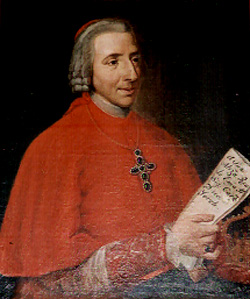





Family background and early life
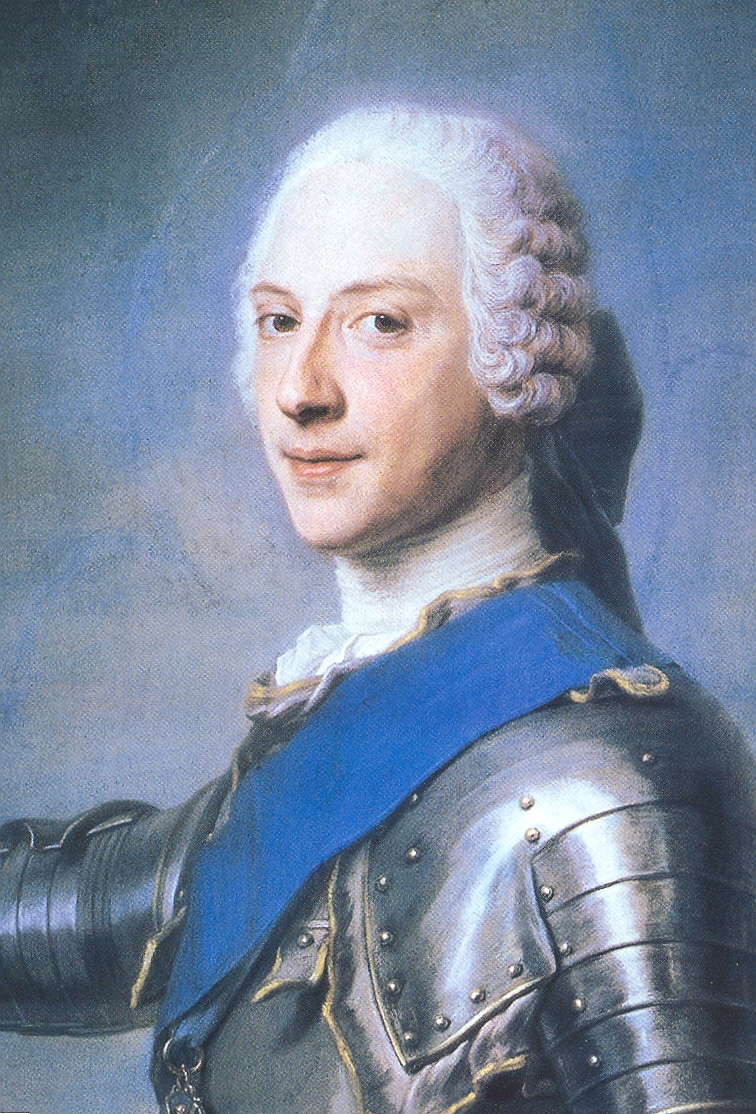
Henry was the younger son of James Francis Edward Stuart, the exiled claimant often called the "Old Pretender" by his opponents, and he grew up in the Stuart court-in-exile that maintained pretensions to the British crowns after the Glorious Revolution. His eldest brother, Charles Edward Stuart, known popularly as "Bonnie Prince Charlie," led the 1745 uprising in Britain and predeceased Henry. During his formative years Henry was given Jacobite titles by supporters abroad and was widely referred to within the movement as Duke of York and, after his brother's death, by some as Henry IX. Many Jacobites continued to treat the family as the legitimate royal line long after their political hopes had faded.
Ecclesiastical career and role in Rome
Rather than pursue restoration, Henry entered clerical life. He was created a cardinal in the mid-18th century and served for decades within the structures of the Roman Catholic Church, rising to senior positions such as Cardinal-Bishop and Dean of the College of Cardinals. He lived almost continuously in the Papal States and was closely associated with successive popes, who treated him as an important prelate though they did not publicly endorse any dynastic claim. The papacy of his time was cautious about recognising temporal claims from exiled dynasties; the pontiff himself was careful to avoid being seen as interfering in the affairs of northern European realms.
Jacobite claim and public stance
Henry inherited the Jacobite claim in a dynastic sense after the deaths of his father and brother, and Jacobite loyalists continued to regard him as their lawful monarch in exile. Yet he refrained from organizing military or diplomatic efforts to press that claim. The distinction between private recognition by supporters and official recognition by states or the Holy See was important: ecclesiastical courtesy and the personal dignity of his rank did not amount to international political recognition.
Titles, possessions and cultural legacy
- Commonly called the Duke of York in Jacobite circles and sometimes styled as a titular king by supporters.
- Held high offices in the Roman Church, including senior cardinalatial bishoprics.
- Custodian of family papers, relics and artworks associated with the Stuart dynasty; his stewardship helped preserve material that later entered public and private collections.
As a high-ranking churchman and a prince of a deposed royal house, Henry occupied an unusual place between religion and dynastic memory. His decision to remain in clerical life shaped how the Stuart story was remembered by both supporters and historians: the emphasis shifted from active restoration to heritage, ceremony and the care of archives and private chapels.
Death and historical assessment
Henry died in 1807 while resident within the territories governed by the papacy. He left no legitimate descendants, and after his death the Stuart claim passed into the hands of more distant relatives and ultimately became a matter of genealogical interest rather than practical politics. Historians view him as a figure who embodied the last phase of the Jacobite movement: a dignified, clerical guardian of a contested legacy who preferred spiritual authority and cultural preservation to the uncertain pursuit of crowns.
For further reading on the Jacobite line and the Stuart family see materials linked by historians and archives: the movement's background and the lives of James Francis Edward Stuart and Charles Edward Stuart are discussed in specialized studies and collections; more information is available from compendia about the papacy and the Pope's relations with exiled dynasts. Contemporary descriptions of Henry's titles and early designation as Duke of York appear in period sources, and summaries of Jacobite activity can be found through broader histories of the Jacobite cause and the political context of 18th-century Europe. Additional archival resources and ecclesiastical records are preserved in repositories that document the Stuart presence in the Papal States and Rome.
Selected reference points: the lives of his father James Francis Edward Stuart and brother Charles Edward Stuart illustrate the contrast between dynastic activism and Henry's clerical path; specialized studies on the late-18th-century College of Cardinals discuss his role among the senior clergy.
Questions and answers
Q: Who was Henry Benedict Maria Clement Thomas Francis Xavier Stuart?
A: Henry Benedict Maria Clement Thomas Francis Xavier Stuart was a Roman Catholic Cardinal, as well as the fourth and final Jacobite heir to publicly claim the thrones of England, Scotland, and Ireland.
Q: What did Pope do when Charles Edward Stuart died in January 1788?
A: When Charles Edward Stuart died in January 1788, the Pope did not recognise Henry as the lawful ruler of England, Scotland and Ireland, but referred to him as the Cardinal Duke of York.
Q: What career did Henry have in the Roman Catholic Church?
A: Henry had a long career in the clergy of the Roman Catholic Church, rising to become the Dean of the College of Cardinals and Cardinal-Bishop of Ostia and Velletri.
Q: How was Henry best known when he was young?
A: When he was young, Henry's father made him Duke of York (in the Jacobite peerage), and that was how he was best known.
Q: How did Jacobites refer to him after his brother's death?
A: After his brother's death in 1788, Jacobites referred to him as Henry IX of England.
Q: How did Henry refer to himself publicly?
A: Publicly he referred to himself as Cardinal-Duke of York nuncupatus.
Related articles
Author
AlegsaOnline.com Henry Benedict Stuart, Cardinal and Jacobite Claimant (1725–1807) Leandro Alegsa
URL: https://en.alegsaonline.com/art/120516
Sources
- oxforddnb.com : Henry Benedict (1725–1807)
- dx.doi.org : 10.1093/ref:odnb/12964