
Hendrik Antoon Lorentz
Dutch theoretical physicist celebrated for the Lorentz transformations, his electron theory, and the 1902 Nobel Prize (with Pieter Zeeman) for explanations of the Zeeman effect.
Overview
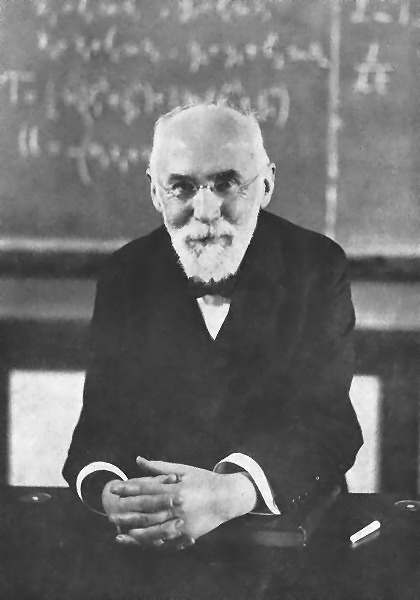
Hendrik Antoon Lorentz (18 July 1853 – 4 February 1928) was a Dutch scientist whose theoretical work on electromagnetism and the electron laid foundations for modern physics. Trained and later based in the Netherlands, he combined careful mathematical analysis with physical intuition to address puzzles in electrodynamics. He is widely remembered for mathematical results and concepts that carry his name and that became central to the development of special relativity.
Image gallery
10 Images




Major contributions
Lorentz's research produced a number of influential ideas and tools. Among the best known are:
- Lorentz force: the formula describing the force on a charged particle in electric and magnetic fields, a core element of classical electrodynamics.
- Electron theory: attempts to model how charged particles interact with electromagnetic fields, including early discussions of electromagnetic mass and radiation reaction.
- Lorentz transformations: a set of linear equations relating space and time coordinates between different inertial frames; these equations preserve the form of Maxwell's equations under changes of reference frame.
Zeeman effect and Nobel Prize
Lorentz collaborated closely with experimentalists; his theoretical interpretation of a magnetic splitting of spectral lines provided a quantitative explanation of results observed by Pieter Zeeman. For this work, which clarified the interaction between light and magnetic fields, Lorentz and Zeeman shared the Nobel Prize in Physics in 1902. The phenomenon is commonly known as the Zeeman effect, and Lorentz's analysis helped connect atomic phenomena with the electromagnetic theory of light.
Relation to relativity
In seeking to reconcile Maxwell's electrodynamics with the apparent lack of motion through the luminiferous ether, Lorentz developed transformations of space and time coordinates that left Maxwell's equations invariant. These mathematical transformations, now called Lorentz transformations, were later reinterpreted by Albert Einstein in the framework of special relativity. While Lorentz maintained an ether-based viewpoint, his formulas and the so-called Lorentz factor became central tools for Einstein and subsequent generations of physicists. Einstein acknowledged the mathematical groundwork even as he adopted a different physical interpretation; Lorentz's influence on the formulation of relativity is well documented in histories of physics.
Career and influence
Lorentz held academic posts in the Netherlands and was associated with the physics community at Leiden University, where he mentored colleagues and contributed to the institutional life of Dutch science. He published extensively and participated in international scientific exchange, receiving recognition across Europe. He is often described simply as a Dutch physicist, but his role bridged mathematics, theory, and the developing understanding of atomic and electromagnetic phenomena. For aspects of his professional life and his positions at Dutch institutions see references to Leiden and broader biographical sources (Leiden University and historical collections).
Legacy and notable facts
Terms bearing his name—the Lorentz force, Lorentz transformations, Lorentz factor—remain standard in physics education and research. The intellectual path from Lorentz's work to the formulation of special relativity illustrates how mathematical results can be reinterpreted within new conceptual frameworks. For further reading on his life, scientific papers, and the context around his collaborations and honors see more general histories of late-19th and early-20th century physics and dedicated biographies (contexts including Einstein's writings).
Questions and answers
Q: Who was Hendrik Lorentz?
A: Hendrik Antoon Lorentz was a Dutch physicist.
Q: What did Hendrik Lorentz discover?
A: He discovered and provided a theoretical explanation for the Zeeman effect.
Q: Who did Hendrik Lorentz share the Nobel Prize in Physics with?
A: He shared the Nobel Prize in Physics with Pieter Zeeman.
Q: What did Hendrik Lorentz do that was later used by Albert Einstein?
A: He derived the transformation equations for space and time that were later used by Albert Einstein.
Q: What was the prize that Hendrik Lorentz was awarded in 1902?
A: Hendrik Lorentz was awarded the Nobel Prize in Physics in 1902.
Q: For what was the Zeeman effect discovered by Hendrik Lorentz and Pieter Zeeman?
A: The Zeeman effect was discovered by them and was given a theoretical explanation by Hendrik Lorentz.
Q: When did Hendrik Lorentz die?
A: Hendrik Lorentz died on February 4, 1928.
Related articles
Author
AlegsaOnline.com Hendrik Antoon Lorentz Leandro Alegsa
URL: https://en.alegsaonline.com/art/120489
Sources
- physik.uni-augsburg.de : "Zur Elektrodynamik bewegter Körper"
- ui.adsabs.harvard.edu : 1905AnP...322..891E
- doi.org : 10.1002/andp.19053221004
- fourmilab.ch : English translation
- ui.adsabs.harvard.edu : 1993CQGra..10S.187K
- doi.org : 10.1088/0264-9381/10/S/020