
Gustav Leonhardt
Dutch harpsichordist, organist and conductor who pioneered historically informed performance of Renaissance and Baroque music, especially the works of J.S. Bach.
Gustav Leonhardt (30 May 1928 – 16 January 2012) was a Dutch keyboard virtuoso, conductor and teacher whose work helped revive the harpsichord and early-music performance practices. Born near 's-Graveland and active for decades from Amsterdam, he combined performing, scholarship and leadership to bring older repertoires to modern audiences.
Image gallery
2 Images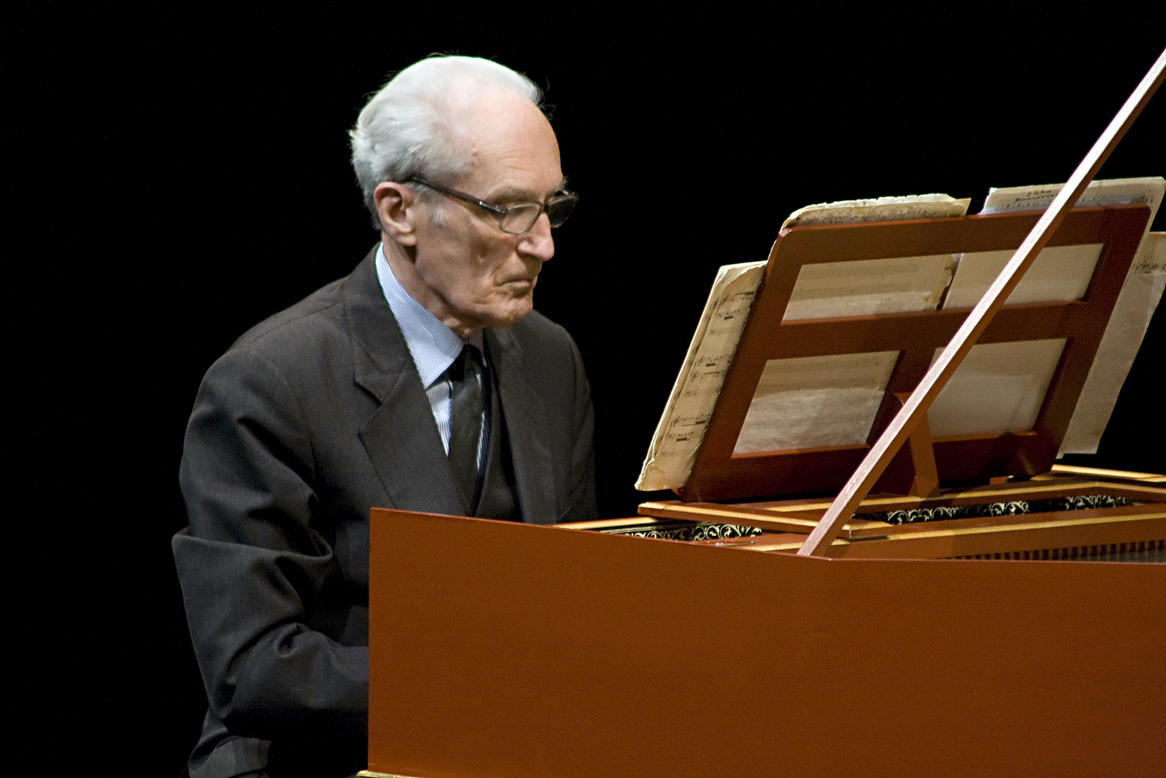

Overview and approach
Leonhardt was foremost a harpsichordist and also an accomplished organist. At a time when early music was generally played with modern instruments and Romantic phrasing, he favored historical keyboard technique, appropriate ornamentation and small ensembles on period instruments. His style emphasized clarity of line, rhythmic vitality and informed choices about tempi and articulation.
Repertoire and instruments
Leonhardt's repertoire centered on music from the Renaissance and Baroque eras, with particular attention to the keyboard works and liturgical music of the 17th and 18th centuries. He championed composers such as Sweelinck, Couperin and above all Johann Sebastian Bach, recording and performing many of Bach's major works on instruments that reflected historical practice.
Recordings, ensembles and collaborations
Leonhardt founded and led chamber groups and consorts that specialized in early repertory. He collaborated with other pioneers of historical performance and participated in influential recording projects that changed general perceptions of Baroque sound. His recordings—both solo and with ensembles—are noted for their scholarly rigour and expressive restraint.
Teaching and legacy
Beyond performance, Leonhardt taught and mentored generations of harpsichordists, continuo players and conductors, helping to establish early music as a standard field of study in conservatories. His editorial and pedagogical work clarified historical practices for ornamentation, continuo realization and ensemble balance.
Significance
- Key figure in the early-music revival and historically informed performance movement.
- Popularized the harpsichord and period keyboard techniques in the 20th century.
- Influential recordings and collaborations that reshaped interpretations of Baroque repertoire.
Today Leonhardt is remembered for combining rigorous scholarship with expressive musicality, leaving a substantial influence on how Renaissance and Baroque music is played and taught worldwide.
Questions and answers
Q: Who was Gustav Leonhardt and why was he famous?
A: Gustav Leonhardt was a Dutch harpsichordist, organist, and conductor who became famous for playing music from historical periods on period instruments, and for making his audiences aware of what music by Johann Sebastian Bach would have sounded like in Bach's day.
Q: When was Gustav Leonhardt born and when did he die?
A: Gustav Leonhardt was born on May 30, 1928, in 's-Graveland, Netherlands, and he died on January 16, 2012, in Amsterdam.
Q: What were the main periods of music that Gustav Leonhardt played?
A: Gustav Leonhardt mainly played music from historical periods, specifically Renaissance and Baroque music.
Q: How did Gustav Leonhardt differ from other musicians of his time?
A: Gustav Leonhardt differed from other musicians of his time because he played music from historical periods on period instruments, whereas others would typically play music from these periods in the same way as music from later centuries.
Q: Why was the harpsichord not a popular instrument at the beginning of Gustav Leonhardt's career?
A: The harpsichord was not a popular instrument at the beginning of Gustav Leonhardt's career because music from the Renaissance and Baroque periods was usually played in the same way as music from later centuries.
Q: What did Gustav Leonhardt make his audiences aware of?
A: Gustav Leonhardt made his audiences aware of what music by Johann Sebastian Bach would have sounded like in Bach's day.
Q: What other roles did Gustav Leonhardt have besides being a musician?
A: Gustav Leonhardt was also a conductor in addition to being a harpsichordist and organist.
Related articles
Author
AlegsaOnline.com Gustav Leonhardt Leandro Alegsa
URL: https://en.alegsaonline.com/art/120141