
Guity Novin — Persian‑Canadian painter, sculptor and founder of Transpressionism
Profile of Guity Novin (b.1944), a Persian‑Canadian painter and sculptor who coined Transpressionism. Covers her biography, artistic development, defining characteristics of her work, and her cultural role.
Overview
Guity Novin (born Guity Navran, April 21, 1944) is a Persian‑Canadian artist known for painting and sculpture and for proposing the stylistic concept she calls "Transpressionism." Born in Kermanshah, Iran, Novin trained in the Faculty of Fine Arts in Tehran and later continued studies in Europe before settling in Canada. Her career spans multiple decades and geographic contexts, and she has worked to articulate both a personal visual language and an approach to art that links feeling with structural transformation.
Image gallery
7 Images



Life and development
Novin completed formal studies at the Faculty of Fine Arts in Tehran in 1970. In the mid‑1970s she relocated to the Netherlands, living in The Hague and elsewhere in the Netherlands, and then went on to continue studies in Manchester in the UK. She emigrated to Canada in 1980 and lived and worked in a number of Canadian cities, including Kingston in Ontario, Montreal, and Ottawa, before making her base in Vancouver. Alongside studio practice she has engaged with artist networks and cultural organizations and has been associated with a national committee of artists under the auspices of UNESCO.
Transpressionism: defining the term
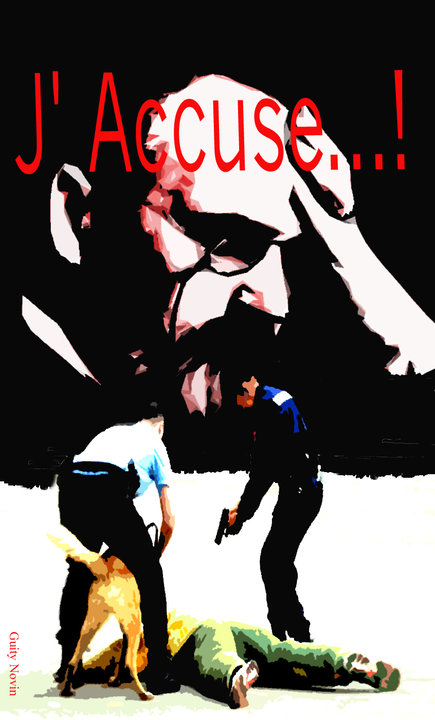
In the mid‑1990s Novin introduced the term Transpressionism to describe a body of work and an artistic intention. The word blends ideas of transition, transformation and expression. Novin uses it to signal an ambition beyond simple expressionism: artworks that move between states, compress and release forms, and aim to carry philosophical or emotional content through both painterly and sculptural means. She emphasizes gestural energy, layered surfaces, and an interplay between figuration and abstraction as frameworks for conveying ideas rather than literal narratives.
Characteristics of her work
- Materials and media: painting on canvas and board, as well as three‑dimensional pieces where surface and volume interact.
- Form and gesture: layered brushwork, textured planes and marks that suggest movement or transformation.
- Color and mood: color is used both expressively and structurally, modulating tension within compositions.
- Conceptual focus: many works aim to convey philosophical concerns—identity, memory and the process of change—without relying on literal representation.
Reception and significance
As a practicing artist who moved between Iran, Europe and Canada, Novin represents an intercontinental trajectory typical of many late twentieth‑century artists. Her coining of Transpressionism constitutes a personal contribution to contemporary art discourse: a named approach that invites discussion about how artists combine expressive intent with structural transformation. She has exhibited and participated in cultural institutions over several decades and has contributed to artist communities, including through committee work connected to UNESCO. Her career is often discussed in the context of diasporic Iranian artists who maintained links to their cultural origins while developing new practices abroad.
Distinctions and context
Novin's work sits alongside other late twentieth‑century movements that explored abstraction, expression and conceptual methods, but her use of the specific label Transpressionism gives her practice a distinct identity. For readers seeking additional information on places and institutions connected to her biography, see links to her birthplace Kermanshah, training in Tehran, time in The Hague and the Netherlands, studies in Manchester in the UK, and subsequent Canadian residences in Kingston, Montreal and Vancouver.
Novin remains a useful case for exploring how artists name and shape movements, and how migration and multiple educational contexts inform the evolution of an individual style. Readers interested in visual examples or curatorial descriptions should consult exhibition catalogues and museum or gallery resources associated with contemporary Persian‑Canadian art movements and diasporic practices.
Questions and answers
Q: Who is Guity Novin?
A: Guity Novin is a Persian-Canadian painter and sculptor who was born Guity Navran on April 21, 1944.
Q: What movement in painting has Guity Novin started?
A: Guity Novin has started a movement in painting that she has named Transpressionism.
Q: Where was Guity Novin born?
A: Guity Novin was born in Kermanshah, Iran.
Q: Where does Guity Novin live and work now?
A: Guity Novin now lives and works in Vancouver and Toronto.
Q: When did Guity Novin introduce the Transpressionism style?
A: Guity Novin introduced the Transpressionism style in 1994.
Q: What is Guity Novin's educational background?
A: Guity Novin graduated from the Faculty of Fine Arts in Tehran in 1970 and completed her studies in Manchester, UK.
Q: Has Guity Novin served on any committees related to art?
A: Yes, Guity Novin has served on a UNESCO national committee of artists.
Related articles
Author
AlegsaOnline.com Guity Novin — Persian‑Canadian painter, sculptor and founder of Transpressionism Leandro Alegsa
URL: https://en.alegsaonline.com/art/120110
Sources
- transpressionism.com : The Transpressionism Website
- Guity Novin