
Green sea turtle (Chelonia mydas)
Chelonia mydas, the green sea turtle, is a large marine turtle of the family Cheloniidae. Adults are mainly herbivorous, return to natal beaches to nest, migrate long distances, and face multiple human-caused threats.
Overview
The green sea turtle (Chelonia mydas) is a large marine reptile in the family Cheloniidae. It is the only widely recognized living species in the genus Chelonia and is one of the species commonly called sea turtles. Green sea turtles occur in tropical and subtropical waters worldwide and are known for their long migrations between feeding areas and nesting beaches.
Image gallery
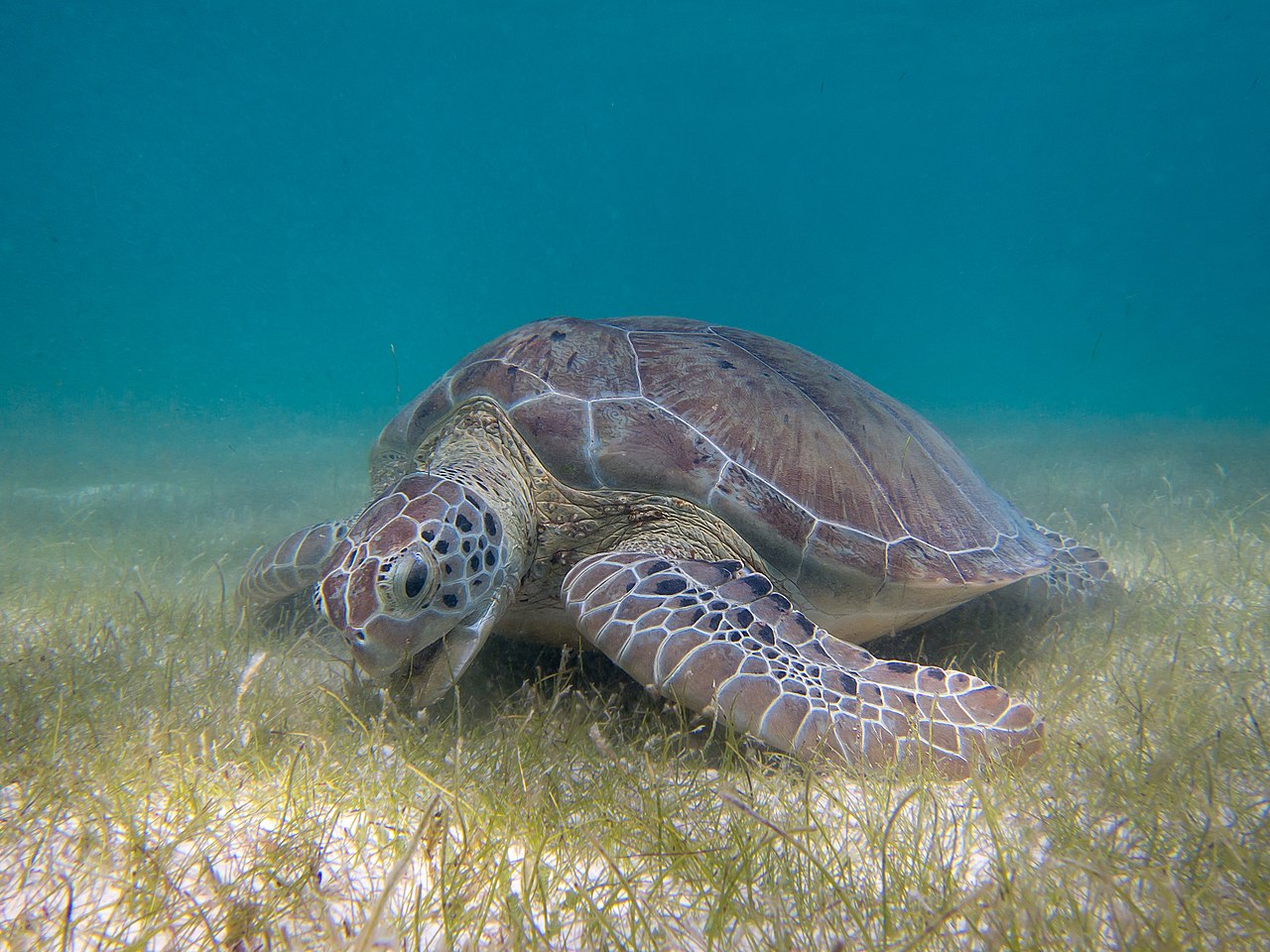
10 Images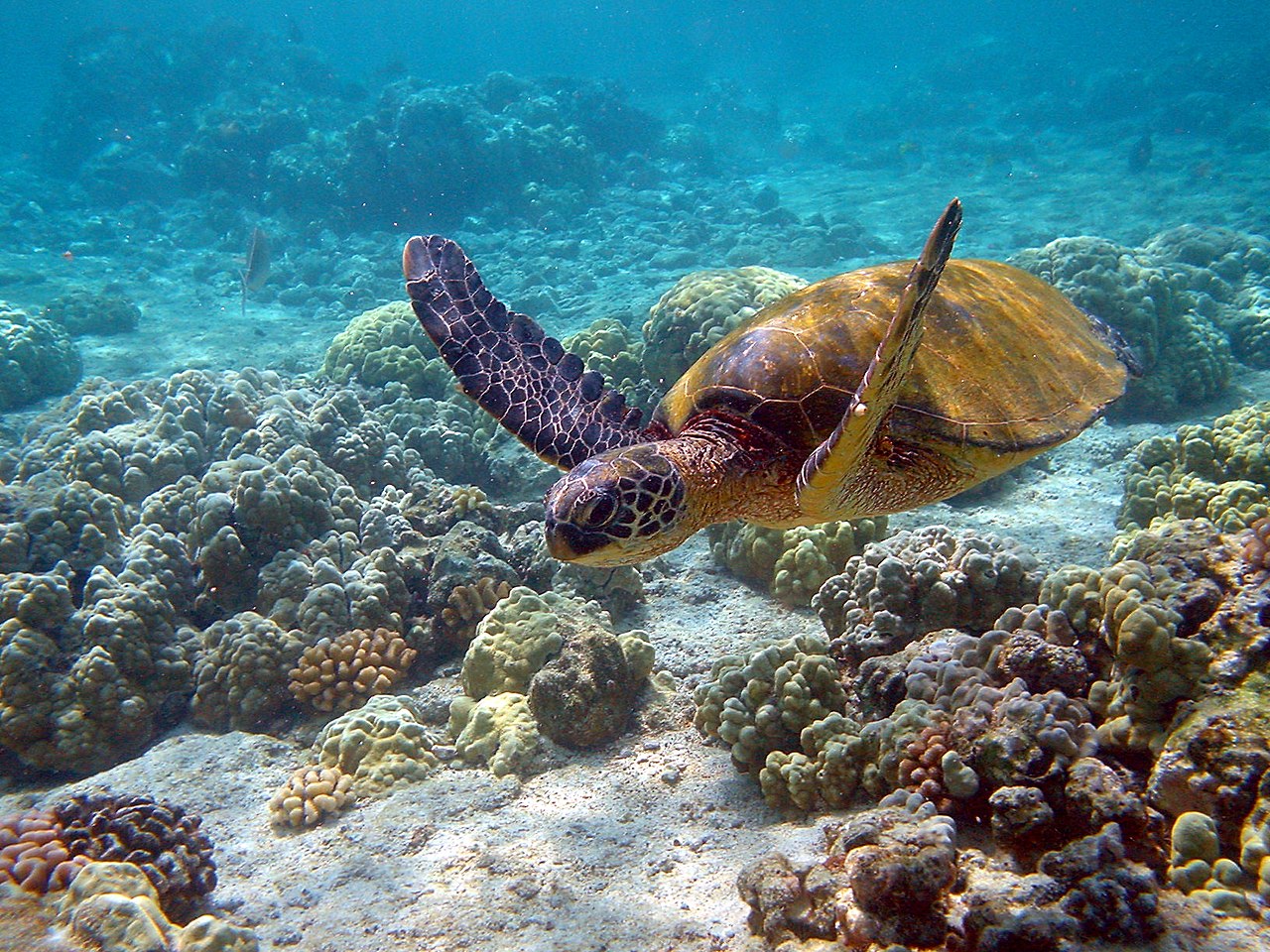



Taxonomy and identification
Adults have a streamlined carapace and paddle-like forelimbs adapted for swimming. The common name refers to the greenish color of the fat beneath the carapace, not the shell. Juveniles often have different coloration and diet compared with adults, and the species has been studied for regional variation in size and shell pattern.
Distribution, habitat and diet
Green turtles use a range of habitats: open ocean for pelagic juveniles, coastal seagrass beds and algal flats for adults, and sandy beaches for nesting. Adults are largely herbivorous, feeding mainly on seagrasses and marine algae, which helps maintain healthy seagrass ecosystems.
Life cycle and behavior
Females return to sandy beaches to lay multiple clutches of eggs, often showing natal homing to the region where they hatched. Incubation conditions can affect hatchling sex, and hatchlings face high natural mortality. Sexual maturity is reached only after many years, making populations slow to recover from declines.
Threats and conservation
Populations have declined due to threats such as fisheries bycatch, coastal development that degrades nesting habitat, pollution, illegal harvesting of eggs and turtles, and climate change affecting beaches and sex ratios. The species is protected by national laws and international agreements in many places; conservation actions include protected nesting sites, fisheries bycatch mitigation, habitat restoration, and coordinated monitoring.
Further information
- Ecological role: grazing on seagrass helps maintain coastal habitats.
- Conservation requires international cooperation because of long migrations.
- Research and monitoring guide management of nesting beaches and fisheries.
For more general taxonomic and conservation resources see relevant species summaries and family accounts at further reading.
Questions and answers
Q: What is the Green sea turtle?
A: The Green sea turtle is a large sea turtle belonging to the family Cheloniidae.
Q: How many species are there in the genus of the Green sea turtle?
A: The Green sea turtle is the only species in its genus.
Q: What is the conservation status of the Green sea turtle?
A: The Green sea turtle is one of the seven marine turtles, which are all endangered.
Q: What family does the Green sea turtle belong to?
A: The Green sea turtle belongs to the family Cheloniidae.
Q: How is the Green sea turtle different from other sea turtles?
A: The Green sea turtle is the only species in its genus.
Q: What is the significance of the Green sea turtle being endangered?
A: The Green sea turtle being endangered means it is at risk of becoming extinct, which can have negative impacts on the ecosystem.
Q: Why is it important to protect endangered species like the Green sea turtle?
A: It is important to protect endangered species like the Green sea turtle to maintain biodiversity and a healthy ecosystem. Additionally, endangered species can have economic and cultural significance.
Related articles
Author
AlegsaOnline.com Green sea turtle (Chelonia mydas) Leandro Alegsa
URL: https://en.alegsaonline.com/art/120031
Sources
- iucnredlist.org : "Chelonia mydas (Green turtle)"
- nmfs.noaa.gov : "Green turtle (Chelonia mydas) - Office of Protected Resources - NOAA Fisheries"