
Grand Duchess Olga Nikolaevna of Russia
Eldest daughter of Tsar Nicholas II, known for nursing during World War I; she was executed with her family in 1918 and later canonized. Her remains were identified by DNA and reburied in St. Petersburg.
Overview
Grand Duchess Olga Nikolaevna (Russian: Великая Княжна Ольга Николаевна) was the eldest daughter of Tsar Nicholas II, the final ruler of Imperial Russia. Born on November 15 (Old Style: November 3) 1895, she grew up at the center of the Romanov court and was widely visible in public life. Her given name and titles in the Russian language are recorded in formal registers and biographies (Russian form).
Image gallery
10 Images


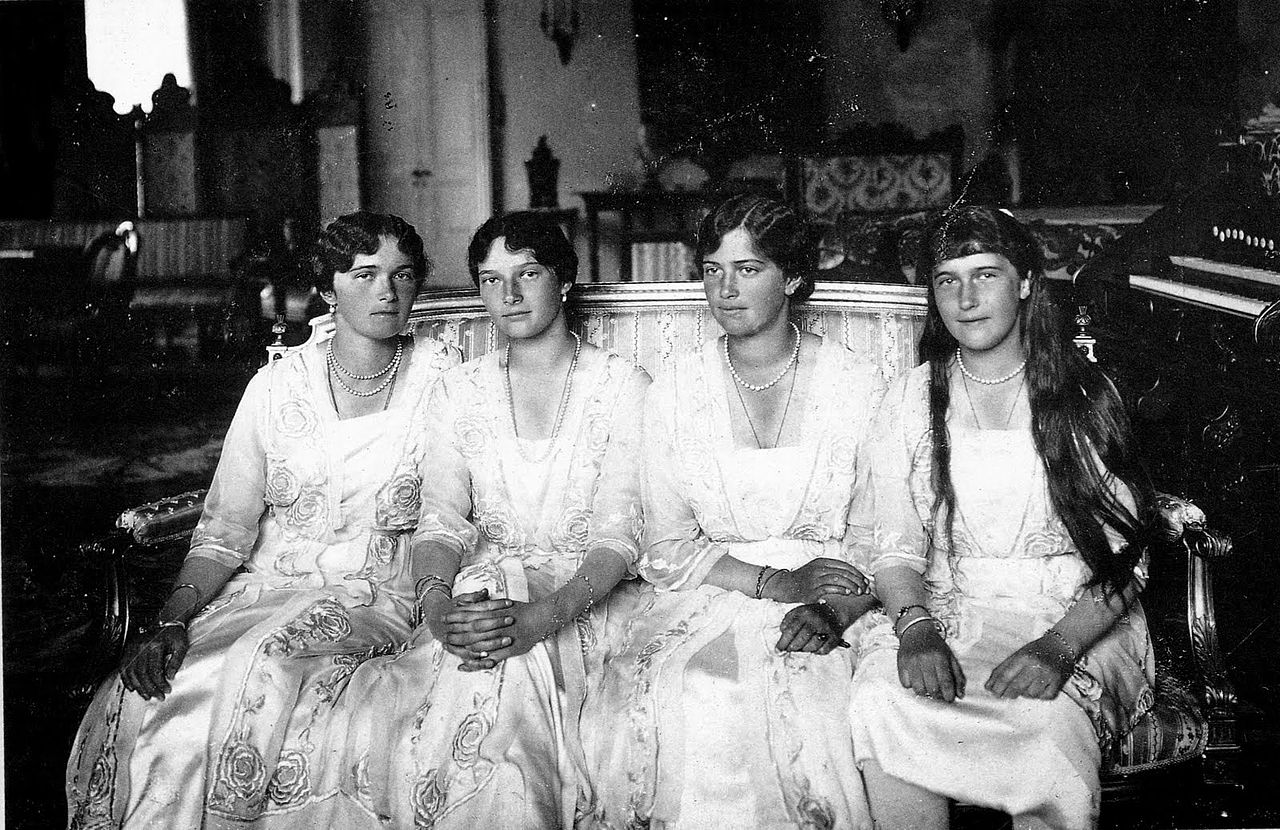


Early life and personality
As the first child of the imperial couple, Olga played a prominent role among her four sisters and her brother, Alexei. Contemporary accounts describe her as composed, intelligent and socially at ease. She received a conventional dynastic education in languages, history and court etiquette, but she also took an interest in medicine and practical service. These qualities shaped her public activities during the First World War and in the family's final years.
Marriage prospects and family expectations
Like other royal daughters, Olga's marriage prospects were the subject of frequent speculation. Domestic and foreign commentators guessed at potential matches, and there were rumors linking her name to several European princes, from a Russian grand duke to figures such as Crown Prince Carol of Romania and other high-ranking heirs. Many observers noted that Olga herself preferred to remain in Russia and, if possible, to marry a Russian rather than leave the country (marriage talk, inside Russia).
War service and public work
When World War I (World War I) broke out, Olga volunteered for service and trained as a nurse. She worked at a military facility, tending wounded soldiers and learning to perform basic nursing tasks. Accounts record that she spent long hours in a wartime military hospital, where she practiced nursing and later took on administrative duties after she fell ill. The hospital where she served is frequently mentioned in descriptions of the imperial family's wartime activities (hospital).
Captivity, execution, and burial
Following the 1917 revolution, Olga and her family were held under house arrest and eventually moved to Ekaterinburg. On July 17, 1918 they were killed by Bolshevik agents; contemporary records and later historical investigations describe the violent end of the imperial household (murdered by the Bolsheviks and their secret police). The Russian Orthodox Church later recognized the family; the Romanovs were canonized as passion-bearers by church authorities, an act that acknowledged their martyrdom in the view of believers (Russian Orthodox Church).
Identification, impostors and legacy
For decades afterward, rumors persisted about possible survivors and impostors. Several people claimed to be members of the imperial family — one of the better-known claimants alleged to be Olga was Marga Boodts — but these assertions were never accepted by historians or official investigators. Modern scholarly consensus, supported by forensic study, holds that Olga was killed at Ekaterinburg along with her relatives; scientific analysis of recovered remains using DNA techniques has clarified what happened to the family (historians and forensic teams).
- Reburial: many of the recovered remains were interred in a public funeral and tomb at the Peter and Paul Cathedral in St. Petersburg.
- Religious status: Olga and her relatives are commemorated in the church calendar as victims of revolutionary violence.
- Cultural presence: Olga remains a figure of interest in biographies, museum exhibits and popular histories of the Romanovs.
Olga Nikolaevna's life has become a focal point for discussions about imperial Russia's final years: she is remembered both for her privileged upbringing and for her wartime service, and her tragic death symbolizes the collapse of the Romanov dynasty. Scholars continue to study archival materials, eyewitness testimony and the scientific evidence that has emerged in the decades since 1918 to refine our understanding of her life and death.
Questions and answers
Q: Who was Grand Duchess Olga Nikolaevna of Russia?
A: Grand Duchess Olga Nikolaevna of Russia (Olga Nikolaevna Romanova) was the oldest daughter of Tsar Nicholas II of Russia, the last sovereign of Imperial Russia, and his wife Alexandra Fyodorovna.
Q: What were some stories about her future marriage?
A: There were stories about matches with Grand Duke Dmitri Pavlovich of Russia, Crown Prince Carol of Romania, Edward, Prince of Wales, eldest son of Britain's George V, and with Crown Prince Alexander of Serbia. Olga wanted to marry a Russian and stay in her home country.
Q: What did she do during World War I?
A: During World War I, Olga nursed wounded soldiers at a military hospital until she became ill herself. After that, she managed administrative duties at the hospital.
Q: How did she die?
A: Olga was murdered with her family on July 17th 1918 by the Bolshevik secret police.
Q: Was there anyone who falsely claimed to be surviving members of the royal family?
A: Yes, a woman named Marga Boodts claimed to be Grand Duchess Olga but she was not taken seriously. Historians believe that Olga was killed with her family at Ekaterinburg.
Q: How were her remains identified?
A: Her remains were identified through DNA testing.
Q: Where are her remains buried now?
A: Her remains were buried in a funeral ceremony in 1998 at Peter and Paul Cathedral in St Petersburg with those of her parents and two sisters.
Related articles
Author
AlegsaOnline.com Grand Duchess Olga Nikolaevna of Russia Leandro Alegsa
URL: https://en.alegsaonline.com/art/120016
Sources
- alexanderpalace.org : The Life and Tragedy of Alexandra Feodorovna