
Gordon Welchman
British mathematician and World War II codebreaker who led Hut 6 at Bletchley Park, devised improvements to the Bombe, and later moved to the United States and wrote about his wartime work.
William Gordon Welchman (15 June 1906 – 8 October 1985) was a British mathematician and prominent World War II codebreaker. Born in Bristol, he became one of the senior figures at Bletchley Park, the United Kingdom’s principal centre for signals intelligence during the conflict, and died in Newburyport, Massachusetts after emigrating to the United States.
Image gallery
2 Images
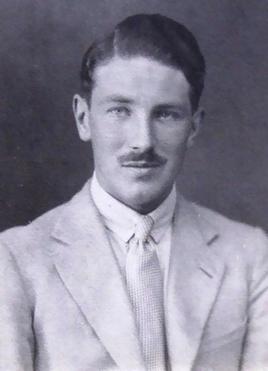
Overview and background
Welchman trained as a mathematician and held academic posts before and after the war. His formal training and organizational skills made him well suited to the practical and managerial demands of wartime cryptanalysis. Although much of the work at the time was secret, Welchman’s role later became widely recognized through his own writing and historical accounts.
Work at Bletchley Park
At Bletchley Park, Welchman was a key leader in the effort to break German Army and Air Force Enigma traffic. He headed operations in what became known as Hut 6, where teams of mathematicians, linguists and technicians translated cryptologic insight into operational success. One of his notable technical contributions was the invention of the "diagonal board," an addition to the electromechanical Bombe machines that improved the efficiency of searching for Enigma machine settings. Welchman worked alongside other central figures of the programme, coordinating analysis and translating theoretical breakthroughs into procedures used by wartime operators.
Later life and publications
After the war, Welchman moved to the United States and eventually took American citizenship. He continued to write and lecture about cryptology once wartime secrecy restrictions eased. His memoir and accounts of Hut 6 provided one of the earliest first‑hand narratives of the problems, people and techniques involved in breaking Enigma and helped the public understand the technical and human sides of wartime codebreaking.
Legacy and notable facts
Welchman is remembered for combining mathematical insight with practical engineering changes and strong organizational leadership. Recognition of his contribution arrived slowly because of official secrecy, but historians now regard him as one of the key operational innovators at Bletchley Park. His career bridged academia and applied signals intelligence, and his writings remain a source for scholars and general readers.
- Full name: William Gordon Welchman.
- Born: 15 June 1906, Bristol.
- Role: Head of Hut 6 and developer of the diagonal board at Bletchley Park.
- Profession: Mathematician and university lecturer.
- Died: 8 October 1985, Newburyport.
- Further reading: his memoir and later historical studies provide detailed accounts of his work and the broader efforts at Bletchley Park.
Questions and answers
Q: Who was Gordon Welchman?
A: Gordon Welchman was a mathematician, university professor, and author who worked as a codebreaker during the Second World War at Bletchley Park.
Q: What was Gordon Welchman's role at Bletchley Park?
A: Welchman worked as a codebreaker at Bletchley Park during the Second World War.
Q: Where was Gordon Welchman born?
A: Welchman was born in Bristol, England.
Q: Where did Gordon Welchman move to after the war?
A: After the war, Welchman moved to the US.
Q: Did Gordon Welchman become a US citizen?
A: Yes, Welchman later took American citizenship.
Q: When did Gordon Welchman die?
A: Welchman died on 8 October 1985 in Newburyport, Massachusetts.
Q: What was Gordon Welchman's area of expertise?
A: Welchman's area of expertise was mathematics.
Related articles
Author
AlegsaOnline.com Gordon Welchman Leandro Alegsa
URL: https://en.alegsaonline.com/art/119978
Sources
- bletchleypark.org.uk : Gordon Welchman: Bletchley Park's architect of Ultra intelligence