
Golda Meir: Israel's Prime Minister (1969–1974) and Early Female Head of Government
Biography of Golda Meir, Israel’s prime minister from 1969–1974 and one of the world’s earliest female heads of government, covering her leadership, wartime crises and political legacy.
Golda Meir (born Golda Mabovitch; May 3, 1898 – December 8, 1978) was an Israeli politician who served as the country’s prime minister from 1969 to 1974. Her name appears in Hebrew (link) and Arabic (link) scripts. Between 1917 and 1956 she was also known by the surname Myerson.
Image gallery
10 Images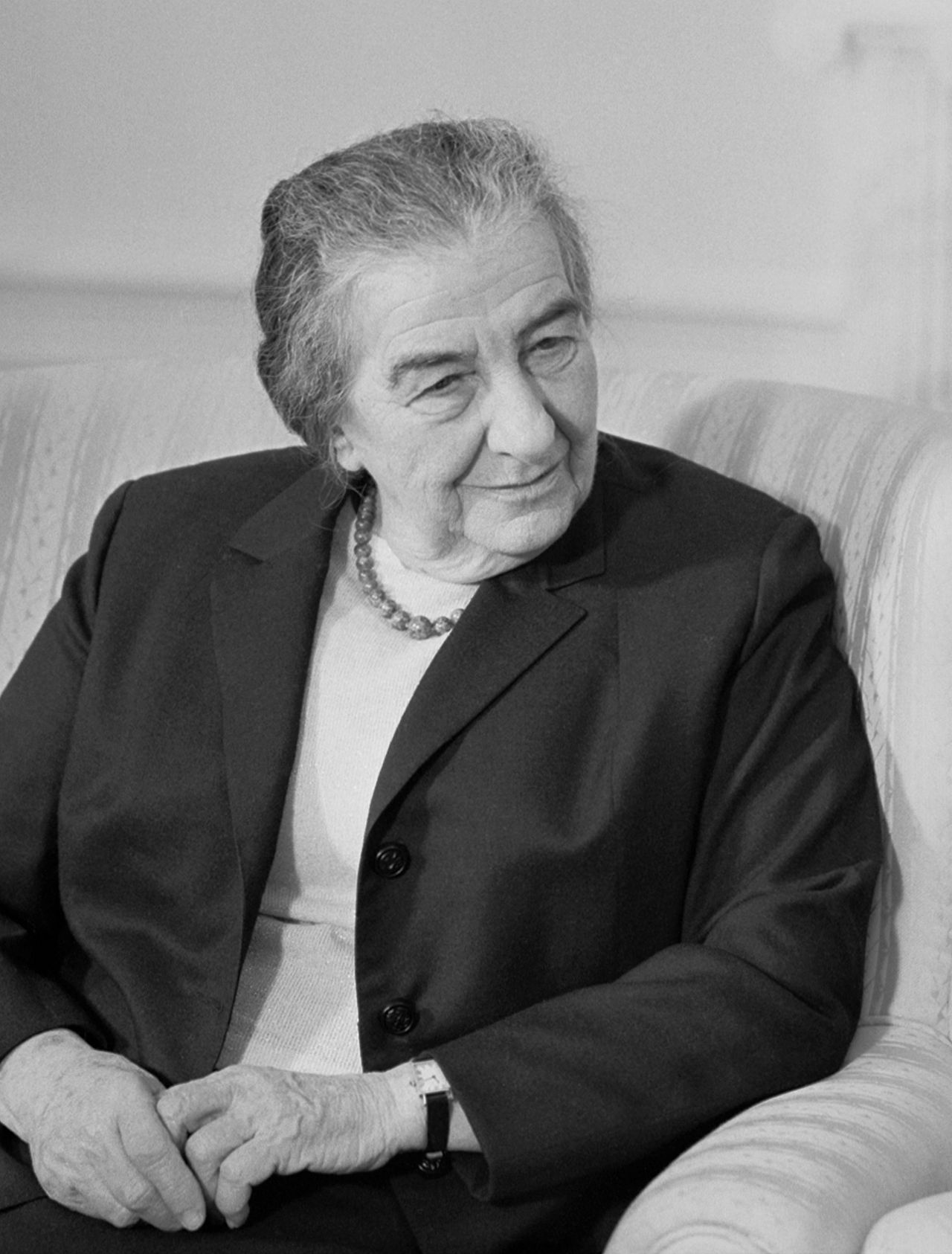
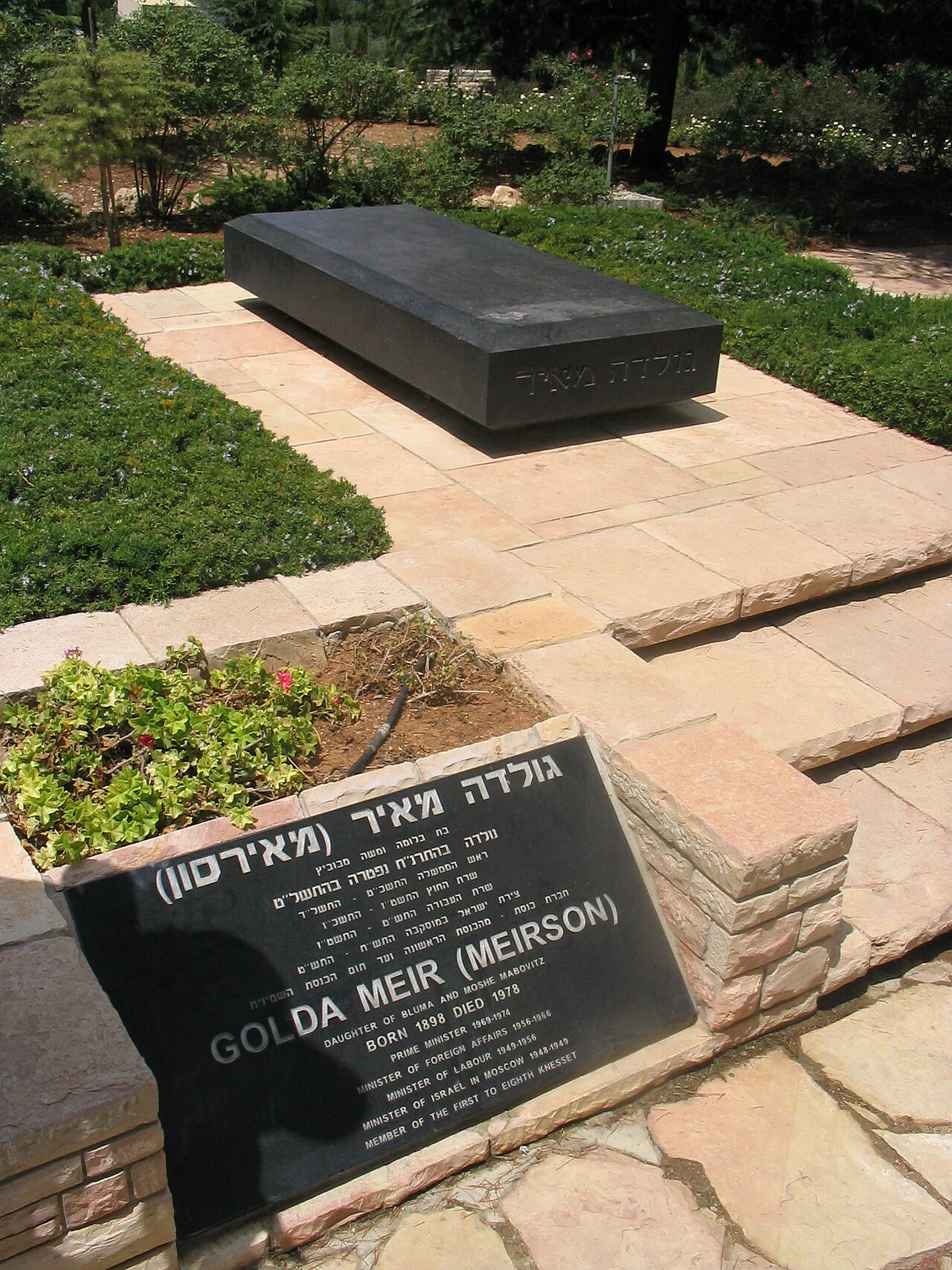


Early life
Golda Meir was born in Kiev in the Russian Empire and emigrated with her family to the United States as a child. She became active in Zionist circles and moved to Mandatory Palestine in the early 1920s, where she took part in labor and communal organizations before entering national politics.
Political career
Meir was a founding figure in the political institutions of the State of Israel. She held several senior cabinet posts, including Minister of Labour and later Foreign Minister, before becoming Prime Minister of Israel on March 17, 1969.
As prime minister
During her premiership Meir confronted major crises that shaped Israel’s domestic and foreign policy. In 1972, the massacre of Israeli athletes at the Summer Olympic Games in Munich shocked the nation. The following year, in 1973, the country fought the Yom Kippur War, a conflict that exposed shortcomings in Israeli preparedness and provoked intense public debate about responsibility at both military and political levels.
Meir was often described as a forceful and determined leader; some commentators applied the epithet “Iron Lady” to her long before it became widely associated with British prime minister Margaret Thatcher. After the Yom Kippur War, widespread criticism of the government’s performance and a public demand for accountability led Meir to resign in 1974. Subsequent official inquiries focused criticism mainly on military command, though the political fallout remained decisive for her career.
Legacy
- She remains Israel’s first and, to date, only woman to have led the government.
- Internationally, Meir is remembered as one of the earliest female heads of government in the modern era.
- Her tenure is often studied for its handling of immigration, labor policy, and crisis management during wartime.
Golda Meir retired from public life after leaving office and died in 1978. Her role in Israeli history continues to be the subject of biographies and scholarly discussion.
Questions and answers
Q: Who was Golda Meir?
A: Golda Meir was the fourth prime minister of the State of Israel and the world's third female prime minister.
Q: When did Golda Meir become the Prime Minister of Israel?
A: Golda Meir became Prime Minister of Israel on March 17 1969.
Q: What was Golda Meir's nickname in Israel's politics?
A: Golda Meir was said to be the "Iron Lady" (a strong-minded woman) of Israel's politics.
Q: What major events took place during Golda Meir's time as Prime Minister?
A: The murder of eleven Israeli athletes at the 1972 Summer Olympic Games and the 1973 Yom Kippur War were the two biggest events of her time as prime minister.
Q: Was Golda Meir Israel's first female prime minister?
A: Yes, Golda Meir was Israel's first and so far only female prime minister.
Q: Why did Golda Meir leave her job as Prime Minister of Israel?
A: The Yom Kippur War raised questions about her handling of the war, and though she was found to be not to blame for problems with the war, Meir left her job.
Q: What was Golda Meir's original name before she changed it?
A: Golda Meir's birth name was Golda Mabovitch, and she changed it to Golda Myerson in 1917, which she used until 1956.
Related articles
Author
AlegsaOnline.com Golda Meir: Israel's Prime Minister (1969–1974) and Early Female Head of Government Leandro Alegsa
URL: https://en.alegsaonline.com/art/119945
Sources
- news.bbc.co.uk : Golda Meir
- ajhs.org : Golda Meir's American Roots
- mscd.edu : Golda Meir: An Outline Of A Life
- zionism-israel.com : Biography of Golda Meir
- virtualjerusalem.com : Golda Meir