
Giordano Bruno: philosopher, cosmologist and controversial thinker
Italian Renaissance philosopher Giordano Bruno (1548–1600) proposed an infinite universe, wrote on memory and cosmology, and was executed for doctrines judged heretical by the Roman Inquisition.
Overview
Giordano Bruno was an Italian intellectual born in 1548 who trained as a friar and became known for challenging established scientific and theological ideas. Early in his life he entered religious life as a Dominican friar and was associated with the Dominican Order, but he later left and spent much of his career travelling and teaching across Europe. His writings combine philosophical speculation, natural philosophy, and literary forms common to the Renaissance.
Image gallery
10 Images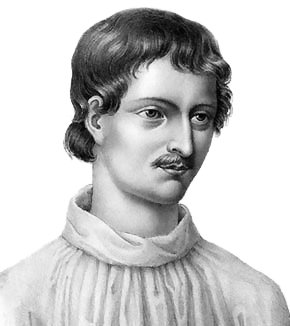





Thought and cosmology
Bruno is notable for arguing that the cosmos extends indefinitely and that the fixed, finite universe of Aristotelian cosmology was wrong. While building on the Copernican model, he went further by proposing an effectively boundless universe containing innumerable worlds and tellingly reinterpreting stars as suns similar to our own. Contemporary descriptions often highlight his role as a philosopher and mathematician who fused metaphysical ideas with an expansive view of nature.
Main ideas
- Infinite universe: Bruno held that space has no center and that the universe may be infinite in extent and content — a claim sometimes summarized with the phrase infinity of the universe.
- Plurality of worlds: He suggested that stars are like our Sun and could be surrounded by their own planets, undermining the uniqueness of Earth.
- Religious and philosophical dissent: He refused to accept certain doctrines of the Roman Catholic Church as he developed a more pantheistic and cosmically expansive metaphysics.
Works and the art of memory
Bruno produced a varied corpus in Latin and Italian, including dialogues and short treatises that mix philosophical argument with rhetorical flourish. He also wrote extensively on the classical practice known as the art of memory: mnemonic systems, images, and combinatory techniques used for learning and invention. His mnemonic interests are part of a broader Renaissance tendency to link memory, language and the structure of knowledge; scholars often point to his contributions to these methods as influential on later intellectual history. For discussion of his mnemonic techniques see references to mnemonic traditions.
Trial, execution, and controversy
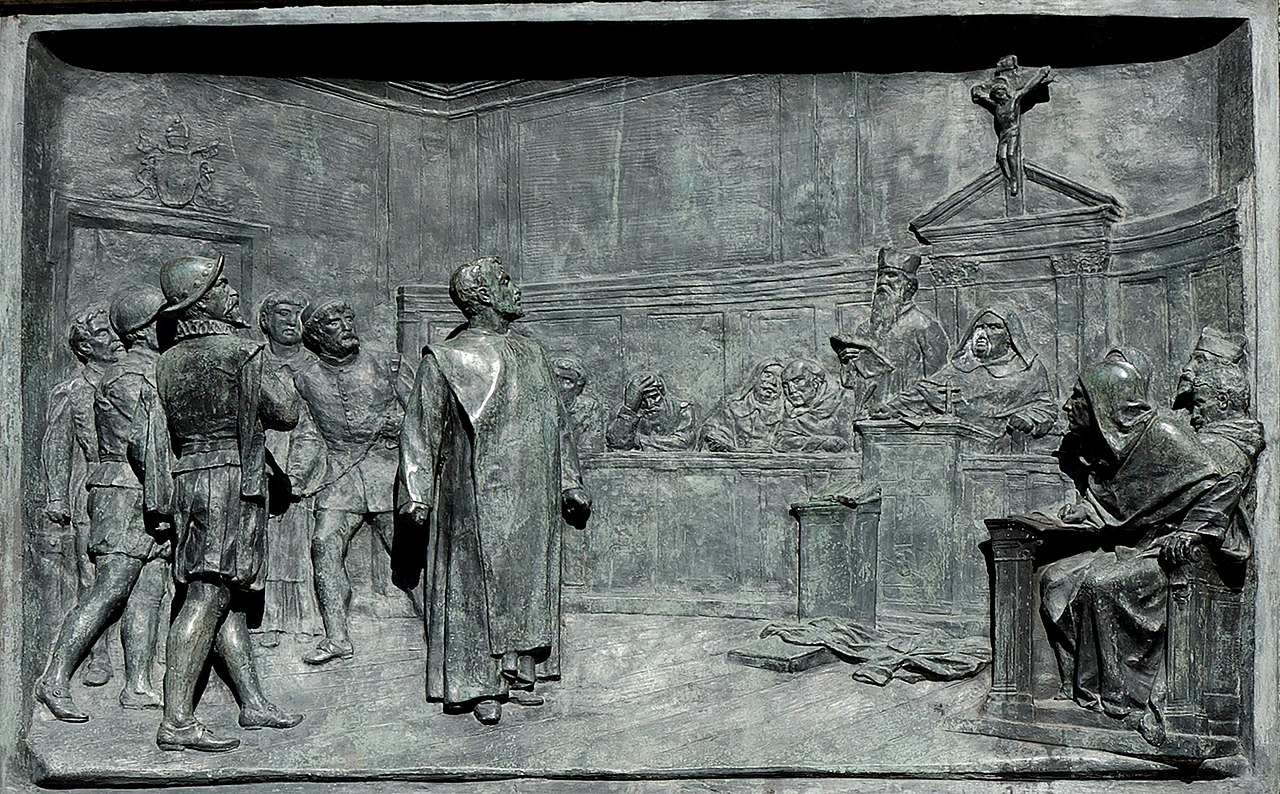
Bruno's outspoken rejection of certain theological points and his public expressions of heterodox ideas led to confrontation with ecclesiastical authorities. Charges brought against him included denial or revision of central doctrines such as transubstantiation and the Trinity, among others. After a lengthy legal process he was condemned by the Roman tribunal and publicly executed — burned at the stake as a heretic following proceedings by the Inquisition. Historians note the complex mix of religious, intellectual and political factors that contributed to his conviction.
Legacy and reception
Since his death in 1600 Bruno has been remembered in different ways: as a martyr for intellectual freedom by some, and as a mystic or speculative metaphysician by others. His cosmological daring prefigured later debates about the size and structure of the universe, while his mnemonic and philosophical writings influenced Renaissance and post‑Renaissance thinkers. Modern accounts treat him as a significant, if controversial, figure in the history of ideas whose case illuminates the tensions between innovation and authority in early modern Europe. For further reading and primary texts consult collections and reliable scholarly sources via biographical and historical portals as well as specialized studies linked from academic repositories (philosophy, cosmology, astronomy, church history, and archival documentation at theological libraries). Additional discussions of his trial and texts are available through modern scholarly editions and commentaries (editions, analyses, legal perspectives and mnemonic studies).
Questions and answers
Q: Who was Giordano Bruno?
A: Giordano Bruno was an Italian friar, philosopher, and mathematician.
Q: What is Giordano Bruno best known for?
A: Giordano Bruno is best known for believing in the infinity of the universe.
Q: What did Giordano Bruno believe about the universe?
A: Giordano Bruno believed that the universe was infinite and that the Sun was just one of many independently moving heavenly bodies.
Q: What is significant about Giordano Bruno's beliefs about the stars?
A: Giordano Bruno believed that the stars we see at night are identical in nature to the Sun, which was a radical idea at the time.
Q: How did Giordano Bruno's beliefs lead to his death?
A: Giordano Bruno's beliefs about the universe were contrary to Roman Catholic dogma, which led to his being burnt at the stake as a heretic by the Inquisition of the Roman Catholic Church.
Q: What other topics did Giordano Bruno write about?
A: Giordano Bruno also wrote extensively about the art of memory, a loosely organized group of mnemonic techniques and principles.
Q: Was Giordano Bruno only a philosopher?
A: No, Giordano Bruno was also a mathematician and a friar of the Dominican Order.
Related articles
Author
AlegsaOnline.com Giordano Bruno: philosopher, cosmologist and controversial thinker Leandro Alegsa
URL: https://en.alegsaonline.com/art/119828
Sources
- giordanobruno.info : Full Italian text, Giordano Bruno.info: Download