
Æthelbald of Mercia (d. 757) — King and Mercian Overlord
Æthelbald, king of Mercia (reigned c.716–757), restored Mercian dominance in Anglo-Saxon England, clashed with the Church, and left a mixed legacy of political strength and moral controversy.
Overview
Æthelbald (also spelled Aethelbald; died 757) was a dominant early 8th-century ruler of the kingdom of Mercia in what is now the English Midlands. Rising to power after a period of Mercian weakness, he rebuilt Mercia into the leading force among the Anglo-Saxon polities of southern Britain and exercised overlordship over several neighbouring kingdoms. Contemporary and near-contemporary sources emphasize both his political skill and the moral controversies that surrounded his court.
Image gallery
8 Images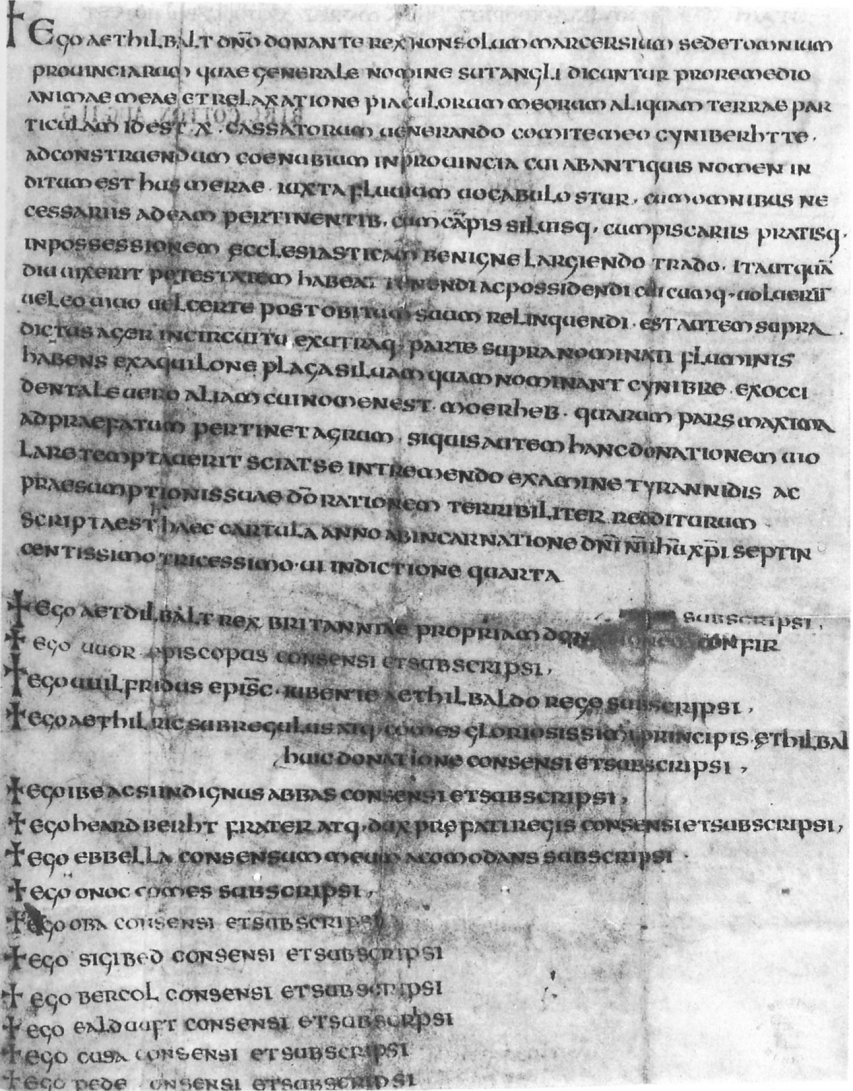


Rise and exercise of power
Æthelbald's reign is usually dated from the early 710s until his death in 757. Through military action, diplomacy and the subjugation of rival rulers he extended Mercian influence over other Anglo-Saxon kingdoms. He is often described as a hegemon among southern rulers, and contemporary writers record titles or phrases that signalled a pan-Anglian authority. For a concise modern introduction to the political setting, see overview sources.
Government, economy, and public acts
Under Æthelbald Mercia strengthened its institutions of kingship. He controlled land grants, imposed levies, and demanded tribute from sub-kings. Evidence of administrative activity appears in charters and in later chronicles that record Mercian coinage and jurisdiction. His court was a centre for redistribution of wealth and the enforcement of royal prerogative; for examinations of Mercian administration consult studies of Mercian governance and numismatic surveys at specialist collections.
Relations with the Church
Æthelbald claimed Christian status and patronised some ecclesiastical foundations, yet he also abused church resources and clergy according to contemporary correspondence. Notably, missionaries and church leaders criticized his personal conduct and his appropriation of church lands and incomes for secular use. Letters and accounts surviving from continental and English clerics discuss attempts to reform his behaviour; see ecclesiastical correspondence and commentary in collections such as primary source compendia.
Legacy and succession
Æthelbald's death in 757 ended a lengthy and consequential reign. After his assassination or violent removal from power (accounts vary), Mercia briefly slipped into instability before new leaders restored its strength later in the 8th century. His long rule helped consolidate Mercian preeminence in southern England and contributed to the gradual emergence of a broader Anglo identity; modern discussions of ethnic labels and political identity reference his use of terms like "gens Anglorum" in source material—see ethnic identity studies and historical surveys.
Notable facts and interpretations
- He is often credited with restoring Mercian supremacy after earlier rulers such as Penda and Wulfhere had established regional power.
- Contemporary critics, including church figures, condemned his private life and fiscal demands on the church; some surviving letters address these complaints directly—see ecclesiastical critiques.
- Scholars emphasize the mixed nature of his legacy: political consolidation and expansion on one hand, and moral and religious conflict on the other; for balanced modern analyses consult recent historiography.
Æthelbald remains a significant figure for the study of early medieval rulership, the relationship between secular and ecclesiastical power, and the processes that shaped early English political identity.
Questions and answers
Q: Who was Aethelbald?
A: Aethelbald was a nobleman who became the King of Mercia.
Q: What did Aethelbald do for Mercia?
A: Aethelbald brought Mercia back to a position of power not seen since the days of Penda and Wulfhere.
Q: What title did Aethelbald use that his people began calling themselves English instead of Saxons, Jutes or Angles?
A: Aethelbald used the title "king of the gens Anglorum" and his people began calling themselves English instead of Saxons, Jutes or Angles.
Q: Was Aethelbald a supporter of the Church?
A: No, Aethelbald was not a supporter of the Church.
Q: What did Aethelbald claim to be?
A: Aethelbald claimed to be Christian.
Q: How did Aethelbald lead his lifestyle?
A: Aethelbald led a scandalous and wicked lifestyle.
Q: What was the significance of Aethelbald's title and his people beginning to call themselves English?
A: Aethelbald's title and his people beginning to call themselves English signified the formation and identity of a united English kingdom.
Related articles
Author
AlegsaOnline.com Æthelbald of Mercia (d. 757) — King and Mercian Overlord Leandro Alegsa
URL: https://en.alegsaonline.com/art/1196