
George Grenville: British Prime Minister and Fiscal Reformer (1712–1770)
George Grenville was an 18th-century British Whig statesman who served as Prime Minister (1763–1765), implemented fiscal measures after the Seven Years' War, and sponsored the Stamp Act that provoked colonial protest.
Overview
George Grenville (14 October 1712 – 13 November 1770) was a British Whig politician who served as Prime Minister of Great Britain from 1763 to 1765. He is widely remembered for his efforts to reform government finance and administration after the costly Seven Years' War and for legislation, notably the Stamp Act, that intensified tensions between Parliament and the North American colonies. Unusually for a man who reached the premiership, he did not accept a hereditary title of nobility.
Image gallery
7 Images



Family background and education
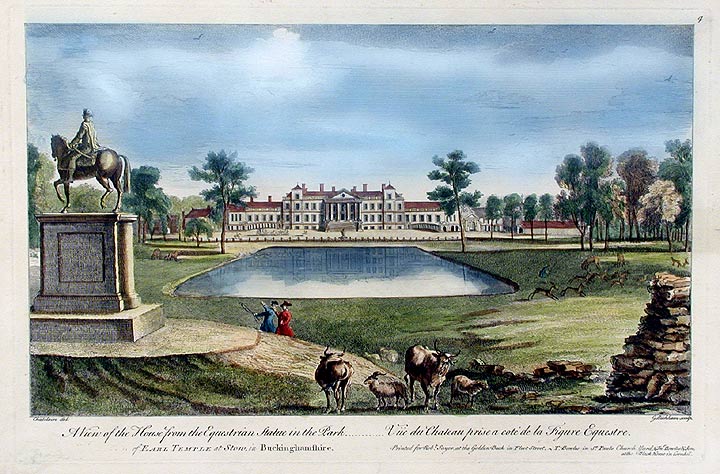
Grenville was born into an established political family. He was the second son of Richard Grenville and Hester Temple and the younger brother of Richard Grenville-Temple, who was also active in politics. He was educated at Eton College and Christ Church, Oxford, schools that provided many of the era's political and administrative leaders. His family connections and schooling helped him enter public life and gain early access to influential circles.
Parliamentary career and administrative skill
Grenville entered Parliament in 1741 as the member for Buckingham, a seat he held until his death in 1770. Over the following two decades he acquired a reputation for painstaking attention to detail, mastery of parliamentary procedure and strong administrative competence. He served in a number of offices, including Treasurer of the Navy, where he introduced measures to regularize payments and reduce corruption in sailors' wages and supplies.
Senior offices and premiership
- Under successive administrations he acted as a senior figure, serving as Leader of the House of Commons in Lord Bute's ministry and later occupying senior cabinet posts.
- In May 1762 he became Secretary of State for the Northern Department and later First Lord of the Admiralty.
- In April 1763 he assumed the offices of First Lord of the Treasury and Chancellor of the Exchequer and thus formed the administration commonly associated with his name.
Fiscal policy and the Stamp Act
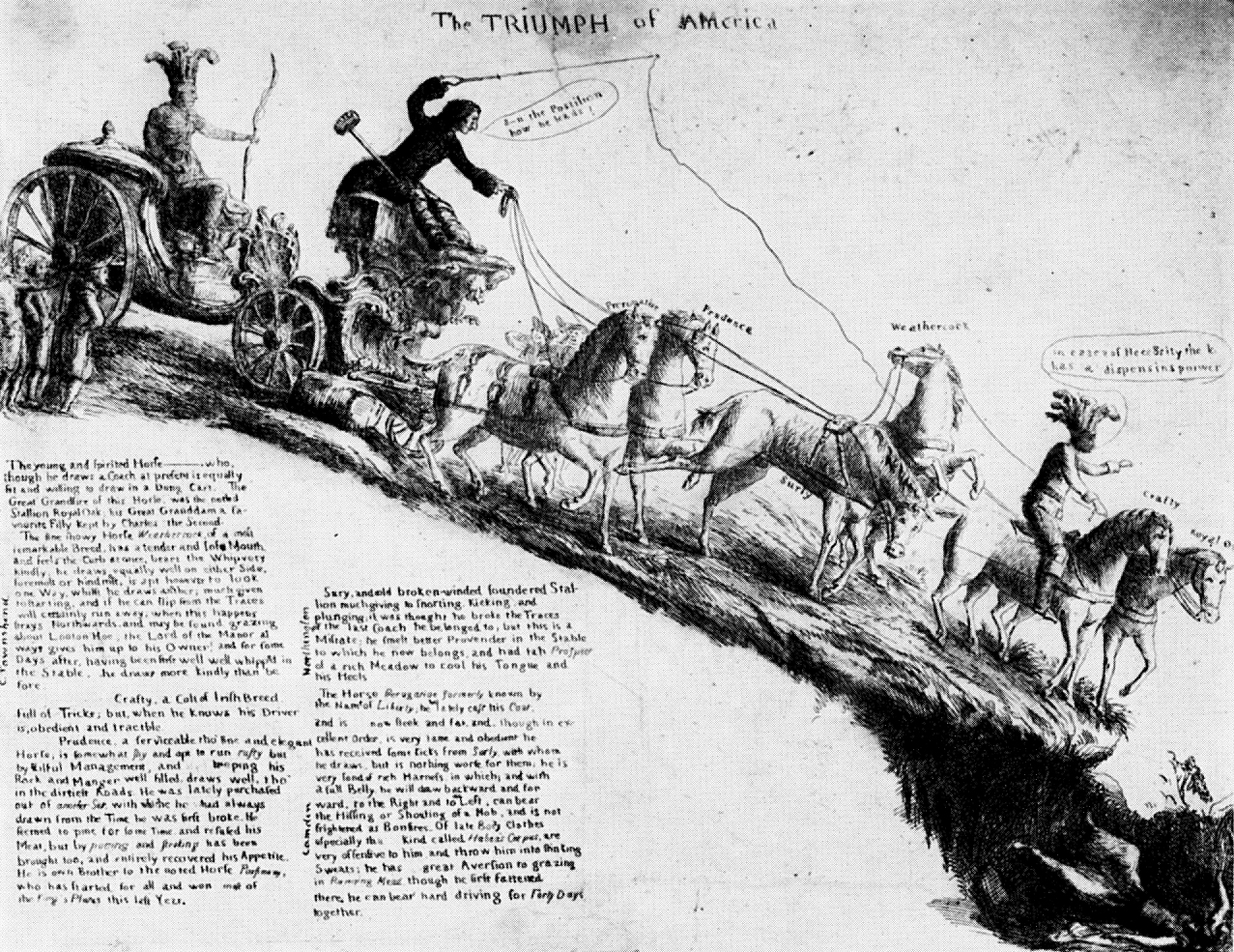
Facing a large national debt following the Seven Years' War, Grenville and his ministers sought new revenues and stricter customs enforcement. Their aim was to reduce the burden on British taxpayers while securing funds to maintain imperial defenses. One of the most controversial measures enacted during Grenville's leadership was the Stamp Act of 1765, which required that a variety of printed materials and legal documents in the American colonies bear an official stamp demonstrating payment of a tax. The Act was intended to raise revenue directly from the colonies but was widely resisted as unjust because the colonists had no direct representatives in Parliament.
Colonial reaction and long-term consequences
The Stamp Act sparked vigorous protest across the colonies, from formal petitions and resolutions to popular demonstrations and boycott movements. Colonial leaders articulated the principle that taxation required representation, and resistance produced a political crisis that pressured Parliament and shaped future imperial policy. Although the Stamp Act was repealed the following year, the episode left a legacy of mistrust and contributed to a chain of disputes that culminated in the American Revolutionary War more than a decade later. Contemporary prosecutions, such as that of the radical journalist John Wilkes, and actions against colonial printers further fuelled public debate on civil liberties and parliamentary authority.
Personality, reputation and dismissal
Grenville was respected for his legal and procedural knowledge and for a disciplined approach to government. At the same time, he was often criticized for a lack of political tact and flexibility. Anecdotes from parliamentary debates—such as his repetitive questioning during the Cider Bill discussions that earned him the nickname the "gentle shepherd"—illustrate a tendency to insist on technical points to the point of irritation. His relationship with King George III cooled as the young monarch grew uneasy about Grenville's influence and approach. Political maneuvering resulted in the replacement of his ministry by the Rockingham administration in 1765; Grenville did not serve in a major office thereafter.
Personal life and death
In 1749 Grenville married Elizabeth Wyndham, daughter of Sir William Wyndham. The couple had seven children. Grenville continued to represent Buckingham in Parliament until his death on 13 November 1770. He was buried with the traditions accorded to a long-serving member of the political class of his time.
Assessment and legacy
Historians typically regard Grenville as an able administrator whose focus on lawful revenue and governmental order reflected fiscal realities after a major war. However, his insistence on particular policies, combined with a sometimes uncompromising manner, meant that measures intended to stabilize the imperial finances produced unintended political consequences. The Stamp Act episode in particular is seen as a turning point in imperial-colonial relations and a significant factor in the long downturn of Anglo-American cooperation in the later 18th century. Contemporary and later scholarship places Grenville within the broader story of how parliamentary policy and imperial administration interacted in this critical period.
More on his premiership | Nobility and titles | Education | Parliamentary career | Buckingham constituency | Allies and rivals | Key dates | Colonial reaction
Questions and answers
Q: Who was George Grenville?
A: George Grenville was a British politician who served as Prime Minister of Great Britain from 1763 to 1765. He was a member of the Whig Party and one of the few prime ministers who never received a title of nobility.
Q: What education did he receive?
A: George Grenville attended Eton College and Christ Church College, Oxford.
Q: When did he enter Parliament?
A: George Grenville entered Parliament in 1741 as member for Buckingham, and represented Buckingham until his death.
Q: What bill did he introduce while Treasurer of the Navy?
A: While Treasurer of the Navy in 1758, George Grenville introduced and carried a bill which established a fairer system of paying the wages of sailors.
Q: What led to disagreements between American colonies and Great Britain during his time as Prime Minister?
A: During his time as Prime Minister, George Grenville's government oversaw the passing of the American Stamp Act 1765 which led to disagreements between American colonies and Great Britain that eventually resulted in the American Revolutionary War.
Q: How did King George III feel about him being Prime Minister?
A: King George III began to think that Prime Minister Grenville was using him as a puppet, so he convinced Rockingham to become the new Prime Minister instead. As a result, Grenville never held an office again.
Q: How did Pitt respond when debating on the Cider Bill with him in 1763?
A: During debate on the Cider Bill in 1763, Pitt whistled an air from a popular tune called "Gentle Shepherd" when Grenville kept asking over and over again where they should lay new taxes if not on cider - this made everyone laugh at House proceedings.
Related articles
Author
AlegsaOnline.com George Grenville: British Prime Minister and Fiscal Reformer (1712–1770) Leandro Alegsa
URL: https://en.alegsaonline.com/art/119594