
George Crabbe: realist poet of rural life (1754–1832)
George Crabbe (1754–1832) was an English poet famed for unsentimental narrative verse about rural communities. His long poem The Borough includes the story that inspired Britten's opera Peter Grimes.
George Crabbe (24 December 1754 – 3 February 1832) was an English poet whose verse is noted for its unsparing, documentary attention to the lives of ordinary people. Born in Aldeburgh in Suffolk, and dying in Trowbridge in Wiltshire, Crabbe combined technical command of poetic form with a temperament for close observation. His long narrative poem The Borough contains the episode about a fisherman that later inspired the composer Benjamin Britten to create the opera Peter Grimes.
Image gallery
6 Images


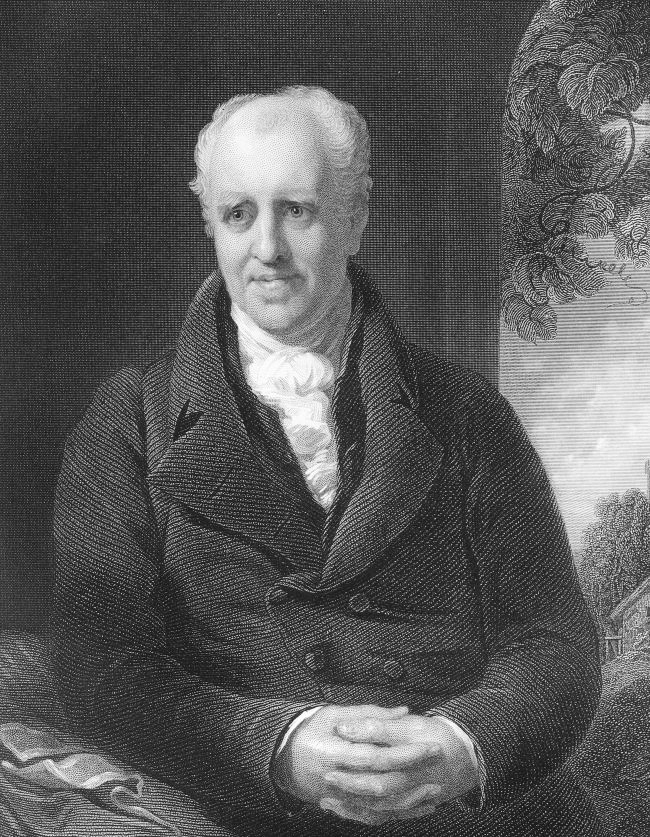
Life and career
Crabbe came from a provincial background and achieved recognition by turning away from idealized pastoral conventions then current in English poetry. Trained early in practical trades and with an interest in natural history — he has sometimes been described as a naturalist in the broad sense of an acute observer of the countryside — he later entered the clergy and spent much of his later life in parochial duties. His biography is an example of a late-18th/early-19th-century literary life that combined local service with national reputation.
Style and themes
Crabbe's poems are distinctive for their narrative energy, precise detail, and moral frankness. Rather than the ideal shepherds of pastoral verse, his characters are ordinary men and women facing poverty, illness, and social constraint. He often used heroic couplets and a controlled, sometimes bleak irony to render scenes with forensic clarity. Critics have praised his ability to make small events reveal larger social truths.
Major works and features
- The Village — an early work that signalled his rejection of pastoral clichés and attracted attention.
- The Borough — a sequence of poems portraying life in a small town; it includes the material that led to the stage work about Peter Grimes.
- Shorter narrative poems and tales in verse that illustrate recurring concerns: poverty, the limits of charity, and the stubborn particularity of place.
Readers and later artists have continued to find value in Crabbe's combination of poetic craftsmanship and documentary realism. His poems are studied both for their technical qualities — the metrical discipline and dramatic presentation — and for their social perspective, which links late-Georgian literature to later realist forms.
Reception and legacy
During his lifetime Crabbe won respect from other writers and patrons and secured a steady audience. Over subsequent centuries his reputation has been reassessed: scholars emphasise his role as a bridge between 18th-century poetic form and 19th-century realism, while musicians and dramatists have drawn on his vivid narratives for new adaptations. The connection between The Borough and the mid-20th-century opera by Benjamin Britten remains one of the clearest examples of Crabbe's continuing cultural influence.
Key points:
- Crabbe is best known for realistic, narrative poems about rural and small‑town life.
- He combined close observation with formal poetic techniques such as heroic couplets.
- His work influenced later writers and the arts, including the operatic adaptation of a Borough episode into Peter Grimes.
Questions and answers
Q: Who was George Crabbe?
A: George Crabbe was an English poet and naturalist.
Q: What was his most famous poem?
A: His most famous poem was The Borough which described life in a small town in Suffolk.
Q: What was the inspiration behind Benjamin Britten's opera Peter Grimes?
A: Benjamin Britten was inspired by George Crabbe's poem The Borough to compose his opera Peter Grimes.
Q: When and where was George Crabbe born?
A: George Crabbe was born in Aldeburgh, Suffolk on December 24, 1754.
Q: When did George Crabbe pass away and where?
A: George Crabbe passed away on February 3, 1832 in Trowbridge, Wiltshire.
Q: What were George Crabbe's professions besides being a poet?
A: George Crabbe was also a naturalist besides being a poet.
Q: What was the significance of George Crabbe's literature in the history of English literature?
A: George Crabbe's literature played a significant role in the development of English literature. His works inspired many later writers in the 19th and 20th century.
Related articles
Author
AlegsaOnline.com George Crabbe: realist poet of rural life (1754–1832) Leandro Alegsa
URL: https://en.alegsaonline.com/art/119575