
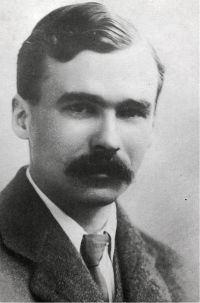
George Butterworth: English composer and folk-song collector
English composer (1885–1916) noted for settings of A. E. Housman, the orchestral rhapsody "The Banks of Green Willow", and his role in the English folk revival; killed in World War I.
Overview
George Butterworth (born 12 July 1885 in London) was an English composer and folklorist whose brief creative life left a disproportionate impression on early 20th‑century British music. He is best remembered for settings of poems by A. E. Housman and for the orchestral rhapsody commonly known as The Banks of Green Willow. Butterworth combined formal training with an intense interest in native song traditions and pastoral atmosphere.
Image gallery
4 Images


Music, style and notable works
Butterworth's music is often described as spare, lyrical and deeply rooted in English modes and folk idioms. He favored clear textures, modal harmonies and a sensitivity to words when writing for voice. Several works and fragments survive and are frequently performed or recorded; the best known include:
- Six Songs from "A Shropshire Lad" (settings of Housman's poems)
- The Banks of Green Willow (orchestral rhapsody)
- Short piano pieces, songs and chamber works that reflect folk sources
Characteristic features of his output include concise forms, strong melodic contours reminiscent of folk tunes, and an avoidance of excessive virtuosity in favor of expressive directness. Butterworth's approach to text setting and orchestral colour places him within the English pastoral line while retaining a personal restraint.
Life, influences and wartime service
Butterworth was active in the English folk‑song revival and worked with collectors and composers of the period; his friendships with figures such as Ralph Vaughan Williams influenced his musical outlook, and he participated in collecting and arranging traditional melodies that informed his art. His rising career was cut short by military service: he served as an officer and was killed in action on 5 August 1916 at Pozières, France during World War I. The loss of his promising talent is often cited when discussing the effects of the war on British cultural life.
Legacy and significance
Although his catalogue is small, Butterworth's works are a staple of the English repertory and continue to be studied for their craftsmanship and atmospheric power. He contributed to a wider interest in folk material and helped shape a distinctly English musical voice during the years before the First World War. Modern performances and recordings have kept his music alive, and scholarly attention has clarified his role as both composer and collector within the period's artistic networks (further reading).
Selected characteristics and notable facts:
- Deep engagement with Housman's poetry and rural sentiment.
- Association with the folk revival and contemporary composers.
- Fame rests more on quality than quantity of output.
For introductions and program notes, consult concise biographies and catalogues that present his surviving songs and orchestral pieces alongside context for the early 20th‑century English musical scene (birthplace, place of death, and other archival references can be found in specialized resources).
Questions and answers
Q: Who was George Butterworth?
A: George Butterworth was an English composer who showed great talent as a young man.
Q: What is George Butterworth best known for?
A: George Butterworth is best known for a group of songs which are settings of poems by A. E. Housman.
Q: When was George Butterworth born?
A: George Butterworth was born on July 12th, 1885.
Q: When did George Butterworth die?
A: George Butterworth died on August 5th, 1916 while fighting in World War I.
Q: What could have happened if George Butterworth had lived for a longer time?
A: If George Butterworth had lived for a longer time, he might have become one of England’s greatest composers.
Q: Where was George Butterworth born?
A: George Butterworth was born in London.
Q: Whose poems are the songs composed by George Butterworth settings of?
A: The songs composed by George Butterworth are settings of poems by A. E. Housman.
Related articles
Author
AlegsaOnline.com George Butterworth: English composer and folk-song collector Leandro Alegsa
URL: https://en.alegsaonline.com/art/119559