
George Andrew Olah
Hungarian–American chemist who used superacids to generate and study carbocations; Nobel Prize laureate (1994) and influential researcher in organic reaction mechanisms and energy chemistry.
Overview
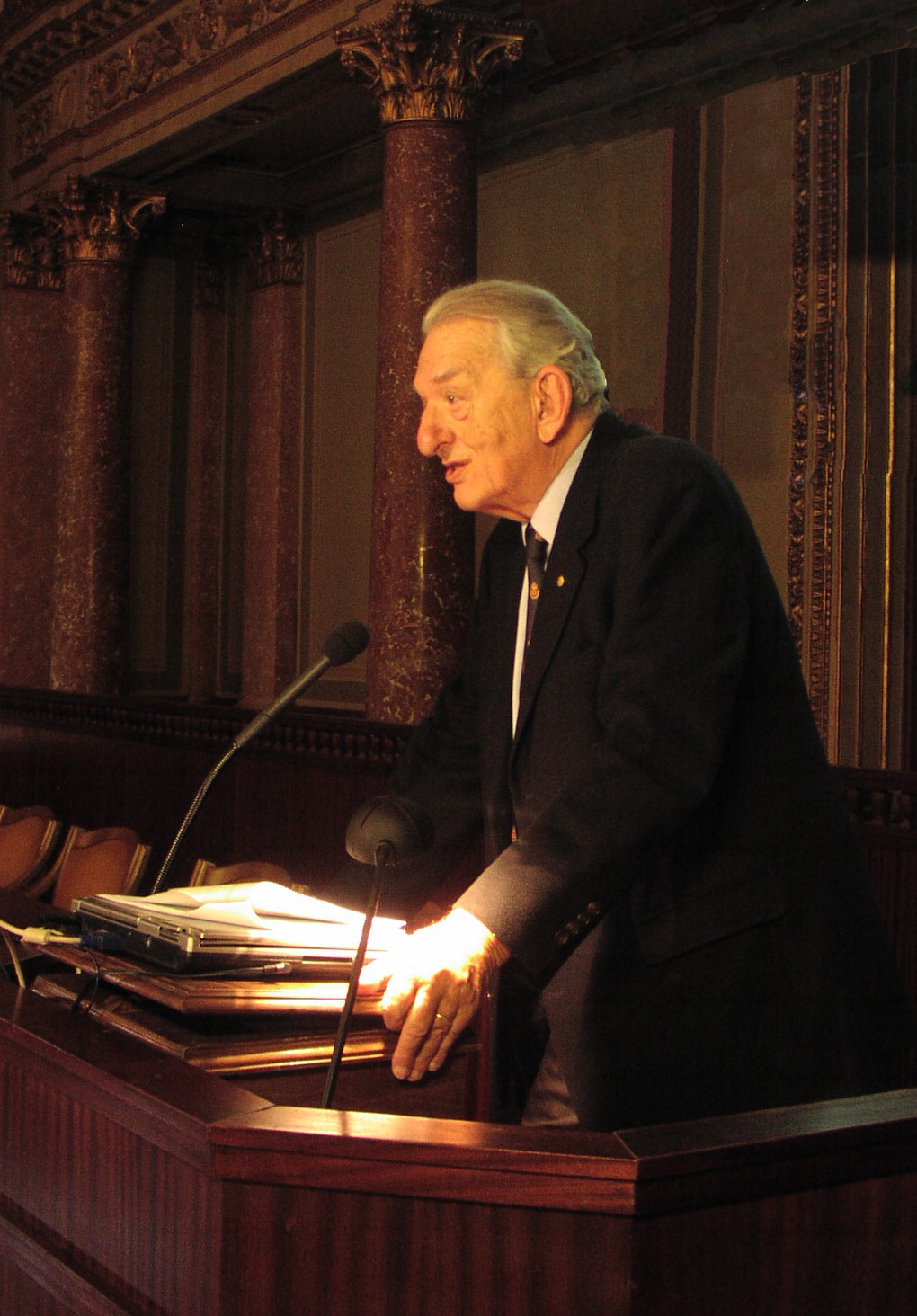
George Andrew Olah (May 22, 1927 – March 8, 2017) was a Hungarian‑born American chemist best known for transforming the understanding of carbocations and their role in organic chemistry. His experimental work demonstrated that positively charged carbon species could be generated, observed, and put to practical use when stabilized in very strong acid media. This body of research earned him the 1994 Nobel Prize in Chemistry and enduring recognition in chemical science.
Image gallery
4 Images


Research and scientific contributions
Olah specialized in the generation, stabilization and reactivity of carbocations. By employing superacids—exceptionally strong acids capable of protonating otherwise inert hydrocarbons—he and collaborators produced and characterized carbocations that had long been treated as ephemeral intermediates. These studies clarified reaction pathways in many types of acid‑catalyzed transformations and opened new perspectives on structure, bonding and reactivity in organic chemistry. He described and used reagents often referred to in the literature as "magic acids" and related superacid systems to probe molecular structure.
Career, positions and advocacy
Born in Budapest, Olah pursued a scientific career that combined academic research with practical concerns. He held appointments in both industry and academia, including a long association with the University of Southern California, where he directed active research programs and trained many students. Later in his career he became a public advocate for alternative fuels and chemical energy carriers, notably promoting the concept of a "methanol economy" as a way to store and transport hydrogen and reduce reliance on petroleum.
Honors, impact and legacy
Olah received numerous distinctions in recognition of his discoveries and influence. Principal honors include:
- Nobel Prize in Chemistry (1994) for his work on carbocations and superacids.
- The American Chemical Society's Priestley Medal, the society's highest award, acknowledging lifetime achievement.
- Election to learned societies and multiple honorary degrees reflecting broad international esteem.
His experimental techniques and conceptual advances reshaped organic mechanistic chemistry, influenced industrial processes that rely on acid catalysis, and inspired continued research into reaction intermediates and energy‑related chemistry.
Further reading
For a biographical overview and chronology, see biographical sources. For technical introductions to the species he studied, consult summaries on carbocations and on superacids. These resources provide entry points to Olah's published work and its ongoing scientific context.
Questions and answers
Q: Who was George Andrew Olah?
A: George Andrew Olah was an American chemist who was born in Hungary.
Q: What was George Andrew Olah known for?
A: George Andrew Olah was known for his research on the generation and reactivity of carbocations using superacids.
Q: What is a carbocation?
A: A carbocation is a positively charged organic ion, which is formed when a molecule loses a valence electron.
Q: What was the significance of George Andrew Olah's research?
A: George Andrew Olah's research was significant because it provided insight into the behavior of carbocations and helped to expand our understanding of organic chemistry.
Q: When was George Andrew Olah awarded the Nobel Prize in Chemistry?
A: George Andrew Olah was awarded the Nobel Prize in Chemistry in 1994.
Q: What is the Priestley Medal?
A: The Priestley Medal is the highest honor given by the American Chemical Society.
Q: Did George Andrew Olah receive the Priestley Medal?
A: Yes, George Andrew Olah received the Priestley Medal from the American Chemical Society.
Related articles
Author
AlegsaOnline.com George Andrew Olah Leandro Alegsa
URL: https://en.alegsaonline.com/art/119539
Sources
- nobelprize.org : "The Nobel Prize in Chemistry 1994"
- doi.org : 10.1002/anie.200462121
- hungarytoday.hu : "GEORGE OLÁH, NOBEL PRIZE WINNING HUNGARIAN-AMERICAN CHEMIST, DIES AT 89"