
Georges Cuvier: French naturalist, comparative anatomist and paleontologist
Georges Cuvier (1769–1832) was a leading French naturalist who founded comparative anatomy and modern vertebrate paleontology, demonstrated extinction, and influenced 19th‑century debates on evolution and geological change.
Baron Georges Léopold Chrétien Frédéric Dagobert Cuvier (1769–1832) was a central figure of early 19th‑century natural science in France. Trained in the methods of dissection and structural comparison, he built a systematic approach to studying animals by examining the relationships among anatomical parts. Working in Parisian institutions, Cuvier combined observations of living species with careful study of fossils to argue that many prehistoric forms no longer existed, a conclusion that helped establish extinction as a scientific fact.
Image gallery
10 Images


Methods and scientific approach
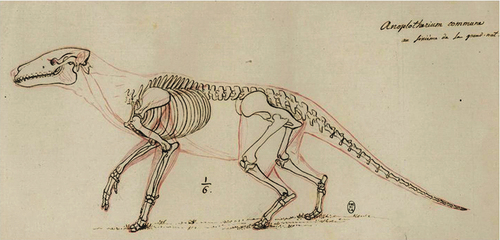
Cuvier is best known for comparative anatomy and an approach sometimes called the "correlation of parts": the idea that the form of one organ often implies specific structures elsewhere in the body. From a jaw, for example, he could infer the likely limb structure and mode of life of an animal. This functional perspective allowed him to reconstruct fossil animals from fragmentary remains and to place them within a practical classification. He divided the animal kingdom into major groups (embranchements) based on structural plans and emphasized morphology tied to function rather than speculative ancestry.
Major contributions
- Founding comparative anatomy: systematized anatomical comparison as a tool for classification and inference.
- Establishing paleontology: showed that fossil bones could be interpreted to reveal extinct organisms and their biology.
- Evidence for extinction: demonstrated that forms such as fossil elephants were distinct from living species and no longer present in nature.
- Catastrophism: argued that Earth's history included sudden, large‑scale events that caused mass extinctions, followed by new creations or repopulation.
- Influence on later scientists: his methods shaped the work of figures such as Louis Agassiz and Richard Owen.
His major synthetic work, Règne animal (The Animal Kingdom), presented a comprehensive view of animal organization and classification in the context of anatomy and function. Cuvier worked in museums and academies in Paris, where he also taught and curated important fossil collections that allowed wide access to specimens for study.
Historical context and controversies
Cuvier rose to prominence at a time when geology and biology were rapidly changing. He opposed transformational ideas that implied species transmuted gradually into new forms; instead he maintained that the fossil record showed distinct, often abruptly terminated faunas. That position placed him at odds with proponents of early evolutionary thinking, most notably Jean‑Baptiste Lamarck. Cuvier’s insistence on empirical anatomy and his skeptical stance on gradual evolution made him a major conservative voice in debates that later developed into Darwinian evolution versus alternative explanations.
Although Cuvier rejected evolution by transmutation, he accepted that the history of life was discontinuous and punctuated by major catastrophes. His preference for episodic change influenced 19th‑century geology and the interpretation of the fossil record until uniformitarian ideas gained dominance. Today he is remembered for establishing rigorous methods in anatomy and paleontology, even as later science revised some of his philosophical conclusions.
Legacy and selected facts
- Member of the Académie des sciences and the Académie française; ennobled as a baron.
- Teacher and mentor to many naturalists; his name appears among the 72 scientists inscribed on the Eiffel Tower.
- Brother Frédéric Cuvier was also a noted naturalist; Georges Cuvier died in Paris during a cholera epidemic in 1832.
- Major works include Règne animal (1817) and numerous memoirs describing fossil vertebrates.
Further reading and resources: biography and timeline, comparative anatomy overview, paleontology introductions, original works and translations, studies on extinction, fossil collections, catastrophism vs uniformitarianism, Règne animal details, Cuvier's methods, Académie des sciences records, Louis Agassiz and followers, Richard Owen and influence, honors and inscriptions, Parisian career, death and burial.
Questions and answers
Q: Who was Baron Georges Léopold Chrétien Frédéric Dagobert Cuvier?
A: Baron Georges Léopold Chrétien Frédéric Dagobert Cuvier (23 August 1769–13 May 1832) was a French naturalist and zoologist.
Q: What fields did he help establish?
A: He helped establish the fields of comparative anatomy and paleontology by comparing living animals with fossils.
Q: What is his most famous work?
A: His most famous work is the Règne animal distribué d'après son organisation 1817; translated into English as The Animal Kingdom.
Q: Was he a member of any academies?
A: Yes, he was a member of the elite Académie française and the French Academy of Sciences.
Q: Did he believe in evolution?
A: No, Cuvier believed there was no evidence for the evolution of organic forms, but there was evidence for successive creations after catastrophic extinction events.
Q: Who were some of his influential followers? A: Some of Cuvier's most influential followers were Louis Agassiz, and Richard Owen.
Related articles
Author
AlegsaOnline.com Georges Cuvier: French naturalist, comparative anatomist and paleontologist Leandro Alegsa
URL: https://en.alegsaonline.com/art/119527