
Georges‑Louis Leclerc, Comte de Buffon
French naturalist and encyclopedic author (1707–1788) whose Histoire naturelle and ideas on species, Earth history and probability shaped later naturalists and public science.
Georges‑Louis Leclerc, Comte de Buffon (7 September 1707 – 16 April 1788), commonly known simply as Buffon, was a leading French naturalist of the 18th century. Trained in mathematics and interested in cosmology and experimental inquiry, he brought literary style and wide erudition to natural history and made the subject accessible to educated readers across Europe. His work combined observation, synthesis of previous knowledge, and speculative interpretation of living forms and the Earth itself. naturalist and polymath roles included contributions to probability as well as natural history.
Image gallery
10 Images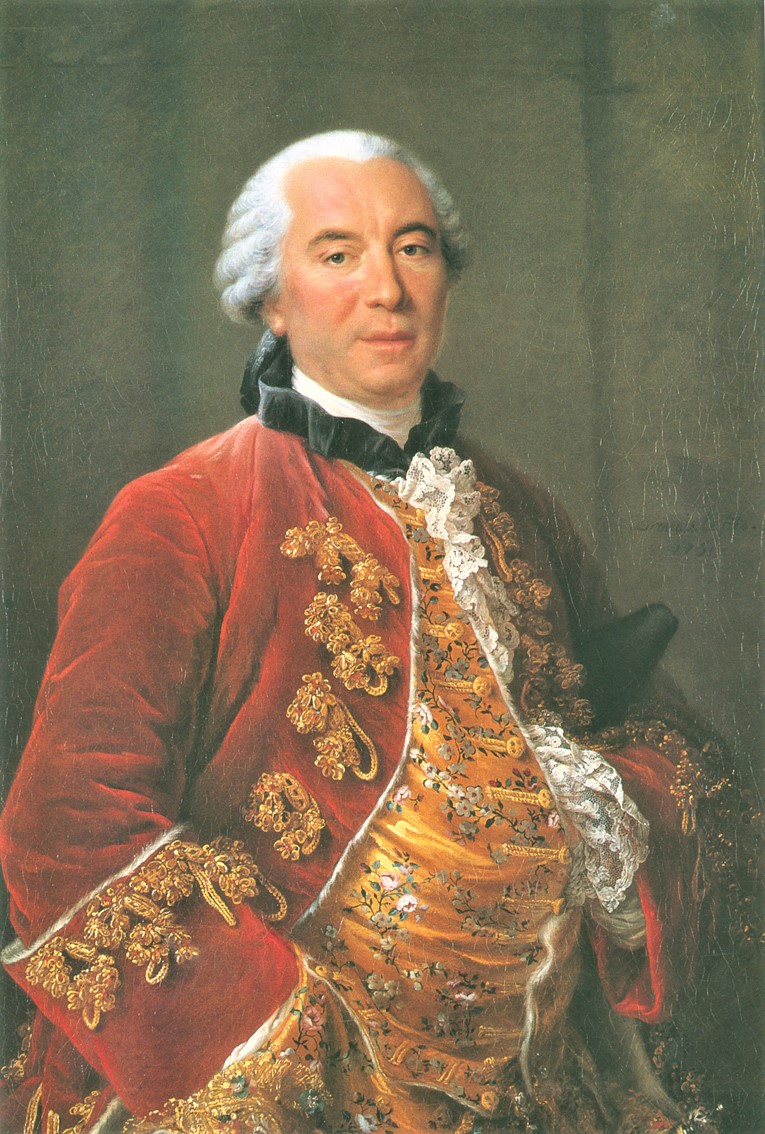






Life and career
Born in Burgundy, Buffon rose to prominence in Paris where he became one of the most influential scientific writers of his age. He held official positions and was entrusted with the direction of the royal garden, the Jardin du Roi, today known as the Jardin des Plantes. In that capacity he organized collections, cultivated plants, and promoted public displays and research at the garden: Jardin des Plantes. His interests extended beyond organisms to large‑scale questions about the Earth and the cosmos, reflecting his background as a cosmologist in the broad Enlightenment sense.
Histoire naturelle and major works
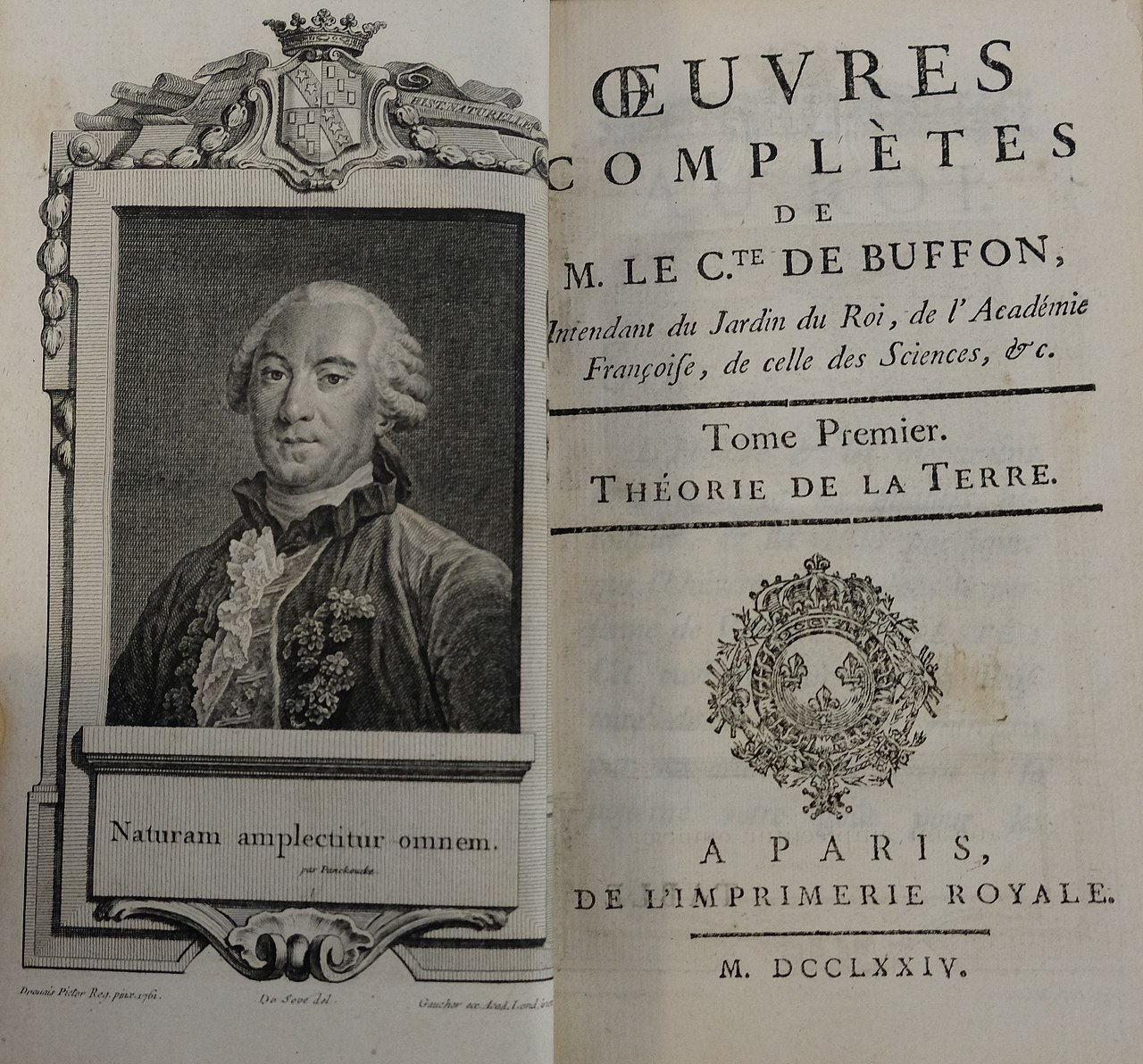
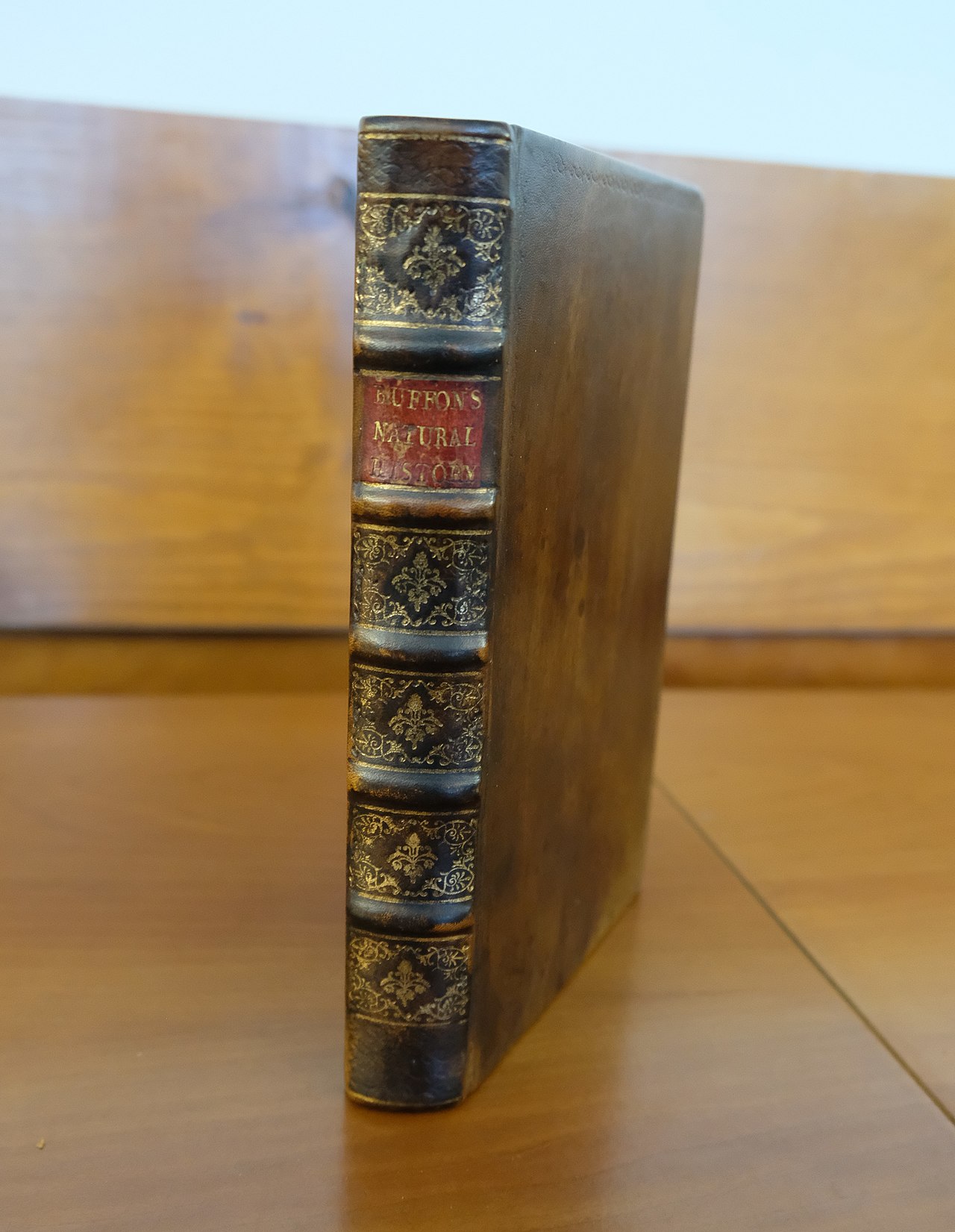
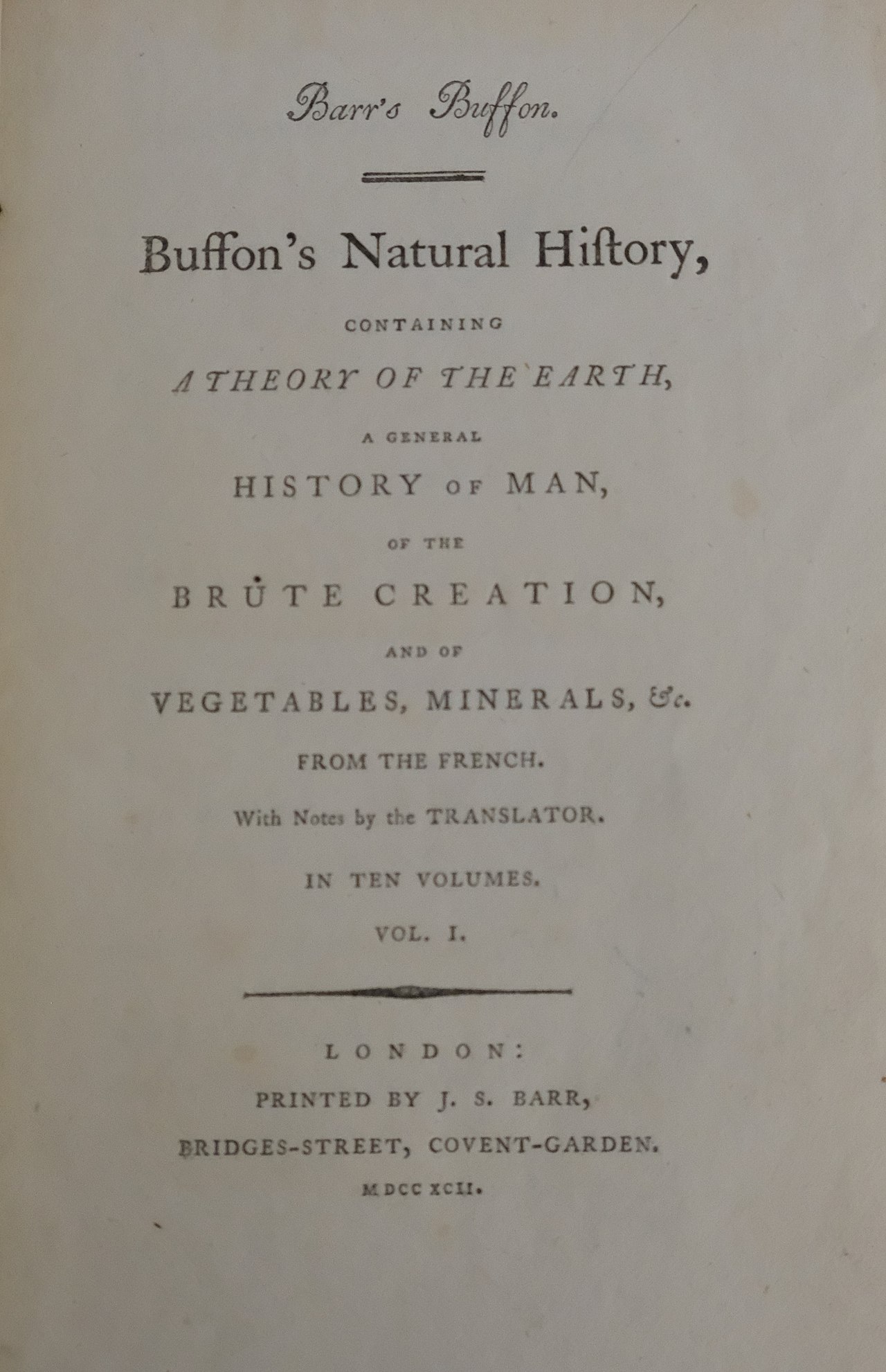
Buffon is best known for his multi‑volume Histoire naturelle, an ambitious attempt to describe the known natural world in a unified, readable form. He published thirty‑five volumes during his lifetime and additional volumes appeared after his death, bringing the complete set to forty‑four volumes. The Histoire naturelle blended careful description, anecdote, and philosophical reflection rather than presenting a narrow encyclopedia of species names; it popularized natural history as a literary and scientific pursuit and reached many readers across Europe.
Ideas, experiments and influence
Buffon advanced several ideas that steered later discussions in biology and Earth science. He argued that varieties could arise through environmental influences and that species were not immutable in form, a position that influenced but did not fully anticipate later evolutionary theories. He also investigated the history and age of the Earth, using experiments with heated spheres to argue that the planet had cooled from a hot state and therefore was far older than traditional chronologies had allowed — a controversial suggestion at the time and one later revised by subsequent geologists and physicists.
- He influenced later naturalists including Jean‑Baptiste de Lamarck and Georges Cuvier, who built on and disagreed with aspects of his work.
- Buffon also posed a famous probability problem — Buffon’s needle — which connects geometry and probability and remains a classic illustration in that field.
Legacy and notable facts
Buffon’s combination of scholarship, rhetoric and synthesis left a lasting imprint on how natural history was written and taught. As director of the royal garden he shaped one of France’s leading scientific institutions; that establishment is sometimes compared to the British royal gardens at Kew: Kew Gardens. His name survives in institutions and place names, such as the Lycée Buffon in Paris (Lycée Buffon), and through continued reference by historians of science. Though some specific claims in his work were later corrected, his method of wide‑ranging description and public engagement helped make natural history a central intellectual enterprise of the Enlightenment.
Questions and answers
Q: Who was Georges-Louis Leclerc, Comte de Buffon?
A: Georges-Louis Leclerc, Comte de Buffon was a French naturalist, mathematician, cosmologist, and encyclopedic author.
Q:What was Buffon's impact on natural history?
A: Buffon's collected information influenced the next two generations of naturalists, including Jean-Baptiste de Lamarck and Georges Cuvier, making him the father of all thought in natural history in the second half of the 18th century.
Q: How many volumes of Histoire Naturelle did Buffon publish?
A: Buffon published 35 volumes of his Histoire naturelle during his lifetime, and nine more were published after his death, for a total of 44 volumes.
Q: What was Buffon's position at the Jardin du Roi?
A: Buffon held the position of Intendant (Director) of the Jardin du Roi, now called the Jardin des Plantes, which is the French equivalent of Kew Gardens.
Q: Is there a school named after Buffon in Paris?
A: Yes, the Lycée Buffon in Paris is named after him.
Q: Was Buffon only a naturalist?
A: No, Buffon was also a mathematician and cosmologist, and an encyclopedic author.
Q: When was Buffon born and when did he die?
A: Buffon was born on 7 September 1707, and he died on 16 April 1788.
Related articles
Author
AlegsaOnline.com Georges‑Louis Leclerc, Comte de Buffon Leandro Alegsa
URL: https://en.alegsaonline.com/art/119522
Sources
- vnweb.hwwilsonweb.com : vnweb.hwwilsonweb.com/hww/login.jhtml.html
- buffon.cnrs.fr : Leclerc, Comte de Buffon 1778. Histoire naturelle, générale et particulière: supplément. 5th ed.
- darwin-online.org.uk : p. xiii
- darwin-online.org.uk : p. xiii