
Friedrich Hund: German theoretical physicist and pioneer in atomic and molecular theory
Short biography of Friedrich Hund, his major contributions (Hund's rules, Hund's cases, early work on quantum tunneling), academic posts, publications and legacy in spectroscopy and quantum chemistry.
Overview
Friedrich Hund (4 February 1896 – 31 March 1997) was a German physicist known for foundational work on the electronic structure of atoms and molecules. Born in Karlsruhe, he made important theoretical contributions in the 1920s and thereafter that shaped modern atomic physics, molecular spectroscopy and quantum chemistry.
Image gallery
3 Images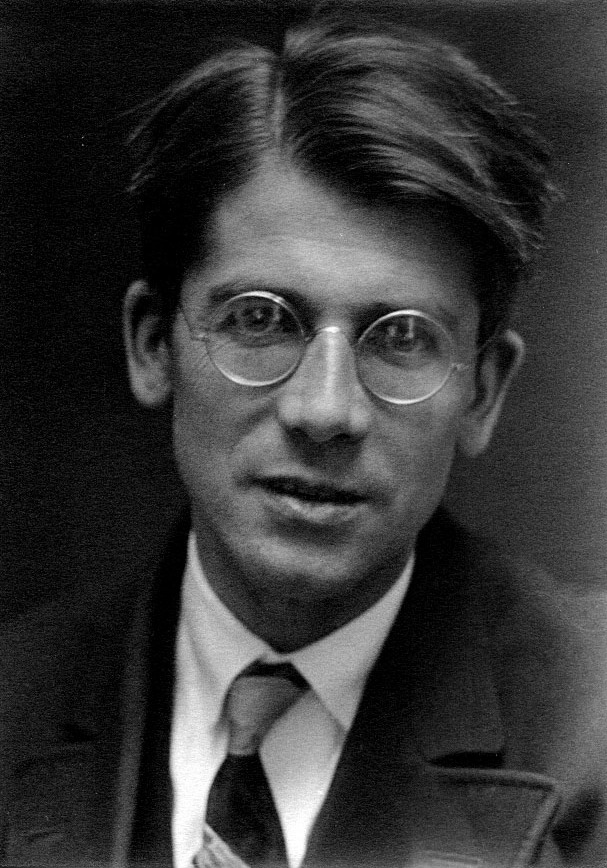


Major contributions
Hund is best known for several widely used concepts and rules that bear his name. His work helped to connect early quantum mechanics to observable spectral patterns and chemical behavior.
- Hund's rules — a set of principles for predicting the ground-state term of an atom, formulated in the early quantum era and still used to determine spin and orbital arrangements in open shells.
- Hund's cases — classifications of angular-momentum coupling in diatomic molecules that organize how electronic, spin and rotational motions combine to produce spectral features.
- Early descriptions of quantum theory phenomena such as tunneling and level splitting, which anticipated later formal developments in quantum mechanics.
Career and publications
During his long career Hund held positions at multiple German universities. He taught and researched at the University of Rostock, Leipzig, Jena, Frankfurt am Main and Göttingen. Over the decades he published more than 250 scientific papers and essays, addressing atomic term symbols, molecular spectra and the theoretical underpinnings of spectroscopic selection rules.
Historical context and development
Hund worked in the formative period of quantum mechanics, alongside contemporaries who were formalizing the new theory. His insights into spin multiplicity, orbital coupling and molecular angular-momentum schemes provided practical rules and classification systems that bridged abstract formalism and experimental spectroscopy.
Legacy and importance
Hund's ideas remain part of the standard toolkit in atomic physics, physical chemistry and molecular spectroscopy. Students learn Hund's rules when determining electronic ground states; researchers apply Hund's coupling cases to interpret molecular band systems. He was also a member of the International Academy of Quantum Molecular Science, reflecting his influence on the field.
More detailed discussions of Hund's work and its applications can be found in specialized texts and reviews of atomic theory and molecular spectroscopy. For historical surveys and modern applications see introductions to quantum chemistry and the spectroscopy literature.
Notable facts: Hund lived to be over 101 years old and his name remains attached to several central concepts in quantum molecular science.
Questions and answers
Q: Who was Friedrich Hund?
A: Friedrich Hund was a German physicist from Karlsruhe known for his work on atoms and molecules.
Q: Where did he work?
A: He worked at the Universities of Rostock, Leipzig, Jena, Frankfurt am Main, and Göttingen.
Q: What contributions did he make to quantum theory?
A: He made contributions to quantum theory about the structure of the atom and the structure of molecular spectra.
Q: What is the Hund's rule?
A: The Hund's rule is a principle in atomic physics that states that when electrons are added to an atom or molecule they will occupy orbitals with different spin orientations so as to maximize their total spin multiplicity. It is named after Friedrich Hund who first proposed it in 1926.
Q: When did he discover the tunneling effect?
A: He discovered the later so-called tunneling effect in 1926.
Q: Was Friedrich Hund a member of any scientific societies?
A: Yes, he was a member of the International Academy of Quantum Molecular Science.
Related articles
Author
AlegsaOnline.com Friedrich Hund: German theoretical physicist and pioneer in atomic and molecular theory Leandro Alegsa
URL: https://en.alegsaonline.com/art/119284