
Frederick II, Holy Roman Emperor: ruler, patron, and reformer
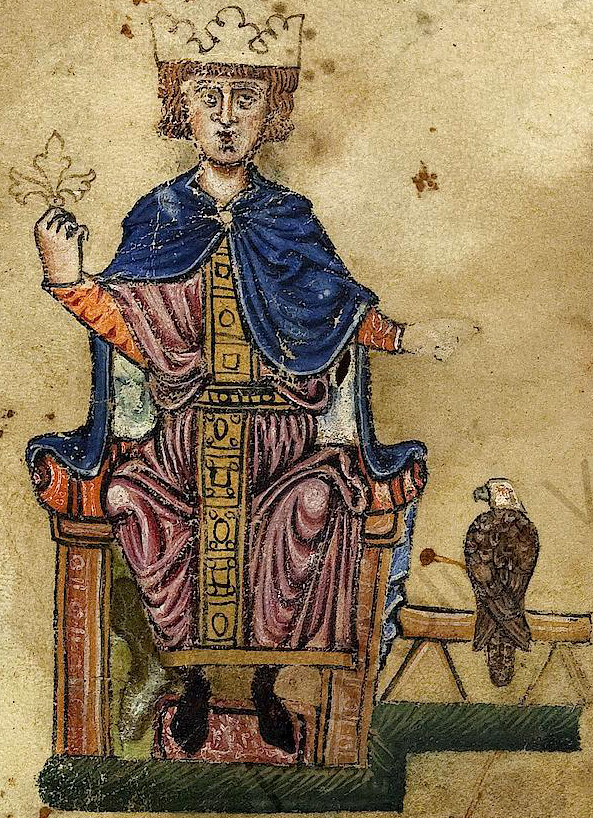
Frederick II (1194–1250), Hohenstaufen king of Sicily and Holy Roman Emperor, known for his multilingual court, legal and administrative reforms, clashes with the papacy, and cultural patronage.
Frederick II (26 December 1194 – 13 December 1250) was a central figure of thirteenth‑century Europe: ruler of the Kingdom of Sicily from childhood, King of Germany and Italy, and Holy Roman Emperor. His authority extended from southern Italy across the Italian peninsula and into German lands; by marriage and diplomacy he also claimed the title King of Jerusalem. Scholars have described him in superlatives — a learned patron of science and letters, a shrewd administrator, and a contentious political actor whose ambitions brought him into repeated conflict with the papacy. Many contemporaries and later writers called him stupor mundi, the wonder of the world, reflecting his reputation for intelligence and unusual tastes.
Image gallery
10 Images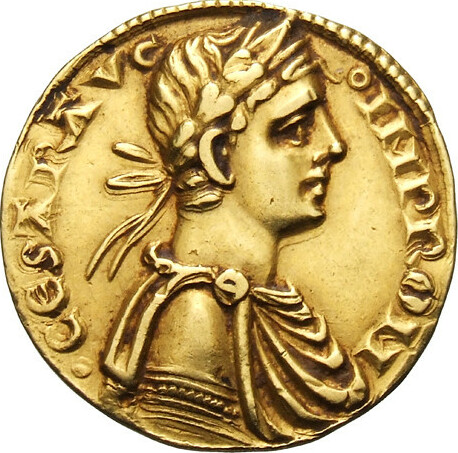



Early life and rise to power
Born into the House of Hohenstaufen, Frederick inherited the Sicilian crown as a child and spent his youth in the Mediterranean world of Norman and Arab influence. He was crowned King of Sicily at a very young age and later secured his election and coronation as Holy Roman Emperor in 1220. His upbringing in Palermo and southern Italy gave him a cosmopolitan outlook, shaped by Latin, Greek and Arabic learning as well as the institutions of Norman Sicily. These roots informed both his legal reforms and his efforts to govern diverse territories from a central court.
Government, law and administration
Frederick developed administrative systems intended to strengthen central control over the Regno (the Kingdom of Sicily) and imperial domains in Italy and Germany. He supported a professional bureaucracy, issued legal ordinances, and promoted institutions to train officials; the foundation of a university in Naples is commonly associated with his aim to prepare lawyers and administrators. His legislation and courts sought predictable, written procedures, and he moved to eliminate arbitrary practices; notably, he was the first European ruler recorded as explicitly banning trials by ordeal, seeing them as irrational and incompatible with a rational legal order.
Conflict with the papacy and crusading politics
Frederick’s concentration of power in Italy put him repeatedly at odds with successive popes, who feared encirclement by his northern and southern territories. He was excommunicated several times in the course of his reign, and relations with the curia were a defining theme of his politics. In particular, his long quarrel with Pope Gregory IX became bitter and public; some papal sources labeled him an Antichrist and depicted him as a dangerous secular opponent. At the same time, Frederick pursued crusading aims with an unconventional mixture of negotiation and force: his engagement in the Sixth Crusade led to a negotiated settlement that temporarily secured his title as King of Jerusalem by diplomacy and marriage rather than large‑scale conquest.
Court culture, learning and language
Frederick’s court at Palermo became a notable center for translation, philosophy, poetry and scientific inquiry. Fluent in several languages, he patronized scholars who worked in Latin, Sicilian, Greek and Arabic and encouraged exchanges between Mediterranean intellectual traditions. Under royal patronage the Sicilian School of poetry produced vernacular lyric in the Sicilian language, an early use of an Italo‑Romance tongue for sophisticated literature that influenced later writers and contributed to the development of the Italian language. His interests ranged from natural philosophy and law to falconry and architecture; contemporaries admired both his learning and his curiosity.
Legacy and historical assessment
Frederick II’s combination of centralized administration, cultural patronage and independent foreign policy left a mixed legacy. His efforts strengthened royal government and left lasting marks on legal and educational institutions, yet his conflicts with the papacy and the costly dynastic struggles that followed his death weakened the Hohenstaufen line. After his passing the dynasty faded and his territories were contested. Historians continue to debate his character — tyrant or modern reformer, heretic or enlightened monarch — but most agree that his reign reshaped medieval government and culture and that his court was a rare meeting place of Latin, Greek and Arabic traditions.
- Major titles: King of Sicily, King of Germany and Italy, Holy Roman Emperor, and claimant King of Jerusalem.
- Language and learning: patron of multilingual scholarship and the Sicilian court poetry movement.
- Papal conflict: multiple excommunications and open rivalry with Pope Gregory IX, who at times called him an Antichrist.
- Legal reform: promoted written law and banned trials by ordeal as part of a more rational judicial system.
Questions and answers
Q: Who was Frederick II?
A: Frederick II was a powerful Holy Roman Emperor of the Middle Ages and head of the House of Hohenstaufen. He had ambitious political and cultural ambitions, stretching from Sicily to Germany, and even to Jerusalem.
Q: What did Professor Donald Detwiler say about him?
A: Professor Donald Detwiler described Frederick II as a man of extraordinary culture, energy, and ability who established something very much like a modern, centrally governed kingdom with an efficient bureaucracy in Sicily and southern Italy.
Q: How many languages did Frederick speak?
A: Frederick spoke six languages - Latin, Sicilian, German, French, Greek and Arabic.
Q: What influence did his court have on literature?
A: The poetry that emanated from his court in Palermo had a significant influence on literature and on what would become the modern Italian language. It predates by at least a century the use of Tuscan idiom as the elite literary language of Italy.
Q: What title did he hold in relation to Jerusalem?
A: Frederick held the title King of Jerusalem by virtue of marriage and his connection with the Sixth Crusade.
Q: How often was he excommunicated by Pope Gregory IX?
A: He was excommunicated four times by Pope Gregory IX.
Related articles
Author
AlegsaOnline.com Frederick II, Holy Roman Emperor: ruler, patron, and reformer Leandro Alegsa
URL: https://en.alegsaonline.com/art/119223
Sources
- newadvent.org : Catholic Encyclopedia - Frederick II
- elfinspell.com : Book VI e. 1.
- stupormundi.it : "Ma l'imperatore svevo fu conservatore o innovatore?"