
Black Hand (Unification or Death)
Secret Serbian military society founded in 1911 seeking unification of Serb-populated lands; associated with nationalist agitation and implicated in early 20th-century conspiracies, notably the 1914 Sarajevo plot.
Overview
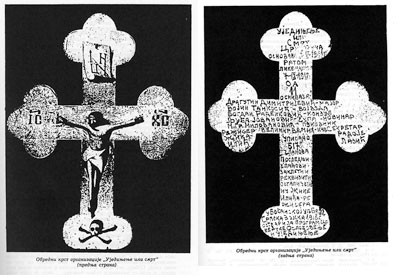
The Black Hand, formally Ujedinjenje ili Smrt ("Unification or Death"), was a clandestine organization formed in 1911 by a group of Serbian Army officers and nationalists. Based in Serbia, its stated goal was to promote the political unification of territories where ethnic Serbs lived into a single state. The group's membership, methods and objectives were shaped by the volatile politics of the Balkans in the early 20th century.
Image gallery
3 Images

Characteristics and organization
Although secretive, the Black Hand is generally described as a hierarchical network of cells linked to sympathetic army officers, with covert committees for intelligence, recruitment and operations. Its activities combined political agitation, clandestine propaganda, training, and—on some occasions—direct action. Key traits included:
- Focus on national unification and expansion of Serbian influence.
- Use of secret oaths, coded communication and compartmentalized cells.
- Connections to sympathetic elements within the military and civilian institutions.
Political aims and methods
The group aimed to bring together Serb-populated lands into a single country, including areas then outside Serbian control. This included regions such as Bosnia and Herzegovina, home to many Serbs, which had been annexed by Austria-Hungary in 1908. To advance its objectives, members engaged in clandestine support for insurgent activity, transfers of arms, and covert operations intended to destabilize opposing authorities.
Role in the Sarajevo assassination and historical debate
Elements associated with the Black Hand have long been linked to the network that supported the assassins of Archduke Franz Ferdinand in Sarajevo, 1914. Historians note that members provided training, weapons or logistical help to Bosnian conspirators, though direct responsibility and chain of command remain subjects of scholarly debate. The assassination triggered the July Crisis and contributed to the outbreak of World War I.
Suppression and legacy
By 1916–1917 the Serbian government moved to curb the group's influence; prominent members were arrested and tried in what became known as the Salonika trials. After World War I, the Black Hand's clandestine model and its association with nationalist violence left a contested legacy: it is remembered both as a force for national self-determination by some and as an example of the hazards of secret militant politics by others.
Notable distinctions
The Black Hand should be distinguished from other contemporary organizations with overlapping aims, including irregular groups and later royalist networks. Its methods, scale and internal secrecy set it apart from open political movements, and scholarly assessments emphasize caution when attributing specific historical events solely to its directives.
For further contextual reading see entries on regional politics and Balkan secret societies. More on Serbia Unification movements Ethnic groups Austria-Hungary

Foundation
The origins of the Black Hand can be traced back to circles in the Serbian officer corps who assassinated Serbian King Aleksandar Obrenović and his wife, Draga Mašin, on 29 Mayjul/11 June 1903greg, ending the rule of the Obrenović dynasty in Serbia. Aleksandar had made himself unpopular above all through his marriage and his authoritarian, repressive governance, but also through his foreign policy, which was based on that of Austria.
Officers who sympathized with a Greater Serbian nationalism directed primarily against Austria in alliance with Russia and France and who wanted to aggressively implement this policy founded the secret organization "Ujedinjenje ili Smrt" (Union or Death), also called the "Black Hand", in Belgrade on March 3, 1911. Leading it was the general staff officer Colonel Dragutin Dimitrijević, called Apis. Other founding members were Colonels Čedomilj A. Popović and Milovan Milovanović, Lieutenant Colonel Velimir S. Vemić, Majors Ilija Radivojević, Vojislav Tankosić and Milan Vasić, Vice-Consul Bogdan Radenković and journalist Ilija Jovanović.

Internal structure
According to "Ujedinjenje ili Smrt" (Unification or Death), the goal of the organization was the realization of the "national ideal", the unification of all Serbs in one nation-state. According to its own statement, the Black Hand put "the revolutionary struggle ahead of the cultural one" and operated for this purpose:
- influencing all state and social forces in Serbia, citing Piedmont's role in the Italian Risorgimento as a model.
- the formation of a revolutionary organization in all areas where Serbs live
- the fight against their enemies with all means
- maintaining friendly relations with pro-Serbian states, popular associations and individuals, as well as with other national liberation movements
A Supreme Central Administration was established as the supreme body, with headquarters in Belgrade, whose membership was to be as small as possible. The decisions of the Supreme Central Administration were binding on all members of the Organization, and it disposed of their lives and property. The interests of the Organization came first, and its members had to report all information and intelligence concerning the Organization that they learned on duty or in private.
The Supreme Central Administration had the right to pronounce death sentences, which were carried out by particularly trustworthy members. Once someone had become a member, he could not leave the organization, no one was allowed to accept his resignation.
The Black Hand was a secret organization whose existence was to remain unknown to the public. In order to ensure the secrecy of its members, they were not listed by name, but by number. As a rule, the members did not know each other, and they were communicated with through special contact people. Only the Supreme Central Administration knew all the members. Although they did not know the organization as such, its members pledged unconditional obedience and absolute secrecy. Dimitrijević, for example, "burned all his documents at regular intervals", which is why there are still considerable gaps in our knowledge about the organisation.
Vow
The following oath was formulated by Jovanović-Cupa and taken by new members in a darkened room before a hooded figure:
I, who enter the organization "Union or Death," swear by the sun that warms me, by the earth that feeds me, before God, by the blood of my fathers, by my honor and by my life, that from this moment until my death I will faithfully follow the statutes of this organization and always be ready to make all sacrifices to it.
I swear before God, by my honor and by my life, that I will obey all directives and orders without contradiction.
I swear before God, on my honor and on my life, that I will take all the secrets of this organization to the grave.
May God and my comrades in this organization sit in judgment on me if I knowingly break or circumvent this oath.

Questions and answers
Q: What is the Black Hand?
A: The Black Hand or Crna Ruka was a secret group of Serbian nationalists founded in 1911 in Serbia.
Q: What was the official name of the Black Hand?
A: The official name of the Black Hand was Ujedinjenje ili Smrt ("Unification or Death").
Q: What was the aim of the Black Hand?
A: The aim of the Black Hand was to create a country from other countries where Serbs lived, including Bosnia-Herzegovina which was a part of Austria-Hungary since 1908.
Q: When was Bosnia-Herzegovina a part of Austria-Hungary?
A: Bosnia-Herzegovina was a part of Austria-Hungary since 1908.
Q: Who founded the Black Hand?
A: The Black Hand was founded by a group of Serbian nationalists (Pan-Serbians).
Q: What did the Black Hand want to achieve for the Serbs?
A: The Black Hand wanted to create a country from other countries where Serbs lived, which would benefit the Serbs.
Q: Was the Black Hand a secret group?
A: Yes, the Black Hand was a secret group of Serbian nationalists.
Tags
Related articles
Author
AlegsaOnline.com Black Hand (Unification or Death) Leandro Alegsa
URL: https://en.alegsaonline.com/art/11920