
Franz Marc: German Expressionist Painter and Co-founder of Der Blaue Reiter
Franz Marc (1880–1916) was a leading German Expressionist known for his vivid animal paintings, pioneering color symbolism, and as a founder of the Der Blaue Reiter group with Wassily Kandinsky.
Franz Marc (1880–1916) was a German painter and printmaker who became one of the most influential figures in early 20th‑century Expressionism. He is best known for paintings that feature animals rendered with simplified forms and striking colors. Marc sought to express spiritual and emotional truths through color, composition and an often symbolic treatment of subjects rather than through naturalistic depiction.
Image gallery
10 Images

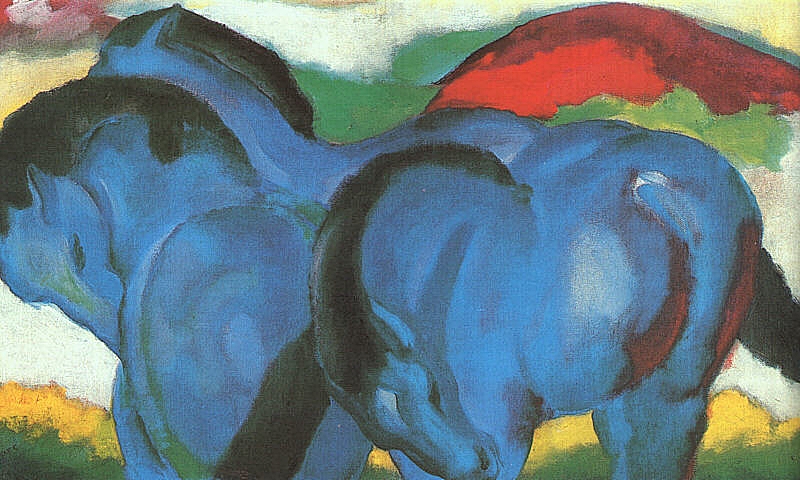


Style and themes
Marc developed a highly individual visual language in which animals—particularly horses, deer and dogs—recur as central motifs. He reduced forms to geometric or flowing shapes and used a bold palette to convey mood and metaphysical ideas. His evolving color theory treated hues as carriers of meaning: for example, blue frequently suggested spirituality or tranquillity, while other colors indicated different emotional or symbolic qualities. He worked in oil, watercolor and printmaking.
Career and Der Blaue Reiter
Active in the years before World War I, Marc was a founder of the Munich‑based journal and informal circle Der Blaue Reiter (The Blue Rider), formed with artists such as Wassily Kandinsky. The group promoted artistic innovation, the spiritual potential of abstracted form and the importance of non‑Western and folk art influences. Through exhibitions and publications they helped define German Expressionism as a major current in modern art.
Notable works and examples
- Blue Horse images and related horse studies, which emphasize simplified anatomy and luminous color.
- The Fate of the Animals (1913), a complex, sometimes unsettling composition that reflects prewar tensions and a move toward near‑abstraction.
- Watercolors and prints that document his experiments with form, color and rhythm across the 1910s.
Marc’s paintings moved from more naturalistic beginnings to a confident, abstracted visual vocabulary by the second decade of the 20th century. He combined observation of nature with expressive distortion, aiming to reveal inner states and relationships between living beings. His work is often read as sympathetic to the animal world and critical of modern industrial society.
Legacy
Marc’s career was cut short when he was killed in World War I in 1916, but his influence persisted through the continued reputation of Der Blaue Reiter and the broader Expressionist movement. His works have been widely exhibited and studied for their use of color and symbolic content. Some of his paintings later became focal points in debates about modern art, cultural politics and restitution. For further background and museum resources, see further reading.
Questions and answers
Q: Who was Franz Marc?
A: Franz Marc was a German painter and printmaker who was one of the key figures of the German Expressionist movement.
Q: When was Franz Marc born?
A: Franz Marc was born on February 8, 1880.
Q: When did Franz Marc die?
A: Franz Marc died on March 4, 1916.
Q: What was Der Blaue Reiter?
A: Der Blaue Reiter was a journal founded by Franz Marc and other artists, whose name later became synonymous with the circle of artists collaborating in it.
Q: What was Franz Marc's contribution to the art world?
A: Franz Marc was a key figure in the German Expressionist movement and a founding member of Der Blaue Reiter.
Q: What is German Expressionism?
A: German Expressionism is an art movement characterized by a focus on expressing emotion and ideas through bold colors and distorted forms.
Q: What is the significance of Franz Marc's involvement in Der Blaue Reiter?
A: Franz Marc's involvement in Der Blaue Reiter was significant because it helped to establish the movement and bring together artists who shared similar ideas and artistic goals.
Related articles
Author
AlegsaOnline.com Franz Marc: German Expressionist Painter and Co-founder of Der Blaue Reiter Leandro Alegsa
URL: https://en.alegsaonline.com/art/119198