
Black Eye Galaxy (Messier 64)
Nearby spiral galaxy famous for a dark dust lane that looks like a 'black eye'. Contains counter-rotating gas, roughly 17–25 million light-years away, and is visible in small telescopes.
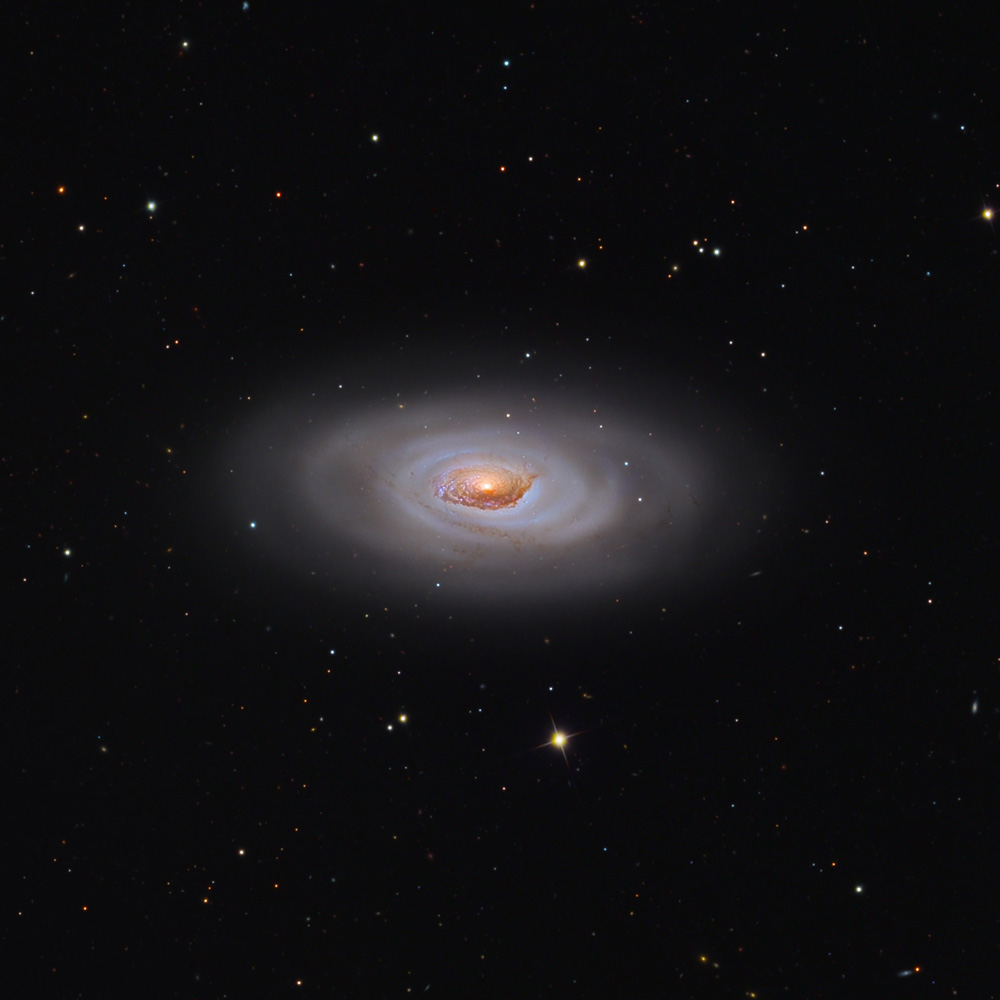
The Black Eye Galaxy, also known as Messier 64 (M64), NGC 4826 or the Sleeping Beauty Galaxy, is a nearby spiral galaxy notable for a prominent dark dust lane that crosses its bright central bulge. Distance estimates typically place it at roughly 17–25 million light‑years from Earth, depending on the measurement method; see distance estimates and catalog notes here.
Image gallery
6 Images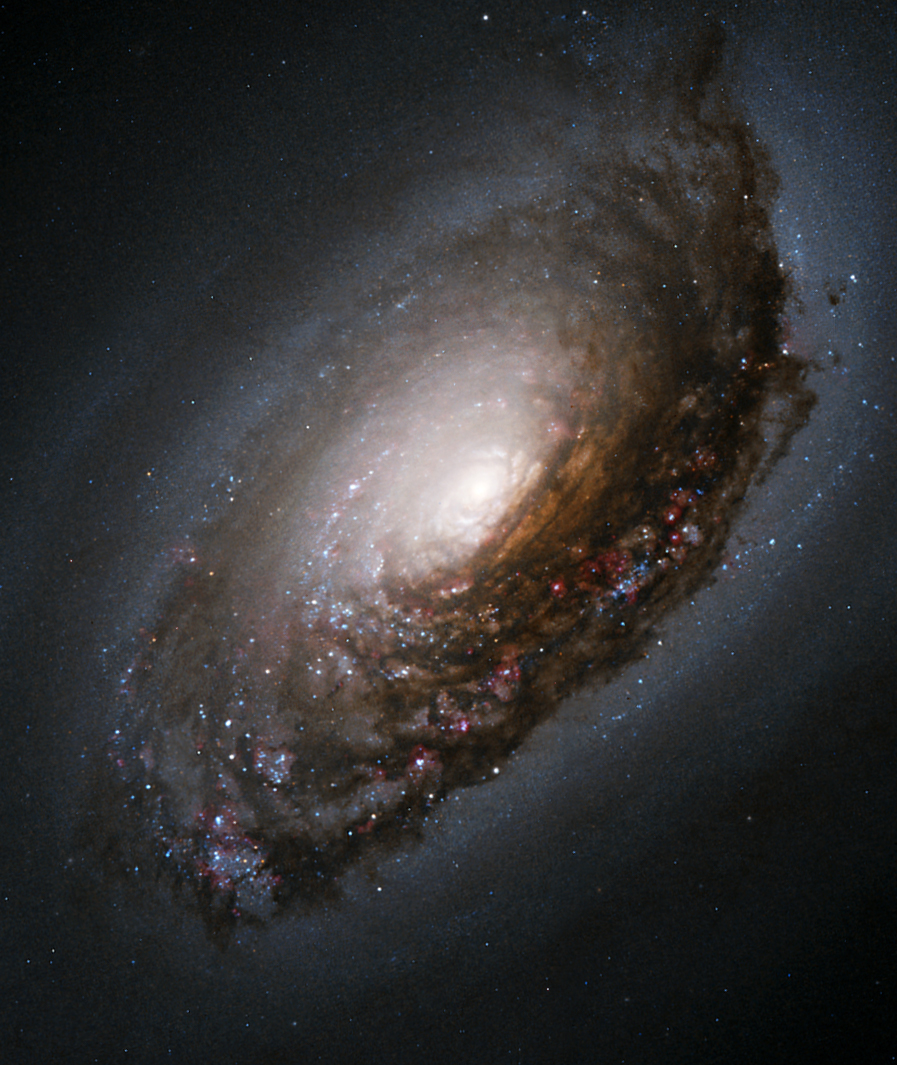




Structure and distinguishing features
M64 is classified as a spiral galaxy with a conspicuous asymmetric dust band that gives it the "Black Eye" appearance. Inside and outside the dust lane astronomers have detected gas and stars that rotate in opposite directions — a rare kinematic signature interpreted as the aftermath of a merger with a smaller galaxy. For images and technical descriptions consult the observing archives.
History and cataloguing
The object was first recorded in 1779 and was later cataloged by Charles Messier as M64; observational records and historical notes are available through general catalogs and amateur resources here. The multiple names (Black Eye, Evil Eye, Sleeping Beauty) reflect the galaxy's striking appearance and long familiarity to skywatchers.
Observation and significance
M64 lies in the constellation Coma Berenices and is popular with amateur astronomers because its dark lane can be seen in modest-sized telescopes as a contrast against a bright core. Typical observing tips include using low to medium magnification, choosing steady seeing conditions, and using averted vision to enhance faint detail. Practical guides and community observing reports are available at amateur guides and telescope resources.
Why astronomers study M64
The counter‑rotating components and the prominent dust lane make M64 a natural laboratory for studying galaxy interactions, gas dynamics, and star-formation triggers. Its relative proximity permits detailed spectroscopic and imaging studies with both professional facilities and advanced amateur setups; see research summaries at research summaries and outreach pages public outreach.
Questions and answers
Q: What is the Black Eye Galaxy also known as?
A: The Black Eye Galaxy is also known as the Sleeping Beauty Galaxy, Messier 64, M64, Evil Eye Galaxy or NGC 4826.
Q: When was the Black Eye Galaxy discovered?
A: The Black Eye Galaxy was discovered in 1779.
Q: How far away is the Black Eye Galaxy?
A: The Black Eye Galaxy is just over 24 million light years away.
Q: What makes the galaxy so distinctive?
A: The galaxy has a spectacular dark band of absorbing dust in front of its bright nucleus which gives it its name "Black Eye" or "Evil Eye".
Q: Is it easy to observe with a telescope?
A: Yes, it can be seen in small telescopes and is well known among amateur astronomers.
Q: What type of galaxy is it?
A: It is a spiral galaxy located in the Coma Berenices constellation.
Related articles
Author
AlegsaOnline.com Black Eye Galaxy (Messier 64) Leandro Alegsa
URL: https://en.alegsaonline.com/art/11909