
François Jacob: French molecular biologist and Nobel laureate
François Jacob (1920–2013) was a French biologist who shared the 1965 Nobel Prize for work that established key principles of genetic regulation, notably the operon model and transcriptional control.
François Jacob (17 June 1920 – 19 April 2013) was a French biologist whose research helped establish how genes are regulated in living cells. He shared the 1965 Nobel Prize in Physiology or Medicine with Jacques Monod and André Lwoff for discoveries concerning genetic control of enzyme synthesis and related mechanisms. Jacob's work provided conceptual and experimental foundations for modern molecular biology, clarifying how cells adapt enzyme production to changing environments.
Image gallery
2 Images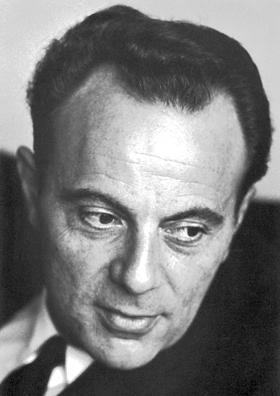

Biography and career
Born in 1920 in France, Jacob trained in medicine before turning to research. He conducted much of his scientific work in Paris, notably in laboratories associated with the Institut Pasteur, and collaborated closely with Jacques Monod and other colleagues. His career spanned laboratory investigation, theoretical synthesis, and public writing; he became known both as an experimentalist in bacterial genetics and as an author who explained biological ideas to a broader audience. His life and work were shaped by the upheavals of the mid-20th century and by the rapid rise of molecular biology as a discipline.
Major scientific contributions
Jacob and Monod developed a conceptual model explaining how cells control the production of enzymes in response to external conditions. Working with bacterial systems, they proposed that linked genes and regulatory sequences form functional units whose activity can be switched on or off. Key elements of their model include the existence of regulatory genes, proteins that act as repressors, and small molecules that function as inducers to relieve repression. Their proposal emphasized control at the level of transcription: by regulating the synthesis of messenger molecules, cells adjust enzyme levels efficiently and reversibly.
- Operon concept: a unit of structural genes and regulatory DNA that coordinates expression of related functions.
- Repressors and inducers: protein regulators and small effector molecules that modulate transcription.
- Transcriptional control: the idea that control of gene expression often occurs when DNA is transcribed into RNA.
Methods, impact and legacy
Jacob used bacteria and phage systems as tractable models to test ideas about gene regulation; these experimental approaches proved decisive for demonstrating regulatory mechanisms. The concepts he helped introduce reshaped molecular genetics, developmental biology and biotechnology. Understanding transcriptional control underlies recombinant DNA techniques, gene expression studies, and many approaches in medicine and agriculture. Jacob also characterized evolution as a process of 'tinkering'—an opportunistic modification of existing structures rather than ideal engineering—a metaphor that has influenced both scientific and popular discussion of evolution.
Writings and recognition
Beyond laboratory work, Jacob wrote essays and books for scientific and general readers, reflecting on the logic of biological systems, development and evolution. His clear expositions helped bridge experimental results and broader scientific thought. His Nobel Prize and subsequent honors recognize both his experimental discoveries and his contributions to conceptual understanding in biology.
Further resources
- Biographical overview of François Jacob
- Details of the 1965 Nobel Prize citation
- Jacques Monod — collaborator and co-recipient
- Introduction to operons and gene regulation
- Transcriptional control and feedback mechanisms
- Historical context of molecular biology in the 20th century
- Writings and essays by François Jacob
- Further reading on the scientific impact of Jacob's work
Questions and answers
Q: Who was François Jacob?
A: François Jacob was a French biologist who shared the 1965 Nobel Prize in Physiology or Medicine with Jacques Monod and André Lwoff.
Q: What did Jacob and Monod discover?
A: Jacob and Monod discovered a fundamental control system in cells, which regulates enzyme levels in all cells through feedback on transcription.
Q: Was François Jacob religious?
A: No, like his colleague Monod, he was an almost lifelong atheist.
Q: When was François Jacob born?
A: He was born on 17 June 1920.
Q: When did he pass away?
A: He passed away on 19 April 2013.
Q: What ethnicity was François Jacob?
A: He was of Jewish descent.
Related articles
Author
AlegsaOnline.com François Jacob: French molecular biologist and Nobel laureate Leandro Alegsa
URL: https://en.alegsaonline.com/art/119016
Sources
- rawstory.com : "Nobel-winning biologist Francois Jacob dies at 92"
- nndb.com : Francois Jacob -- NNDB