
Fallow deer (Dama dama): description, behaviour, distribution and human significance
Fallow deer (Dama dama) are medium-sized deer native to Eurasia and widely introduced worldwide. Males bear palmated antlers; they occupy mixed woodland and grassland and show several coat morphs.
Overview
The fallow deer (Dama dama) is a medium-sized cervid native to parts of Europe and western Asia that has been widely introduced by people to other continents. Recognisable features include a typically spotted coat on the common form and the broad, flattened (palmated) antlers of adult males. Fallow deer are adaptable and occur in semi-natural woodlands, parkland and areas of mixed pasture and scrub; in some introduced areas they thrive in both rural and peri-urban landscapes.
Image gallery
10 Images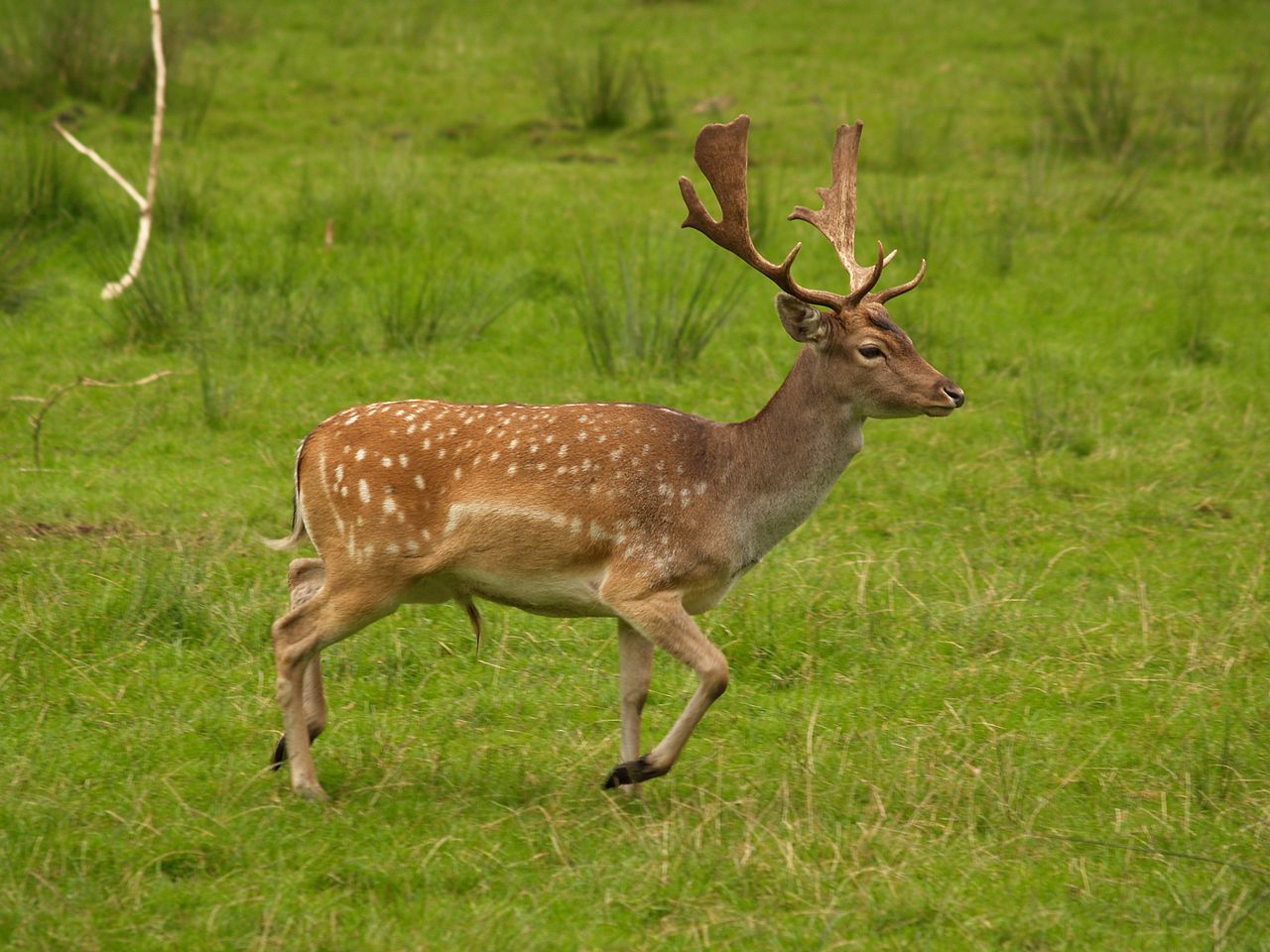


Taxonomy and names
Fallow deer belong to the family Cervidae and the genus Dama. Common English names include fallow deer, fallow, and in hunting and husbandry contexts the adult male is called a buck, the female a doe and the young a fawn.
Physical characteristics and variation
These deer are notable for marked coat variation. The most familiar form has a brown coat with conspicuous white spots during summer, while other recognised forms include darker (menil), very dark or melanistic and pale or leucistic variants. Fawns are born with spots which help camouflage them. Adult bucks grow broad, palmated antlers each year and shed them after the breeding season; does normally lack such antlers. A black-tipped tail and a contrasting rump patch are typical features.
Distribution and habitat
The species originated in Eurasia but has been introduced to many regions, including parts of the Americas, Africa, Australasia and additional areas of Europe. Fallow deer favour habitats that combine open grassland for feeding with wooded areas or scrub for cover. In managed landscapes they are commonly found in historic parklands and estates; in wild or semi-wild settings they occupy mixed woodland, hedgerow mosaics and pasture margins.
Diet and ecology
Fallow deer are primarily grazers but will also browse leaves, shoots and agricultural crops, with diet composition changing seasonally. They are often most active at dusk and dawn (crepuscular), using woodland for shelter during the day and open areas for feeding. Population density and grouping behaviour reflect food availability, predation pressure and human disturbance.
Social structure and reproduction
Social organisation varies by season. Outside the breeding season small family groups are common; where conditions allow, larger herds of mixed sexes may form, sometimes numbering many dozens and occasionally larger aggregations. The rut takes place in autumn: males establish dominance, display and spar with their antlers to gain access to females. Does typically give birth to one, occasionally two, fawns in late spring or early summer; young are concealed and cared for by the mother until they can join the group. Lifespan in the wild commonly spans over a decade, while individuals in protected conditions may live longer.
Predators, threats and population management
Natural predators include large carnivores where present, and young fawns may fall prey to canids and other opportunistic predators. Humans are the main source of mortality through hunting, vehicle collisions and land-use change. In places where fallow deer are introduced or reach high densities they can alter vegetation structure, compete with livestock or native herbivores and cause agricultural damage; these situations often prompt active management, including population control and habitat planning.
Relationship with people
Fallow deer have a long association with humans. They have been kept in managed herds for centuries for venison, sport and as ornamentals in parklands. Their cultural presence in many historic estates and urban parks has helped their persistence and spread, but the same history of translocation means that modern populations are sometimes viewed as non-native or invasive beyond their native range.
Conservation and research
Globally the species is widespread and often locally abundant. Conservation concern is generally low for the species as a whole, though local management and research focus on the ecological impacts of introduced populations, genetic distinctiveness of relict groups and best practice for coexistence with agriculture and infrastructure. Studies cover topics such as antler biology, seasonal movements, disease monitoring and the effects of habitat fragmentation.
Further reading and resources
- General species information: species overview
- Range maps and distribution details: distribution and range
- History of introductions and management case studies: introduction history
- Behavioural and antler biology studies: behavioural studies
Questions and answers
Q: What is a fallow deer?
A: A fallow deer is a type of deer from the family Cervidae.
Q: Where is the fallow deer originally from?
A: The fallow deer originally lived in Eurasia.
Q: Where else has the fallow deer been brought to?
A: The fallow deer has been brought to other parts of the world, such as Australia.
Q: What are the names for the male, female, and young fallow deer?
A: The male fallow deer is called a buck, the female is a doe, and the young a fawn.
Q: What is the lifespan of a fallow deer?
A: Fallow deer live for about 12-16 years.
Q: What are the common physical characteristics of fallow deer?
A: All of the fallow deer have white spots on their backs, and black tips at the ends of their tails. Only bucks have antlers, which are wide and shaped like a shovel.
Q: What type of environment do fallow deer prefer to live in?
A: Fallow deer like to live in an area that is mixed woodland and open grassland. They try to stay together in groups of up to 150.
Related articles
Author
AlegsaOnline.com Fallow deer (Dama dama): description, behaviour, distribution and human significance Leandro Alegsa
URL: https://en.alegsaonline.com/art/118835
Sources
- iucnredlist.org : "Dama dama"
- bds.org.uk : "Fallow deer"
- phoenixpark.ie : phoenixpark.ie