
Erasmus Darwin: physician, natural philosopher, poet and early thinker on evolution
Erasmus Darwin (1731–1802) was an English physician, inventor and poet whose scientific writings and membership of the Lunar Society helped shape late‑18th‑century natural thought and anticipate later evolutionary ideas.
Erasmus Darwin (1731–1802) was a prominent English physician and polymath whose work bridged medicine, natural history, poetry and mechanical invention. Trained and active as a physician, he combined clinical practice with wide reading in chemistry, botany and mechanics, and paid close attention to the diversity and changes of living organisms. He is also remembered as a poet who used verse to popularize scientific themes and as an inventor and experimenter in a network of industrialists and thinkers.
Image gallery
8 Images




Life and roles
Darwin trained and practised medicine while pursuing natural philosophy and literary interests. As a medical doctor, he built a reputation for careful observation and practical remedies, but he did not confine himself to the consulting room. His household and published work were informed by the Enlightenment ideal that scientific inquiry, artistic expression and social improvement were closely linked. He lived and worked in Staffordshire and the Midlands, where he maintained botanical gardens and collected specimens.
Major works and ideas
Darwin wrote essays, long narrative poems and scientific treatises that circulated widely in his lifetime. His prose work Zoonomia (late 1790s) presented ideas about the generation, variation and adaptation of organisms that later readers recognized as an important precursor to later evolutionary discussion. In poetic works such as The Botanic Garden he described plant structure and reproduction using an imaginative, didactic style that brought scientific details to a popular audience.
- Early natural history: he argued that species could change over time and explored mechanisms by which varieties might arise.
- Medical and physiological studies: he sought general principles linking life processes and disease.
- Public science in verse: he used poetry to disseminate scientific knowledge to a broader readership.
Connection to the Lunar Society and invention
Darwin was an active member of the Lunar Society, a loose association of industrialists, engineers and natural philosophers who met to exchange ideas. The society connected him with contemporaries who were shaping the Industrial Revolution; their conversations and collaborations supported practical innovation as well as theoretical speculation. While Darwin himself did not patent a long list of machines, his experiments and designs—recorded in essays and letters—reflect the same inventive culture that produced important mechanical and chemical advances in late‑18th‑century Britain.
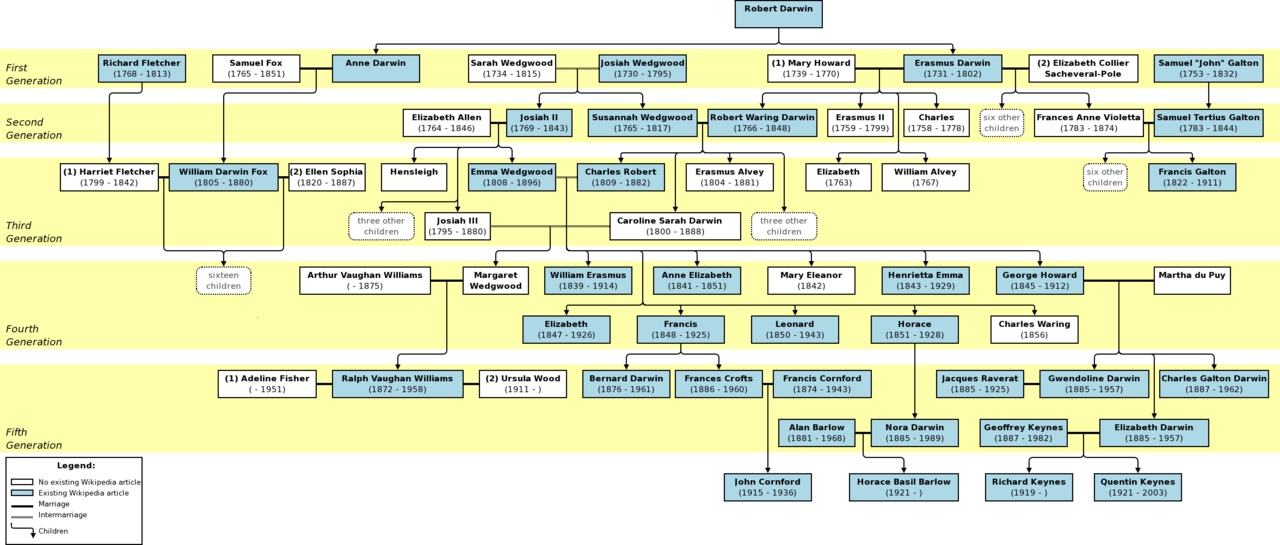
Although he did not formulate the theory later known as natural selection, Erasmus Darwin anticipated several themes that his grandson, Charles Darwin, and others would later develop further. Contemporary and subsequent historians note that Erasmus’s writings contain speculative accounts of descent with modification and of environmental influence on living forms; these ideas contributed to a climate of thought in which more defined evolutionary theories could emerge, including Charles’s work on natural selection.
Legacy and public memory
Darwin’s intellectual legacy survives in several overlapping ways. His home in Lichfield is maintained as a museum that presents his life and interests to visitors, and educational institutions have been named in his honour. The combined roles of physician, poet and experimenter illustrate the interconnected character of scientific culture in his era: he acted as a communicant between learned inquiry and the social and industrial changes of his time. His writings remain of interest both to scholars tracing the history of evolutionary ideas and to readers exploring the broad literary and scientific dialogues of the late Enlightenment.
For further introductions to his life and writings, readers can consult specialized biographies and collections of his work, and explore local displays and archives that preserve manuscripts and correspondence. Erasmus Darwin’s career exemplifies how medical practice, literary expression and speculative natural history could come together in a single public intellectual life, helping to prepare the ground for major scientific developments that followed in the 19th century.
More on his scientific approach • Context for evolutionary thinking in the 18th century • Medical and practical work
Inventions and designs • Poetry and public influence • Clinical practice
Questions and answers
Q: Who was Erasmus Darwin?
A: Erasmus Darwin was an English scientist, poet, inventor, and medical doctor.
Q: What was the Lunar Society?
A: The Lunar Society was a group of important scientists and businessmen who were friends.
Q: What did Erasmus Darwin study?
A: Erasmus Darwin looked at how living things evolved (change over a long time).
Q: Who was Charles Darwin?
A: Charles Darwin was Erasmus Darwin's grandson.
Q: What did Charles Darwin write a book about?
A: Charles Darwin wrote a book that explained evolution by natural selection.
Q: What is Erasmus Darwin House?
A: Erasmus Darwin House is the home of Erasmus Darwin located in Lichfield and now serves as a museum dedicated to his life's work.
Q: What is Erasmus Darwin Academy?
A: Erasmus Darwin Academy is a school located in nearby Chasetown that recently converted to Academy status and is named after Erasmus Darwin in honor of his scientific contributions.
Related articles
Author
AlegsaOnline.com Erasmus Darwin: physician, natural philosopher, poet and early thinker on evolution Leandro Alegsa
URL: https://en.alegsaonline.com/art/118585