
Enrico Fermi
Italian-American physicist (1901–1954), Nobel laureate and pioneer of nuclear physics, quantum theory, and statistical mechanics; led construction of the first nuclear reactor and shaped 20th-century physics.
Overview
Enrico Fermi (1901–1954) was an Italian-born physicist who became a central figure in both theoretical and experimental physics. Trained in Europe and later based in the United States, he won the Nobel Prize in Physics in 1938 for his work on induced radioactivity and made foundational contributions across several fields. For a concise biographical summary, see biographical resources.
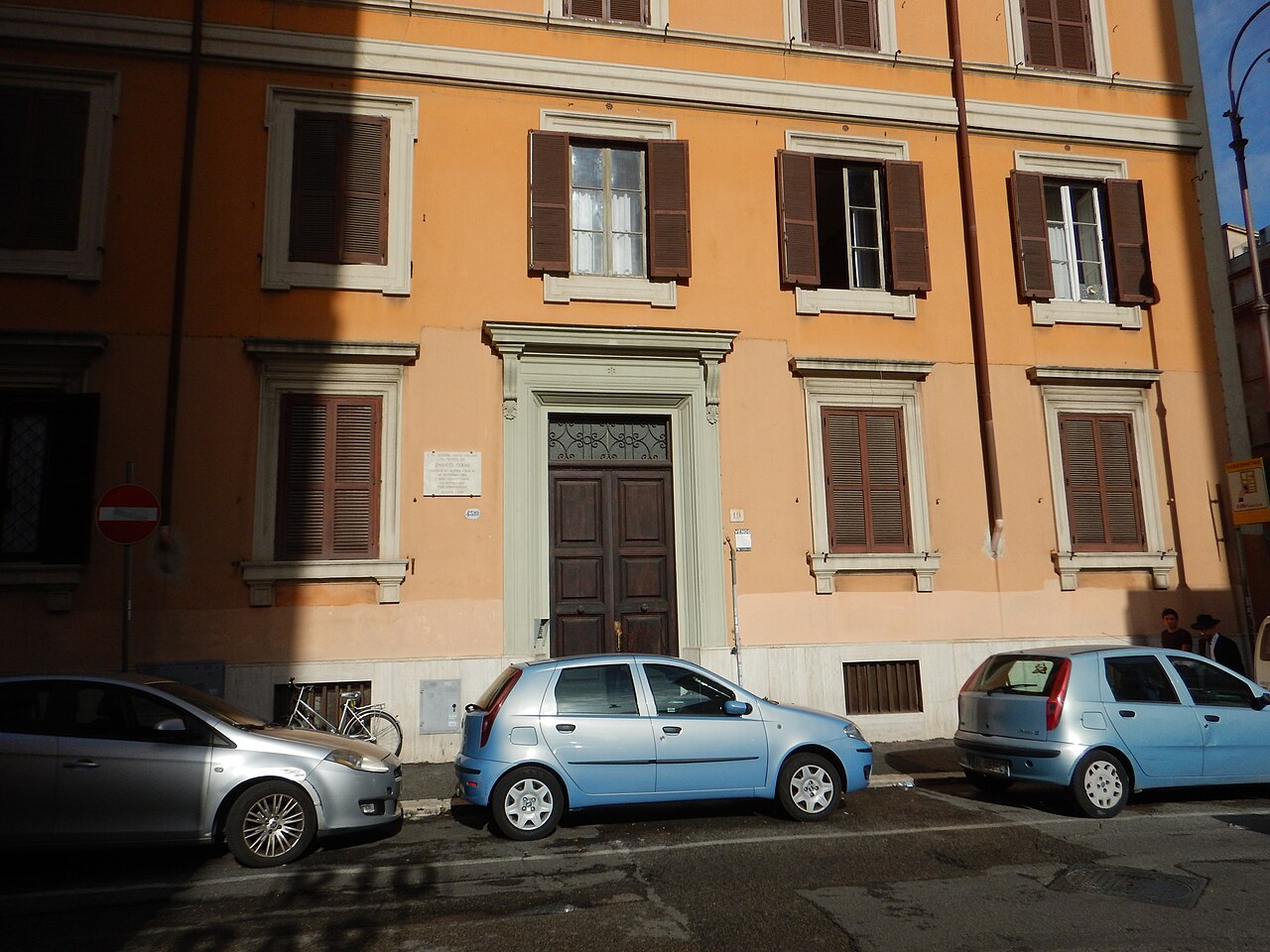
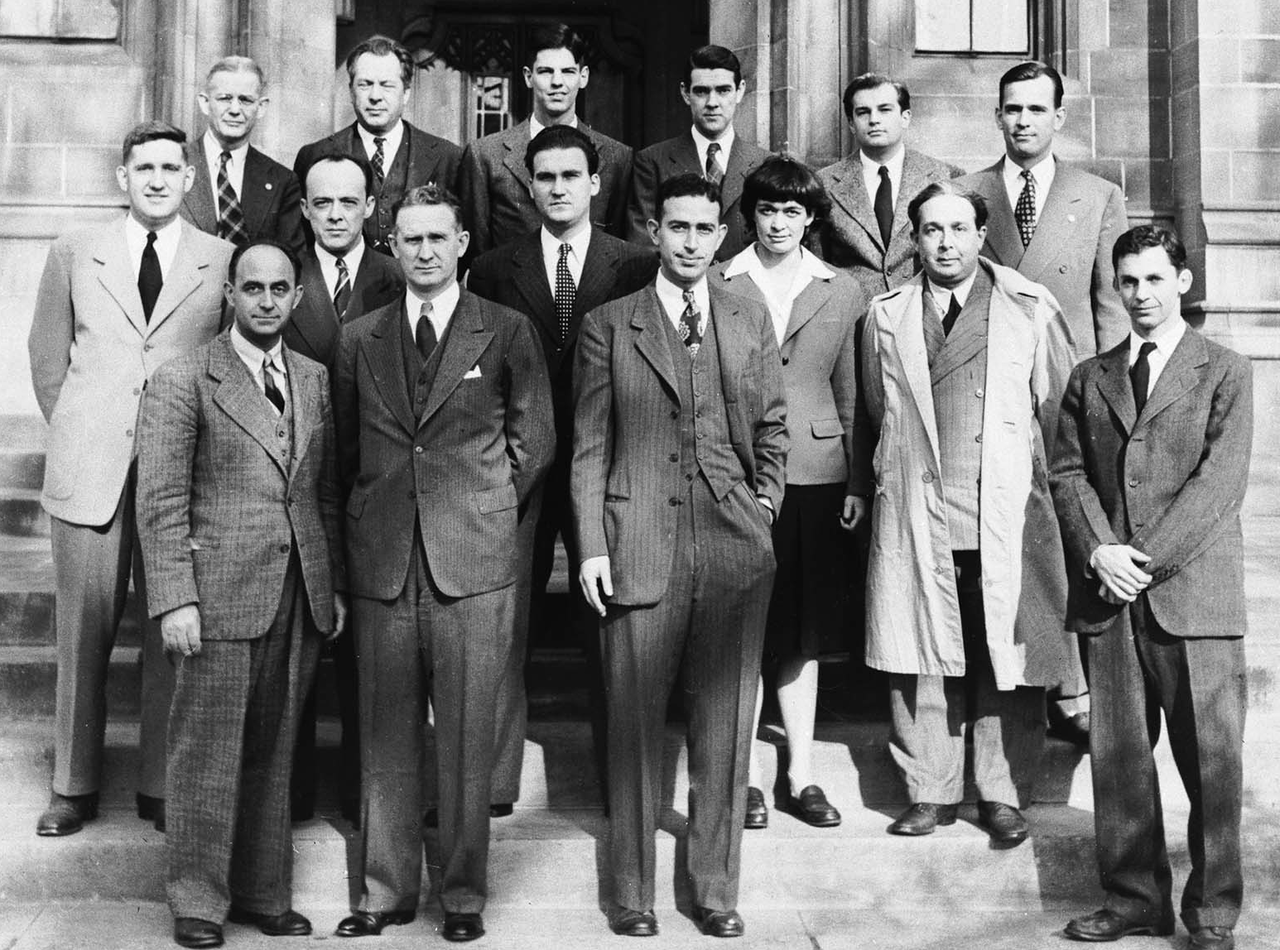
Image gallery
10 Images




Major contributions and ideas
Fermi's work spans theoretical advances and practical experiments. He developed what are now called Fermi–Dirac statistics, which govern the behavior of fermions and underpin modern solid-state physics and astrophysics. In 1934 he proposed a theory of beta decay that introduced the concept of a new weak interaction, and he helped clarify aspects of quantum theory and particle behavior. Further background on his role in quantum theory can be found at quantum theory overviews, and his influence in particle physics is discussed in particle physics summaries.
Experimental work and the first reactor
Fermi led the team that constructed the world's first controlled, self-sustaining nuclear chain reaction, often referred to as Chicago Pile-1 in late 1942. That achievement marked the transition from experimental nuclear science to practical reactor engineering and played a pivotal part in wartime research programs. Details about the reactor and its construction are available at first reactor accounts. His practical approach and versatility are often cited among the reasons he is counted among the most influential great scientists of the 20th century.
Legacy, teaching, and methods
Beyond specific discoveries, Fermi is remembered for his clarity of thought, teaching, and a practical method of estimation now known as "Fermi problems"—order-of-magnitude reasoning used across science and engineering. His students and collaborators carried forward his approaches into postwar physics and academia. He received numerous honors in addition to the Nobel Prize and influenced research in nuclear physics, statistical mechanics and early particle theory. For perspectives on statistical mechanics and Fermi's role, see statistical mechanics resources.
Notable facts and distinctions
- Nobel Prize (1938) — awarded for studies of induced radioactivity and related experimental work.
- Fermi–Dirac statistics — fundamental to fermions and quantum statistics.
- Theory of beta decay — introduced elements of the weak interaction concept.
- First controlled nuclear chain reaction — a milestone in reactor physics and the Manhattan Project era.
Fermi combined theoretical insight with experimental skill, leaving a broad legacy that continues to shape physics education, research methods, and technologies. For more general reading, consult the linked resources above.
Questions and answers
Q: Who is Enrico Fermi?
A: Enrico Fernando Fermi was an Italian-American physicist who worked on the first nuclear reactor and helped make quantum theory.
Q: What were Fermi’s contributions to physics?
A: Fermi’s contributions to physics include working on the first nuclear reactor and helping make quantum theory. He was also important to particle physics and statistical mechanics.
Q: What is induced radioactivity, and how did Fermi contribute to it?
A: Induced radioactivity is a process in which normally stable isotopes become radioactive when exposed to radiation. Fermi won the Nobel Prize in Physics in 1938 for his work on induced radioactivity.
Q: What did Fermi build that was remarkable, and what is its significance?
A: Fermi built the world's first nuclear reactor, which is significant because it demonstrated the possibility of controlled nuclear reactions and paved the way for nuclear power plants.
Q: What award did Fermi win for his work on physics, and when did he win it?
A: Fermi won the Nobel Prize in Physics in 1938 for his work on induced radioactivity.
Q: Why is Fermi considered one of the greatest scientists of the 20th century?
A: Fermi is considered one of the greatest scientists of the 20th century because of his significant contributions to multiple fields of physics, including nuclear physics and quantum theory, as well as his groundbreaking work on the first nuclear reactor.
Q: When was Enrico Fermi born, and when did he die?
A: Enrico Fermi was born on September 29, 1901, and he died on November 28, 1954.
Related articles
Author
AlegsaOnline.com Enrico Fermi Leandro Alegsa
URL: https://en.alegsaonline.com/art/118557
Sources
- osti.gov : "Enrico Fermis and the First Slef-Sustaining Nuclear Reaction"
- nobelprize.org : "Enrico Fermi – Biography"
- books.google.com : Energy at the Crossroads: Global Perspectives and Uncertainties
- Enrico Fermi
- Nobel Prize in Physics
- wikidata.orgQ8753.html : wikidata.orgq8753.html
- authority.bibsys.no : 90057569
- catalogo.bne.es : XX886394
- catalogue.bnf.fr : cb12275443t
- data.bnf.fr : (data)
- cantic.bnc.cat : a11906091
- ci.nii.ac.jp : DA01376238
- d-nb.info : 118683322
- isni.org : 0000 0001 2134 1777
- id.loc.gov : n50026886