
Empress Suiko — Early Japanese Ruler and First Female Sovereign
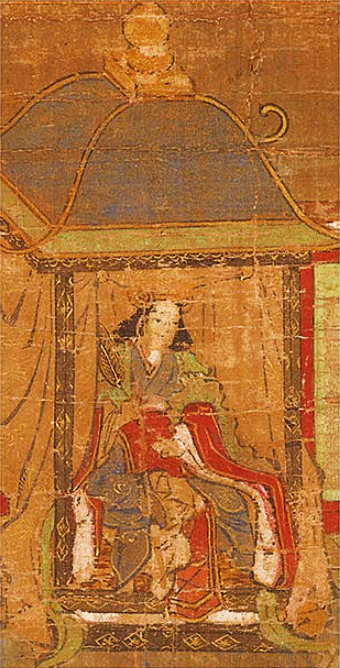
Empress Suiko (554–628) is traditionally counted as Japan’s 33rd sovereign. Her reign (593–628) oversaw early state formation, official patronage of Buddhism, and intensified contacts with Korea and China.
Overview
Empress Suiko (推古天皇, Suiko-tennō) is traditionally regarded as the 33rd sovereign in the conventional order of succession in Japan. Her reign is conventionally dated from 593 to 628. She is widely remembered as the first of a small group of women who ruled as empresses in classical Japan and as a central figure during a period when the Yamato polity worked to consolidate court institutions, codify ritual, and deepen diplomatic and cultural ties with the Asian mainland. The sequence that places her as the 33rd ruler appears in the conventional traditional order of succession.
Image gallery
4 Images


Origins and accession
Born about 554 into the ruling house of Yamato, Suiko became sovereign following a period of dynastic adjustment and the death of her predecessor. Early chronicles report her accession in the context of negotiations among court clans and influential courtiers. Many later accounts emphasize the role of prominent relatives and ministers in stabilizing the court after transitions of power.
Regency, governance, and court leadership
Surviving chronicles present Suiko as presiding over a court that increasingly adopted administrative practices influenced by the continent. Day‑to‑day governance during much of her reign is often described in traditional sources as dominated by senior statesmen; one of the most prominent figures associated with her court is Prince Shōtoku, who is traditionally described as a chief advisor or regent at various points. Scholars treat the exact lines of authority cautiously, since contemporary documentary evidence is limited and later narrative accounts sometimes conflate roles and achievements.
Buddhism and cultural change
Suiko’s reign coincided with growing official patronage of Buddhism in the Japanese court. Temples, clergy, and Buddhist texts increasingly figured in elite ritual and education. The period saw the construction and endowment of early temples and the introduction of continental artistic and doctrinal influences. These religious developments were closely tied to broader efforts to strengthen central institutions and legitimize rulership through ceremony and learning.
Foreign relations and continental contacts
Diplomatic and cultural exchange with Korea and China intensified during her rule. Missions, envoys, and immigrants carried technologies, bureaucratic models, and written materials that shaped legal, administrative, and religious change at court. These channels helped transmit ideas used in attempts to organize government offices and compile legal material influenced by continental precedents.
Sources and historiography
Knowledge of Empress Suiko rests largely on chronicles compiled in subsequent centuries together with archaeological and comparative continental evidence. Because the narrative sources mix historical record with legendary elements, historians describe some details of her life and reign as possibly legendary while treating the broader outline as plausible. The name Suiko‑tennō itself was assigned after her death; posthumous names and the standardized roster of early sovereigns were shaped by later compilers and rulers (posthumous name and later generations).
Longer significance and succession
The conventional list and sequence of early emperors were not fully fixed in historical practice until later reigns — notably during the era of Emperor Kammu, who played a role in stabilizing accepted genealogies of the Yamato line (Emperor Kammu). Within the broad history of Japan, Suiko is significant as a transitional ruler: her reign marks a time when court ritual, Buddhism, and centralized administration began to take deeper root. She also exemplifies how women could occupy the throne in periods when political consensus or dynastic needs favored a mature, stabilizing sovereign.
Female sovereigns in classical Japan
Empress Suiko was the first of eight women who are listed as reigning sovereigns in traditional accounts of Japan’s imperial history. Later female rulers named in these lists include:
- Kōgyoku / Saimei
- Jitō
- Gemmei
- Genshō
- Kōken / Shōtoku
- Meishō
- Go‑Sakuramachi
Legacy
While few documentary particulars survive from Suiko’s own time, the period associated with her reign remains central in studies of early Japanese state formation. Historians combine literary sources, archaeology, and continental records to reconstruct developments in government structure, religious patronage, and international exchange. Even allowing for uncertainties in later narratives, Empress Suiko’s reign is widely seen as a foundational episode in the emergence of more centralized court government and the institutional presence of Buddhism in Japan.
Further reading
For broader context on Suiko’s place in Japan’s imperial chronology and the early medieval state, see reference works on the traditional succession, studies of Prince Shōtoku, and general surveys of the history of Japan.
Questions and answers
Q: Who was the 33rd Emperor of Japan?
A: Empress Suiko (推古天皇, Suiko-tennō) was the 33rd Emperor of Japan.
Q: When did her reign start and end?
A: Her reign started in 593 and ended in 628.
Q: How many women have been Empresses of Japan?
A: Eight women have been Empresses of Japan, including Empress Suiko.
Q: What were the names of the other seven female empresses?
A: The other seven female empresses were Kōgyoku/Saimei, Jitō, Gemmei, Genshō, Kōken/Shōtoku, Meishō, and Go-Sakuramachi.
Q: When was it confirmed that the conventionally accepted names and sequence of early emperors were traditional?
A: It was not confirmed as "traditional" until the reign of Emperor Kammu who was the 50th monarch of the Yamato dynasty.
Q: What is Empress Suiko's posthumous name?
A: Her posthumous name is Suiko-tennō which was created for her by later generations.
Related articles
Author
AlegsaOnline.com Empress Suiko — Early Japanese Ruler and First Female Sovereign Leandro Alegsa
URL: https://en.alegsaonline.com/art/118539
Sources
- kunaicho.go.jp : 推古天皇 (33)
- t-net.ne.jp : "Kofun Culture,"
- t-net.ne.jp : Japanese Archaeology.
- kunaicho.go.jp : Ceremony of Accession (Sokui-no-Rei)
- ndl.go.jp : "Calendar history/The Source"
- yukikurete.de : "(596) 推古 Suiko"
- books.google.com : "Suiko Tennō" in Japan Encyclopedia, p. 910