
Bittern (Botaurinae): the secretive reed-dwelling herons
Bitterns are compact, secretive herons of the subfamily Botaurinae, adapted to life in reedbeds and marshes worldwide. This article covers their ID, behaviour, taxonomy, habitat, diet and conservation.
Overview
Bitterns are a group of stocky, often cryptically coloured birds that belong to the heron family. They are placed in the subfamily Botaurinae and are recognized for their secretive behaviour and preference for dense wetland vegetation. While clearly related to other herons, bitterns tend to have shorter necks and a habit of remaining concealed among reeds and tall marsh plants rather than hunting in open water. The broader group of herons is discussed under herons.
Image gallery
4 Images

Appearance and adaptations
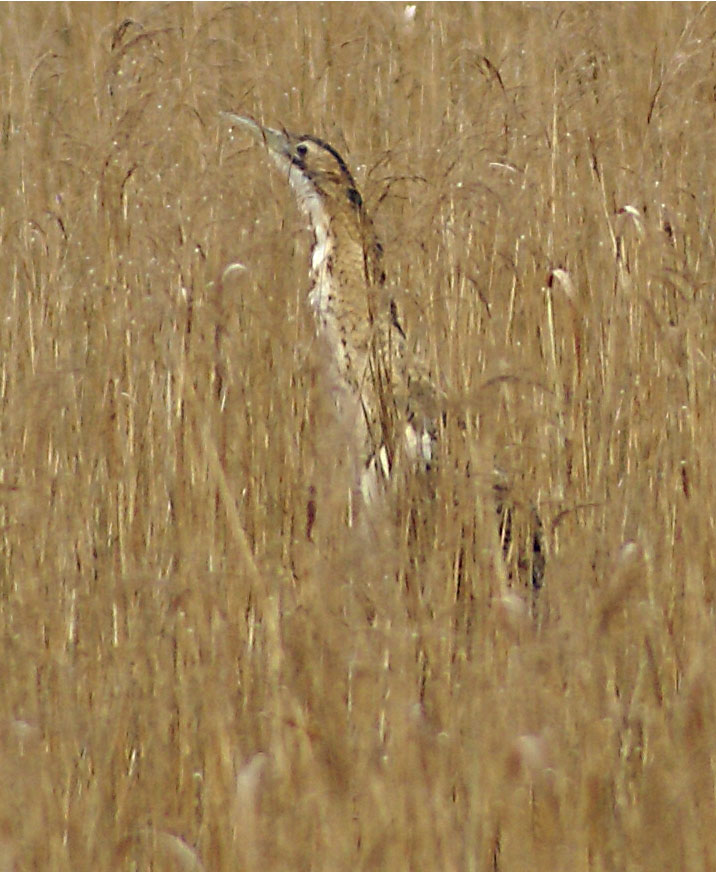
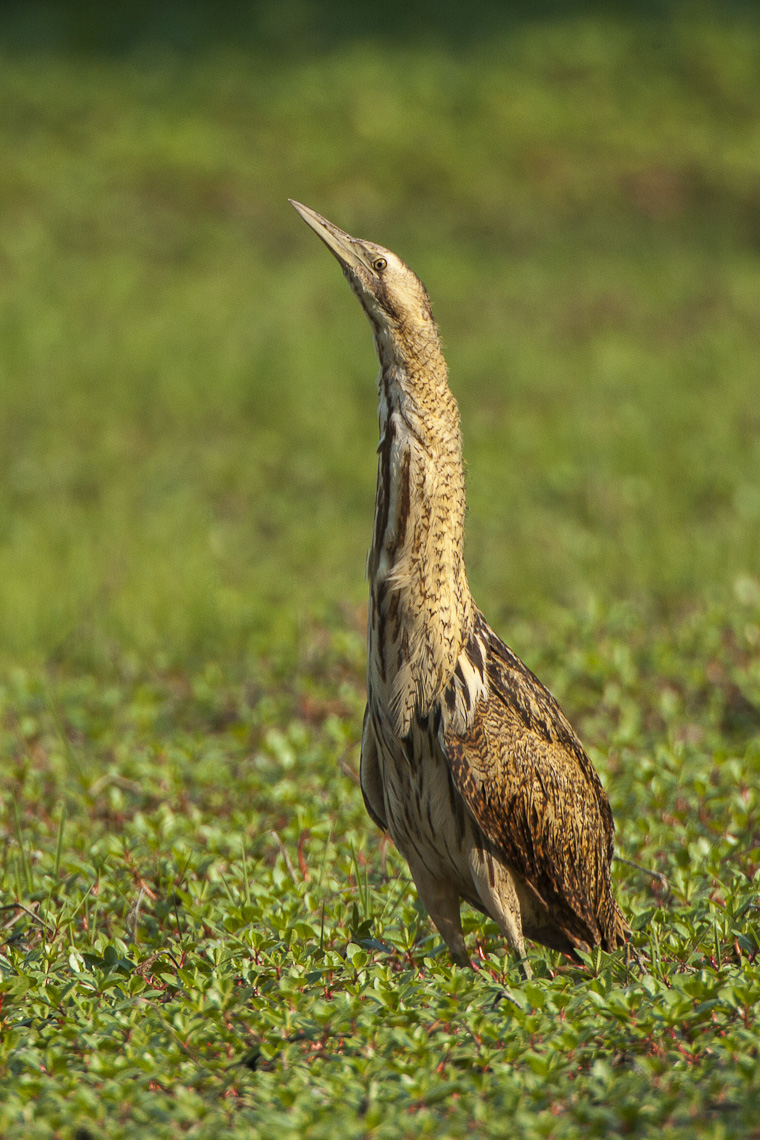
Most bitterns have streaked brown, buff and black plumage that provides excellent camouflage in their preferred habitats. Their body shape is more compact than that of many other herons; when attempting to remain unseen they often adopt a characteristic posture, pointing their bill upwards and aligning their streaked flanks with surrounding stems. These birds are well adapted to life among reeds and emergent vegetation, able to move quietly and to strike quickly at prey from a concealed position.
Habitat, distribution and taxonomy
Bitterns are primarily found in freshwater wetlands such as reedbeds, fens and marshes, though a few species also use brackish or coastal wetlands. The subfamily is nearly worldwide in distribution, with species in Eurasia, Africa, the Americas, Asia and Australasia. Taxonomically they are usually divided into three genera: smaller species in Ixobrychus, the larger Botaurus species, and a single small genus, Zebrilus, containing one species. Their presence is often linked closely to the condition and extent of dense wetland vegetation.
Feeding and behaviour
Bitterns are ambush predators. They feed on a varied diet that typically includes:
Unlike storks, ibises and spoonbills, bitterns (and other herons) fly with the neck retracted rather than outstretched; compare with storks, ibises and spoonbills for this distinction. Many species are crepuscular or nocturnal, becoming most active around dawn and dusk.
Breeding, voice and human interactions
Bittern nests are typically built low in reedbeds or among other marsh vegetation, where eggs and chicks are hidden from view. Several species are known for a low, booming call produced by males during the breeding season; this deep sound can carry across reedbeds and is one of the most familiar traits of some large bitterns. The English name has deep roots: it is derived via Old French from earlier terms recorded in Old English, reflecting a long history of human recognition of the bird (Old French/Old English origin).
Conservation and notable facts
Bitterns are sensitive to wetland drainage, pollution and the loss of tall vegetation. In many regions the size and health of local populations serve as indicators of wetland condition. Conservation efforts for bitterns focus on protecting and restoring reedbeds, maintaining suitable water regimes, and reducing contamination. Their camouflage, secretive habits and distinctive booming calls make them ecologically significant and culturally notable among wetland birds.
For further reading on related groups and wetland ecology see links to general resources on herons and reedbed management (reeds, marshes), and for species-level information consult region-specific guides or conservation organizations referenced at camouflage and identification.
Questions and answers
Q: What are bitterns?
A: Bitterns are waterbirds that belong to the family Ardeidae, which are wading birds. They are shorter-necked and more secretive than other herons.
Q: How do bitterns look like?
A: Bitterns have good camouflage amongst the reeds where they make their nests. They are shorter-necked and more secretive than other herons.
Q: What kind of areas do bitterns usually frequent?
A: Bitterns usually frequent reedbeds and similar marshy areas.
Q: What do bitterns usually feed on?
A: Bitterns feed on amphibians, reptiles, insects, and fish.
Q: How do herons and bitterns fly?
A: Unlike the similar storks, ibises, and spoonbills, herons and bitterns fly with their necks retracted, not outstretched.
Q: What are the three genera of bitterns?
A: The three genera of bitterns are Ixobrychus, Botaurus, and Zebrilus. The genus Ixobrychus contains mainly small species, while the genus Botaurus has the larger bitterns. There is a single species in the third genus, Zebrilus.
Q: What is the distribution of bitterns like?
A: The distribution of bitterns is pretty much worldwide.
Tags
Related articles
Author
AlegsaOnline.com Bittern (Botaurinae): the secretive reed-dwelling herons Leandro Alegsa
URL: https://en.alegsaonline.com/art/11851
Sources
- bartleby.com : "Bittern"