
Emperor Kaika (traditional ninth emperor of Japan)
Emperor Kaika is listed as the ninth sovereign in Japan’s traditional order. Considered a legendary figure, his name and sequence were fixed centuries later and no verifiable dates or tomb have been confirmed.
Overview
Emperor Kaika is traditionally counted as the ninth monarch in the imperial succession of Japan. His place in lists of rulers comes from early chronicles, but modern historians treat Kaika as a largely legendary figure rather than a verifiable historical ruler. The name "Kaika-tennō" was not used during his purported lifetime but was applied posthumously by later generations seeking to establish a continuous imperial genealogy.
Image gallery
3 Images
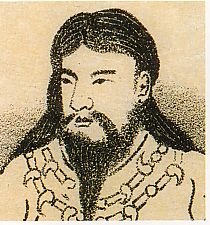

Primary sources and traditional narrative
Accounts of Kaika are passed down through Japan's oldest chronicles, which compile myths, genealogies and court lore. These texts present a sequence of early emperors and brief statements about their residences and lineages, but they do not provide reliable chronological data. As with several of the earliest named rulers, the traditional biography of Kaika is short and formulaic: he appears in lists that link him to predecessors and successors rather than in detailed contemporary records.
Reign, palace and succession
According to classical compilations, Kaika is placed immediately after the eighth sovereign and before the tenth. Some records state that his court was located at a palace described as Isakawa-no-miya at Kasuga in the territory later known as Yamato province; this detail is preserved in medieval histories such as the Gukanshō. Beyond these conventional attributions, no independent documentary or archaeological evidence corroborates the specifics of his reign, length of rule, or personal acts.
Historicity and scholarly view
Scholars generally regard Kaika and many early emperors as part of a constructed ancestral framework that served political and religious purposes for later courts. The arrangement of names and reigns was standardized centuries after the events they describe; the ordering of the early sovereigns became widely accepted by the time of the court reforms and record-keeping changes under the imperial house whose fiftieth sovereign is often cited in discussions of the canonization of the list (50th monarch). For historical study, reliable documentary evidence for Japan’s imperial line becomes clearer only from the mid-first millennium onward, leaving figures such as Kaika in the realm of tradition rather than empirically verified history.
Significance and cultural role
Despite the uncertain historicity, Kaika figures in Japan’s cultural memory as part of the foundational sequence that underpins imperial legitimacy. The sequence of early rulers has been invoked in ritual, historiography and national genealogy. A short list of salient points about Kaika's role in tradition:
- He occupies the ninth position in the classical order of succession (traditional order).
- His name is an honorific title applied after his lifetime, illustrating how posthumous naming practices shaped the narrative (posthumous).
- Descriptions of his palace and provincial associations reflect how later writers localized ancient rulers in familiar landscapes.
Notable facts and distinctions
Important cautions for readers: there are no secure chronological dates, contemporary inscriptions, identified burial mounds, or ongoing administrative records attributable specifically to Kaika. Where the traditions preserve place names and familial links, these should be read as elements of an inherited account compiled and edited over centuries. For further reading on how early imperial lists were formed and transmitted, consult general works on Japan’s early chronicles and the processes by which court historians shaped the national past (legendary tradition and historiography).
For contextual research, sources and reference collections available through academic and public institutions provide commentary on the early imperial listings and the principal chronicles that mention Kaika. Readers may follow curated entries and overviews to learn how historians distinguish mythic genealogy from evidence-based reconstructions of early Japanese polity.
Related links: traditional order, Japan, legendary, posthumous, later generations, 50th monarch, Gukanshō.
Questions and answers
Q: Who was Emperor Kaika?
A: Emperor Kaika was the 9th emperor of Japan according to the traditional order of succession who is considered a legendary person by historians.
Q: Was Emperor Kaika's name given to him posthumously?
A: Yes, the name Kaika-tennō was created for Emperor Kaika posthumously by later generations.
Q: Is there any concrete information on Emperor Kaika's dates of life or reign?
A: No, there is no certain dates that can be assigned to Emperor Kaika's life or reign.
Q: When were the early emperors' names and sequence confirmed as "traditional"?
A: The early emperors' names and sequence were not confirmed as "traditional" until the reign of Emperor Kammu, who was the 50th monarch of the Yamato dynasty.
Q: Where did Emperor Kasuga rule from?
A: Emperor Kaika ruled from the palace of Isakawa-no-miya at Kasuga in what will come to be known as Yamato province.
Q: Is Emperor Kaika considered to be a historical figure?
A: Historians consider Emperor Kaika to be a legendary person rather than a historical figure.
Q: What is the Gukanshō record regarding Emperor Kaika's reign?
A: The Gukanshō records that Emperor Kaika ruled from the palace of Isakawa-no-miya at Kasuga in what will come to be known as Yamato province.
Related articles
Author
AlegsaOnline.com Emperor Kaika (traditional ninth emperor of Japan) Leandro Alegsa
URL: https://en.alegsaonline.com/art/118507
Sources
- kunaicho.go.jp : 開化天皇 (9)
- t-net.ne.jp : "Kofun Culture,"
- t-net.ne.jp : Japanese Archaeology.
- books.google.com : Nihongi: Chronicles of Japan from the Earliest Times to A.D. 697.
- worldcat.org : OCLC 448337491
- search.japantimes.co.jp : "Life in the Cloudy Imperial Fishbowl,"